Gunnison Sage Grouse Gets Federal Protection

Sage Grouse

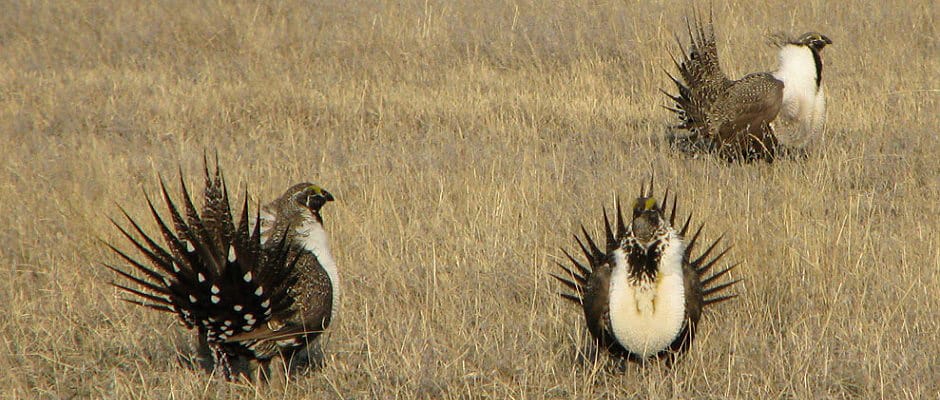
The U.S. Fish and Wildlife Service (FWS) listed the Gunnison sage grouse as threatened under the Endangered Species Act this week. FWS also established 1.4 million acres of critical habitat for the bird, which is found only in southwestern Colorado and southeastern Utah.

Read more at FWS.

Learn in the Great Outdoors

Field Course

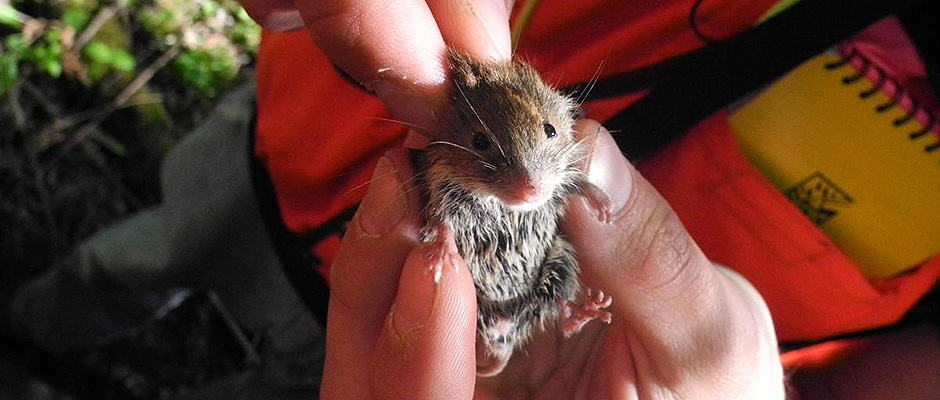
The Wildlife Society announces the Northeast (NE) Section’s Wildlife Field Course taking place in Castleton, VT from May 17-30, 2015. The NE Section offers a two week long, hands-on, outdoor program where students learn a variety of field techniques, including small mammal trapping, telemetry, GPS operation, and the use of chemical immobilization equipment. Students also become certified as Project Wild instructors and complete a basic hunter education course. Students receive 3-6 undergraduate or graduate credits through Castleton State College, which can be transferred to their home institution.

The NE Section has been sponsoring this field course since 2009. Also referred to as a “wildlife field camp”, the NE Section offers an experience that many college and university wildlife programs are unable to provide. Each year, 15 to 25 practicing professional biologists volunteer their time to travel to Vermont and lead portions of the course. By exposing students to outdoor courses taught by seasoned experts, the NE Section gives access to the type of outdoor experience that helped shape many previous generations of wildlife professionals. Rated “fricken awesome!” and “an amazing experience” by previous students, the course not only provides a unique learning atmosphere but also offers opportunities to network with professionals and to connect with fellow wildlife students.

“The TWS program does not simply fill a curriculum void for wildlife students. The program exposes students to a variety of faces, backgrounds, and experiences rare in most university environments,” said Sarah Wilkinson, a student from the 2011 Field Course. “A variety of student backgrounds fostered a dynamic of student-to-student learning. Access to state lands and numerous tools of the trade gave me a real feel for what it would be like to perform tasks out in the field.”

Interested students are encouraged to register early as the course can only accommodate 20 students. For more information visit the Northeast Section of TWS’s website and/or Facebook.

Sources: John McDonald, Northeast Section, NE Section Winter 2011-2012 Newsletter

Wildlife Management Issues on the Ballot Last Week

Hunting Photo

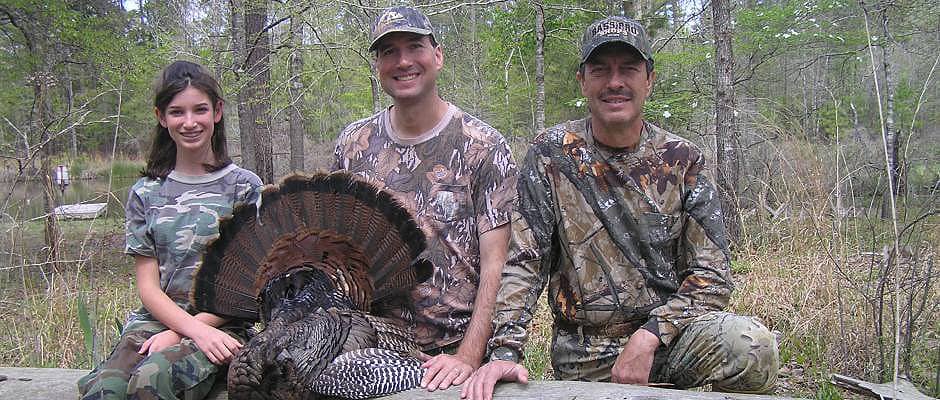
Four states voted on ballot measures related to wildlife management last week – primarily in regards to how hunting is managed and treated within the state. Alabama and Mississippi each approved constitutional amendments to ensure hunting and fishing rights for its citizens, a relatively common trend over the past several election cycles. Maine and Michigan each rejected their proposed initiatives related to hunting specific species.

Alabama: Amendment 5, Alabama Right to Hunt and Fish

The “Sportperson’s Bill of Rights” was passed by Alabama voters on Tuesday, preserving the future of hunting and fishing in the state. The constitutional amendment ensures that citizens have the right to hunt and fish subject to reasonable regulations that promote sound conservation and management.

Source: ABC 3340 (November 4, 2014)

Maine: Question 1, Citizen Initiative on Bear Hunting Practices

Maine voters rejected a proposed ban on hunting bears with bait, dogs, and traps last Tuesday. The Maine Department of Inland Fisheries and Wildlife along with the Maine Chapter of The Wildlife Society endorsed opposition to the proposed ban.

Source: WCSH6 (November 5, 2014)

Michigan: Proposal 1, Michigan Wolf Hunting Referendum and Proposal 2, Michigan Natural Resources Commission Referendum

Michigan voters rejected two proposals on November 4 regarding hunting. Proposal 1 would have allowed the establishment of wolf hunting seasons and designated wolves as game animals in the state. Proposal 2 would have allowed the Natural Resources Commission to directly designate game species and determine hunting seasons, rather than game animals being designated through legislation. The failure of the two proposals suggests that a 2015 wolf hunting season will not occur in Michigan.

Source: Detroit News (November 5, 2014)

Mississippi: Mississippi Right to Hunt and Fish Amendment

Mississippi voters approved a constitutional amendment that citizens have the right to hunt, fish, and harvest game species throughout the state. This establishes that hunting and fishing through regulations is a right, rather than merely a privilege. Mississippi lawmakers will work with state game wardens to regulate hunting and fishing seasons.

Source: Hattiesburg American (November 4, 2014)

Sources: Ballotpedia

Bats Compete for Resources

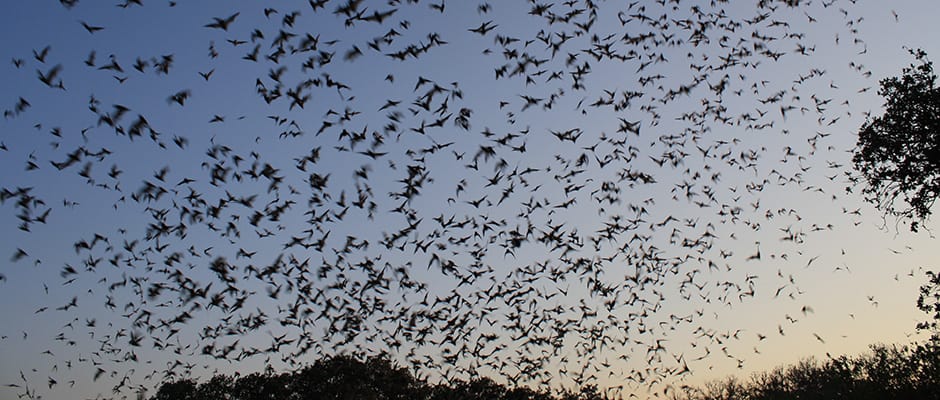
Researchers recently found that Mexican free-tailed bats compete for food by jamming each other’s echolocation frequencies mid-hunt — a behavior that has never been seen before.
Read more at BBC News.

Going Beyond Professional Development

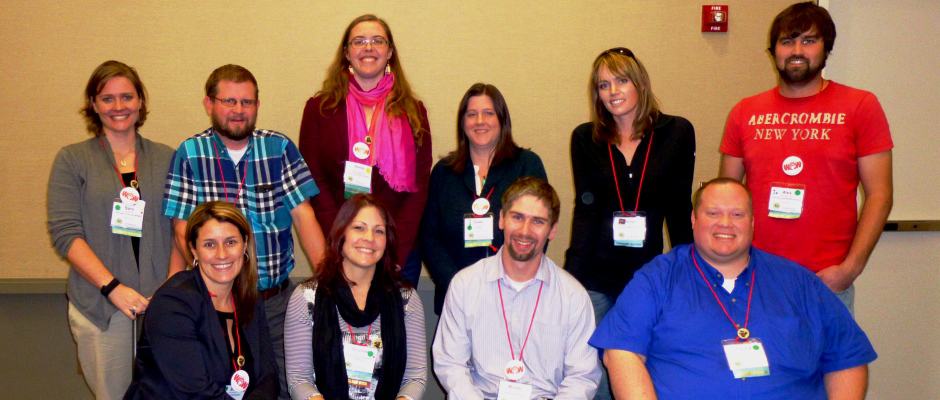
The 2014 TWS Leadership Institute concluded last month during TWS’s Annual Conference in Pittsburgh, Pennsylvania.

Participants of the 2014 Leadership Institute completed several assignments, readings, and analytical discussions throughout the year aimed at exploring and developing various aspects of leadership. “The Wildlife Society established the Leadership Institute in 2006 to enrich the future of our membership and our profession,” says TWS Executive Director Ken Williams. “The program has garnered widespread support because it has been very successful in preparing our early-career members to take active professional leadership roles both within and outside TWS.”

During the conference, participants served as mentors for students and were mentored by Leadership Institute alumni and TWS Council members. Participants also attended Council meetings and met for several discussions moderated by current leaders of the wildlife profession – several of which are Leadership Institute alumni.

For Michel Kohl, a PhD student at Utah State University and participant in the 2014 Leadership Institute, the time spent in the Institute was both personally and professionally rewarding, “This experience goes beyond professional development. It provides you the avenues to examine yourself and how you view your responsibilities…”

Sonja Leverkus, owner and ecosystem scientist of Shifting Mosaics Consulting, is using this experience to build her career and remain involved in TWS. “I am so honored to have been part of the 2014 class and I look forward to giving back as best as I can over my career to TWS. I am very thankful to have had the opportunities to network and build my professional career.

“Through this experience, you begin to change your perceptions of how and why you are treated the way you are as well as how you treat others. This awakening only increases your ability to serve as a leader in your profession and in society” says Kohl. “I highly recommend this experience to anyone who is interested in taking the next step in building our profession.”

TWS congratulates this year’s participants as they join the ranks of Leadership Institute alumni:

  • Charles Anderson, Resource Science Supervisor, Missouri Department of Conservation
  • David Dahlgren, Extension Associate, Utah State University
  • Dawn Davis, Sage-Grouse Conservation Coordinator, Oregon Department of Fish and Wildlife
  • Alexander Galt, Wildlife Biologist, U.S. Fish and Wildlife Service, Minnesota
  • Sara Hansen, Wildlife Biologist, Washington Department of Fish and Wildlife
  • Michel Kohl, Research Associate/Doctoral Student, Utah State University
  • Sonja Leverkus, Doctoral Candidate, Oklahoma State University and Ecosystem Scientist, Shifting Mosaics Consulting, British Columbia, Canada
  • Erin McCance, Project Manager/Wildlife Biologist, Joro Consultants, Manitoba, Canada
  • Sonja Smith, Area Wildlife Biologist, Montana Department of Fish, Wildlife, and Parks
  • Heather Stricker, Wildlife Resources Program Director, Forest County Potawatomi Community, Wisconsin

The Wildlife Society received vital financial support for the Leadership Institute in 2014 from 17 organizations, including the Dallas Safari Club, the Boone and Crockett Wildlife Conservation Program, the University of Montana, Texas Tech University, and several Sections and Chapters of The Wildlife Society. AllStar Ecology, Inc provided support for the Leadership Institute Reception at the annual conference in Pittsburgh. The Wildlife Society thanks all these contributors for their support of our leadership development program.

For more information about TWS Leadership Institute and a complete list of alumni, visit wildlife.org/leadership-institute

Report Finds Biodiversity Goals are Off Track

Despite the efforts of some nations, the world is not on track to meet its biodiversity goals, according to a new progress report from the Convention on Biological Diversity (CBD), an organization born out of the United Nations Environment Programme and aimed at restoring biodiversity worldwide.

In 2010, the convention parties — comprised of the European Union and 193 countries including Canada, Malaysia, Turkey, and Uzbekestan — adopted a 10-year strategic plan with 20 specific targets such as restoring 15 percent of degraded ecosystems across the world and slashing the rate of habitat loss in half. If achieved, the targets should slow the loss of global biodiversity.

Nearly halfway to the deadline, experts from around the world analyzed the progress made. They broke targets down into 55 component parts, some as indistinct as “people are aware of the values of biodiversity” to more specific goals such as “at least 10 percent of all coastal and marine areas are conserved” and “the rate of loss of forests is at least halved and where feasible brought close to zero.” Next, experts used current trends to predict whether those components are likely to be realized by 2020.

While participating countries are making progress on some goals, they are mostly falling short on others. The report showed that of the 55 components, only five are on track for completion. The other 50 components have seen little or no headway. For example, the CBD’s plan aims to prevent the extinction of endangered or threatened animals by 2020, but the report indicates that this goal is further away than it was four years ago.

This may be due in part to the onslaught of pressures that wildlife face everyday. Habitat loss and fragmentation, pollution, invasive species, and global climate change are just a few on an ever-expanding list that threaten global biodiversity. The CBD report suggests these pressures are likely to intensify over time, pushing more and more species closer to extinction.

But the future may not have to be as bleak as the results suggest. The report argues there is still time to meet these conservation goals if governments and societies make major changes in the ways they think about and use resources. Similarly, Peter White, conservation ecologist at the University of California believes making sustainable choices will lead to a brighter future for biodiversity. “I think this gloom we are experiencing now is just the narrow neck of an hour glass,” White said. “The question is how much biodiversity can we squeeze through this neck if we live sustainably?”

Court Strikes Down ESA Protections for Prairie Dog

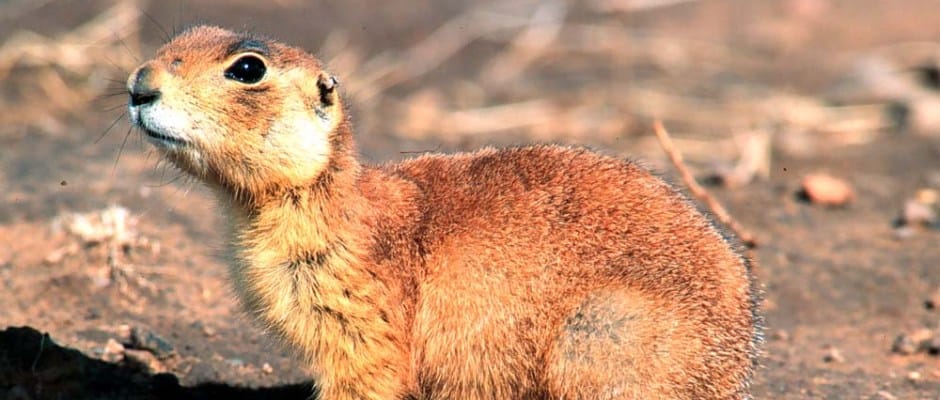
A federal judge struck down protection for a species of prairie dog in Utah last week. U.S. District Court Judge Dee Benson reasoned that since the prairie dog’s range is entirely within Utah, the Commerce Clause of the U.S. Constitution does not apply and any federal regulation is therefore not applicable. The ruling is at odds with several past rulings dealing with species residing entirely within one state and may set up future litigation at higher courts.
Read more at the Washington Post

Travel Grants Deliver High Value for Students

The Wildlife Society recently awarded a total of $7,000 in travel grants to 18 deserving students who had been selected to be presenters at the 21st Annual Conference in Pittsburgh. With that experience now behind them, but the memories and the impact still fresh in their minds, a few of those students shared their insights and their appreciation.

Attending the annual conference provides students with numerous opportunities to not only learn but also to network with wildlife professionals. Franny Buderman’s PhD advisor has often told her that you never know when your future boss will be in the room.

“And this is never more true than at a conference,” the Colorado State University student said. “While it might not be an immediate benefit, going to the annual conference is an investment that should yield future returns.”

For Sonja Leverkus, a PhD candidate at Oklahoma State, the conference provided a unique opportunity for face-to-face networking on a much larger scale than possible at home.

“I live in a very remote part of Canada where there is minimal interaction with wildlife professionals,” she said. “I was able to connect and network with other Canadian biologists whom I may not have ever been able to meet.”

For those presenting research, such as the travel grant winners, the conference provides an excellent forum to practice communication skills and to receive feedback from scientists.

“The conference as a whole provides a great opportunity to receive insightful, critical feedback and to build networks with potential collaborators and employers,” said Shannon Kachel from the University of Washington.

Jacob Bert, a graduate student at Purdue University, said he “was amazed at how approachable everyone was – from senior faculty at highly regard universities to undergraduate students, every person that I met was very approachable and easy to talk to.” He believes that this played a large factor in learning how to effectively communicate his research to other professionals.

For students interested in attending future conferences and/or presenting research, Hsiang Ling Chen from the University of Arizona recommended that you contact people you’d like to work with in advance and “practice, practice, practice!” for your presentation.

Tori Donovan from Laurentian University says, “I strongly recommend entering the conference with an outgoing and eager attitude towards meeting new people.”

In other words, put your best foot forward and be ready to learn, network, and engage!

TWS Travel Grants help students with travel expenses for the annual conference, including transportation, lodging, and meals. Applicants must meet a series of requirements, including that they be a member of TWS, a confirmed presenter at the conference, and that they have not received a travel grant for the previous year. The submission site is typically available during the month of June and applications are accepted for approximately four weeks.

A Gray Wolf in the Grand Canyon?

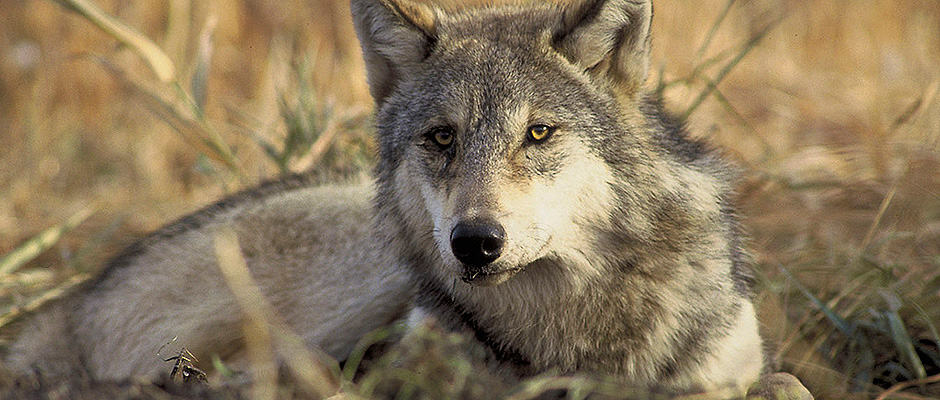
U.S. Fish and Wildlife Service officials are investigating reports of a gray wolf sighting in Grand Canyon National Park—the species hasn’t been seen in the area since the 1940s.
Read more in the Washington Post.

Conservation Funding Wins Big in Midterms

The midterm elections last week proved not only successful for the Republican Party, which now holds the majority in both the U.S. House and Senate, but also for state initiatives on conservation. Voters in several states supported funding initiatives that benefit wildlife and the overall environment.

Six states across the country had proposed different ways to bring in more money for conservation efforts, to the tune of several billion dollars. Five of those measures passed — California, Florida, Maine, New Jersey, and Rhode Island. Below is a summary of each state’s ballot measure.

California: Proposition 1, Water Bond. Funding for Water Quality, Supply Treatment, and Storage Projects

The severe multi-year drought in California led to the passage of a $7.5 billion bond to fund water projects in the state. The inclusion of $2.7 billion for water storage projects that would include dam construction was controversial among many environmental organizations. However, a portion of the bond, around $1.5 billion, will fund the protection and restoration of rivers, lakes, and watersheds. The remaining resources will fund various water projects involving wastewater treatment, desalination, and flood protection.

Source: The Sacramento Bee (November 5, 2014)

Florida: Amendment 1, Florida Water and Land Conservation Initiative

Floridians passed a constitutional amendment that will dedicate 33 percent of funds from the existing real estate tax to conservation over the next twenty years. The estimated billion dollars per year generated from the tax will finance the Land Acquisition Trust Fund to acquire, improve, manage, and restore conservation lands including the Everglades and protect and restore water resources and historic sites. Florida Forever, a conservation land purchasing program that experienced deep budget cuts during the recession, is estimated to receive half of the funds. The Florida Chapter of The Wildlife Society actively supported this initiative and worked as part of a larger coalition to get the measure approved.

Source: Miami Herald (November 4, 2014)

Maine: Question 6, Maine Clean Water and Wetlands Bond Issue

Maine voters approved a $10 million bond to fund projects that ensure clean water, protect drinking water and restore wetlands. In addition to funding improvements for wastewater treatment and drinking water supply sources, a portion of the bond — $5.4 million — will be given to municipalities upgrading road-stream crossings. Maintaining stream crossings is important for mitigating habitat fragmentation. Unblocked and well maintained culverts enable fish, turtles, salamanders, and other species to move safely between watersheds.

Source: Bangor Daily News (October 29, 2014)

New Jersey: Public Question No. 2, Open Space Preservation Funding Amendment

New Jersey voters created a permanent funding source for the state to buy and preserve open space. Four percent of New Jersey’s corporate business tax will now be directed towards the state’s open space program; however, some of this money is being redirected from the state’s Department of Environmental Protection and the maintenance budgets of the state parks and fish and wildlife areas. The proportion of the funding is set to increase from four to six percent of the corporate tax by 2019.

Source: NJ.com (November 4, 2014)

Rhode Island: Question 7, Clean Water, Open Space and Healthy Communities Bonds

Rhode Island voters approved a $53 million bond for environmental and recreational purposes. Of that, $3 million will go towards flood protection including restoring and improving the resiliency of coastal habitats, rivers, and streams, while $15 million will fund improvements and renovations to the Roger Williams Park Zoo. The remaining $35 million will fund clean water and community projects including water pollution abatement infrastructure projects, brownfield remediation projects, and local recreation grants.

Source: Rhode Island

North Dakota: Initiated Constitutional Measure No. 5, Clean Water, Wildlife and Parks Trust

North Dakotans rejected the creation of a Clean Water, Wildlife and Parks Trust, that would have set aside five percent of the state’s oil extraction tax revenue for conservation. The North Dakota Chapter of The Wildlife Society actively supported the initiative. Although the measure failed, it has drawn attention to conservation funding in the state. Governor Dalrymple recently proposed increasing funds to the state’s Outdoor Heritage Fund and the state’s House of Representatives plan to introduce a bill to increase funding for state parks.

Source: Grand Forks Herald (November 5, 2014)

Sources: Ballotpedia, Washington Times (October 30, 2014)