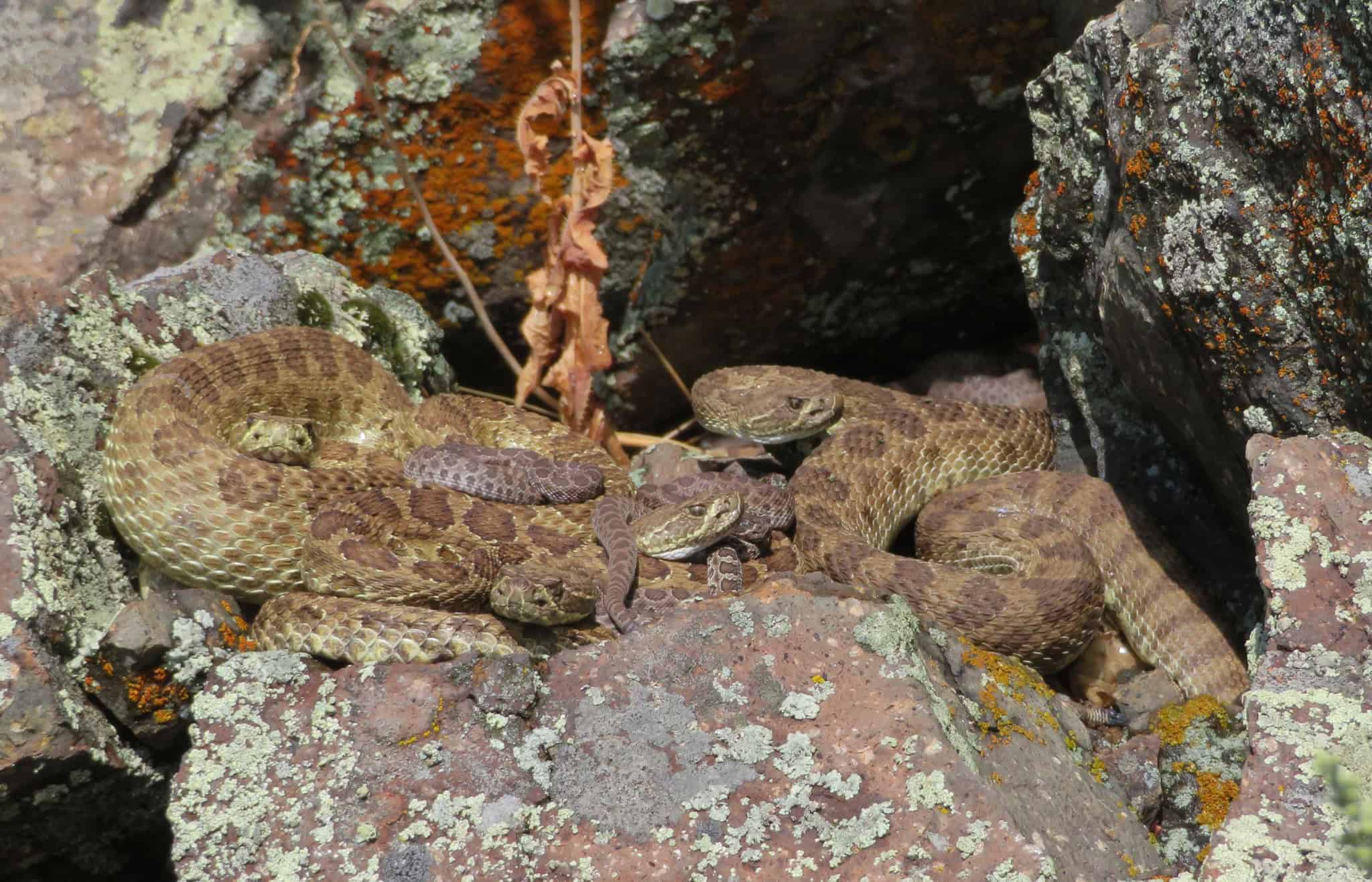
Can a little PR help rattlesnakes’ image?

Are rattlesnakes fearsome venomous predators waiting to ambush every gardener? Do they attack everything that comes within a fang’s reach?

Or are they devoted mothers who play a critical role in working ecosystems?

Public opinions on rattlesnakes can be polarizing, which can often lead to people unnecessarily killing them—as well as some nonvenomous serpents they confused with the pit vipers.

For those looking to protect them, conserving rattlesnakes can be a hard message to sell. But researchers wanted to know whether educational videos might improve public perception and decrease persecution.

“Trying to get people to not kill every snake they saw was our main message,” said Zachary Loughman, a biology professor at West Liberty University in West Virginia.

Many snake attacks on humans don’t happen out of the blue.

“Most of the time when people get bit, it’s when they are trying to kill a rattlesnake,” said Loughman.

Spin battle

He and his colleagues created the educational video above to try to improve public perception of snakes by stressing the role rattlesnakes play in reducing rodents and other pests. Its message is simple, Loughman said. “Snakes eat mice. Mice carry diseases. You get diseases from mice. If you kill snakes, the mice (population) explodes.”

But he and his team weren’t sure this message was the most effective way to increase public empathy for rattlers. So, they began to cue into recent science describing ways in which rattlesnakes may seem more human-like than previously believed. This included discoveries that some rattlesnakes get more agitated and defensive when their young are present, and that when they are out and about, adult rattlers often leave their offspring in places with temperatures the cold-blooded reptiles prefer.

“Herpetologists were hesitant to say ‘parental care’ for a long time,” Loughman said. But, “those are all things that mothers do with kids when they are mammals.”

They made another video, above. Similar in length and narrated by the same grad student, this video focused on the roles that female rattlesnakes play in raising their young. Its message: “Snakes are like us,” Loughman said. “They are good moms. They protect their kids or babies.”

To see which message resonated more with viewers, Loughman and his colleagues posted both videos on social media platforms. In an effort to get a wide range of opinions, they targeted Facebook groups that focused on nature, wildlife, gardening and certain urban centers known to have a lot of rattlesnakes. After watching the videos, the viewers were asked to take a short survey about whether or not their perception of snakes changed.

More than 1,000 people from multiple countries and nearly all 50 states took the survey. In a study published recently in PLOS ONE, the researchers analyzed the responses. Discarding answers from people who said they liked snakes in the first place, the team focused on those who said they didn’t like snakes or were neutral.
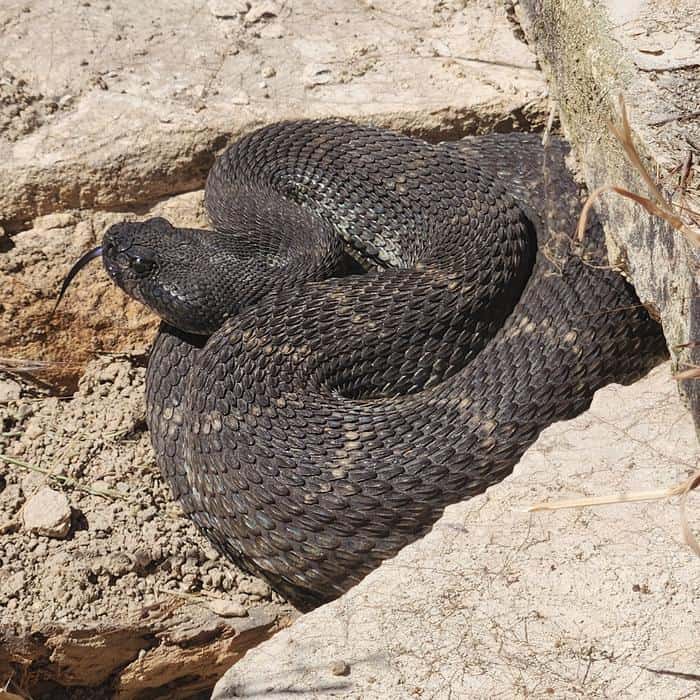
A western rattlesnake (Crotalus oreganus). Credit: Emily Taylor

Demographic differences

Overall, the messages describing snakes’ role in the ecosystem did more to change peoples’ perspectives on snakes than the video concentrating on snake family life.

But the responses varied a lot based on demographics. Women’s opinions on rattlesnakes improved more after watching the family-oriented video. Men were more likely not to change at all after watching either video.

Religious belief also played a role. People identifying as agnostic were more likely to change their opinions than those identifying as following a religious belief.

Age played a role, too. The researchers divided respondents up into generations and found that Generation Z was much more likely to be swayed by the messages than Baby Boomers, Generation Xers or Millennials.

The “silver lining,” Loughlin said, is that “opinion is changing about snakes. Younger people, seem “more open-minded about the creepy-crawly creatures of the world,” he said.

Loughman isn’t sure whether these generational attitudes will stay in place or older people are simply more set in their ways in general. He said he’d be interested to run the same survey in 30 years to find out if Generation Zers became less likely to change their minds later in life and if their views about rattlesnakes became more negative.

But scientific knowledge of snakes has improved a lot in the past few decades. Loughman hopes that some of that trickles down to the public.

“It is important to improve people’s perception of rattlesnakes because they are vilified and despised, which is primarily due to widespread misunderstanding,” said Erin Allison, a PhD student at West Liberty University and a coauthor on the study. “The threat of harm, which is the root of many people’s fear, comes from a lack of knowledge of rattlesnake behavior and natural history.”
Canada authorities find narwhals no longer at risk

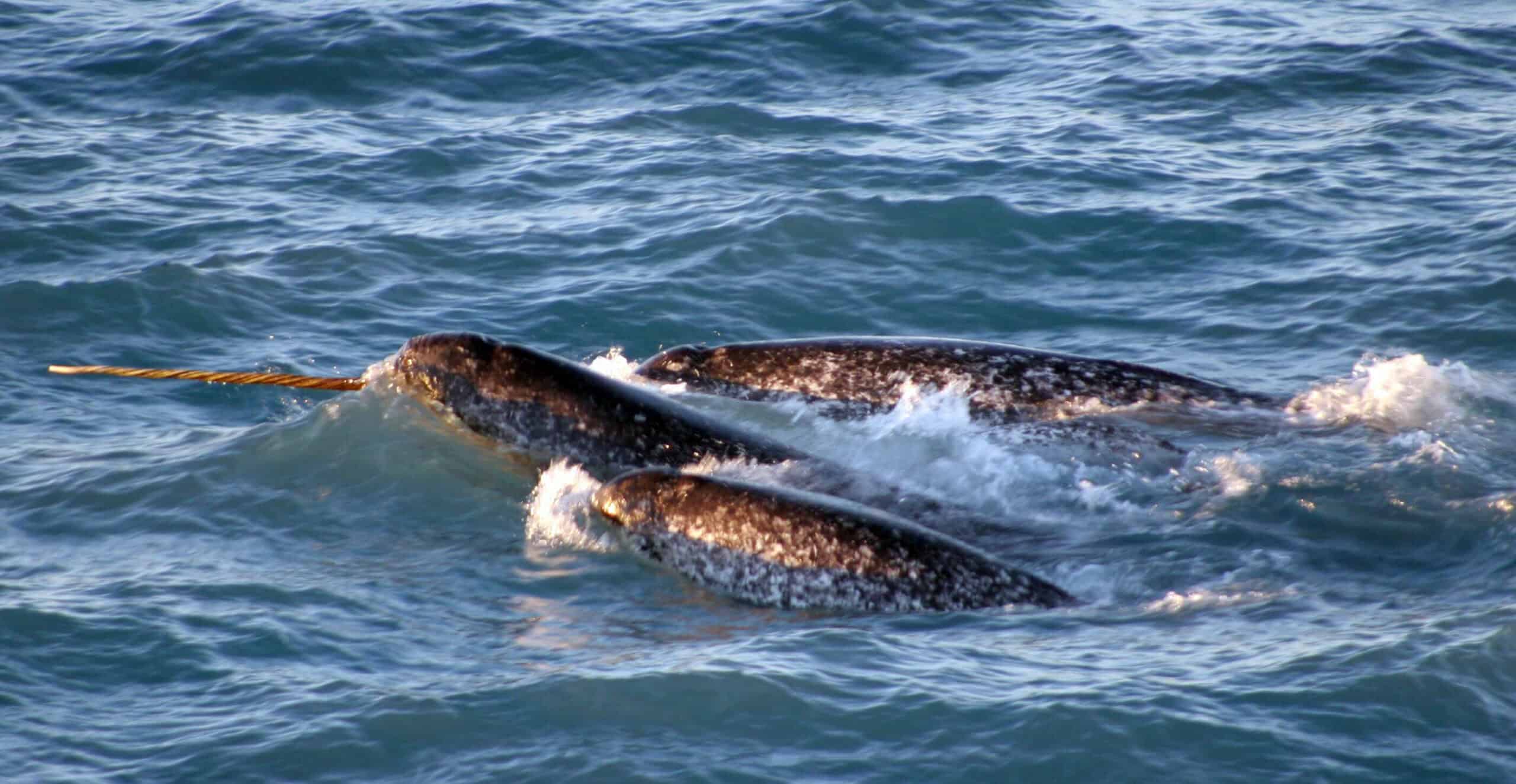
Canadian officials say the narwhal is no longer considered at risk after researchers found the iconic species’ Nunavut population appears to be stable.

Famous for long tusks extending from their heads, the narwhal (Monodon monoceros) faces a number of threats, including the loss of sea ice and increasing boat traffic.

“So far, these whales are proving adaptable, and populations remain stable,” the Committee on the Status of Endangered Wildlife in Canada concluded.

The Nunavut Wildlife Management Board, the Department of Fisheries and Oceans Canada and others have been monitoring the species.

“Narwhal are recognized as a cultural cornerstone by Inuit,” said Jason Akearok, executive director of the Nunavut Wildlife Management Board, in a statement.

“In alignment with their cultural relevance, the Nunavut Wildlife Management Board commits to a thorough examination of scientific insights and Inuit Qaujimajatuqangit [knowledge] from COSEWIC, evaluating their assessment of the Narwhal as ‘Not at Risk,’” Akearok said.

COSEWIC considered the conservation status of 12 species. Among them were the Kirtland’s warbler (Setophaga kirtlandii) and gray-headed chickadee (Poecile cinctus), which were both assessed as endangered. Both species are believed to be threatened by climate change. The tiny Blanchard’s cricket frog (Acris blanchardi)—not documented in Canada since 1977— was assessed as extirpated.

The assessment also considered eight other species, included plants and invertebrates.

“There is good news and bad news for Canadian wildlife,” said committee chair David Lee. “Some species are doing better than predicted, some are struggling and some are sadly gone. Ongoing efforts are needed to ensure those we steward have a future.”

Read more from COSEWIC.

Wild Cam: Grizzlies tolerate tourists when salmon are scarce

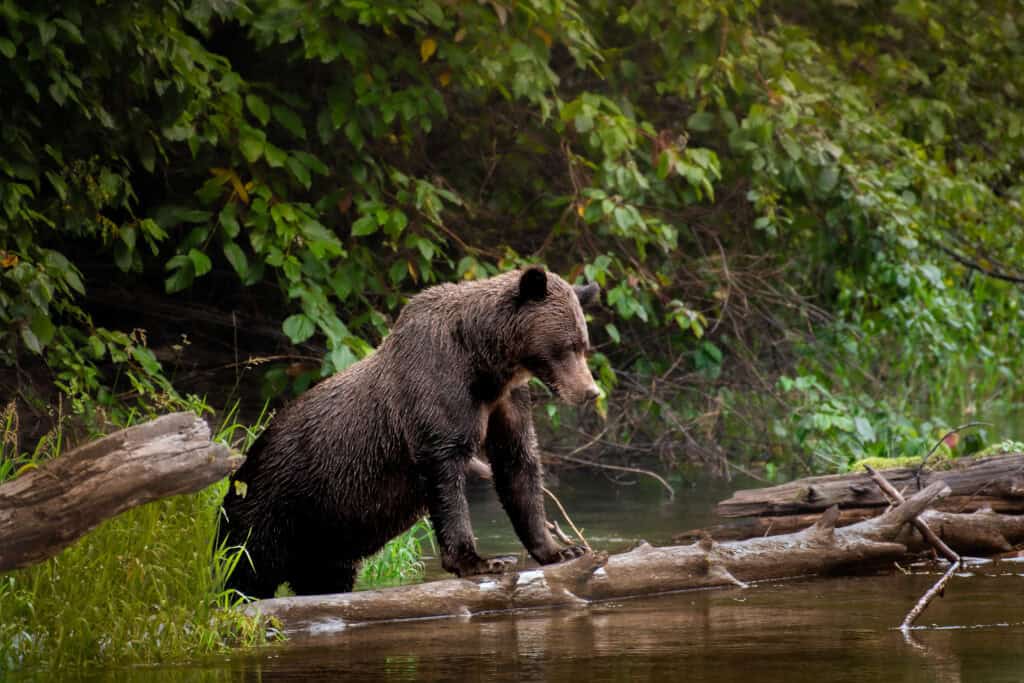
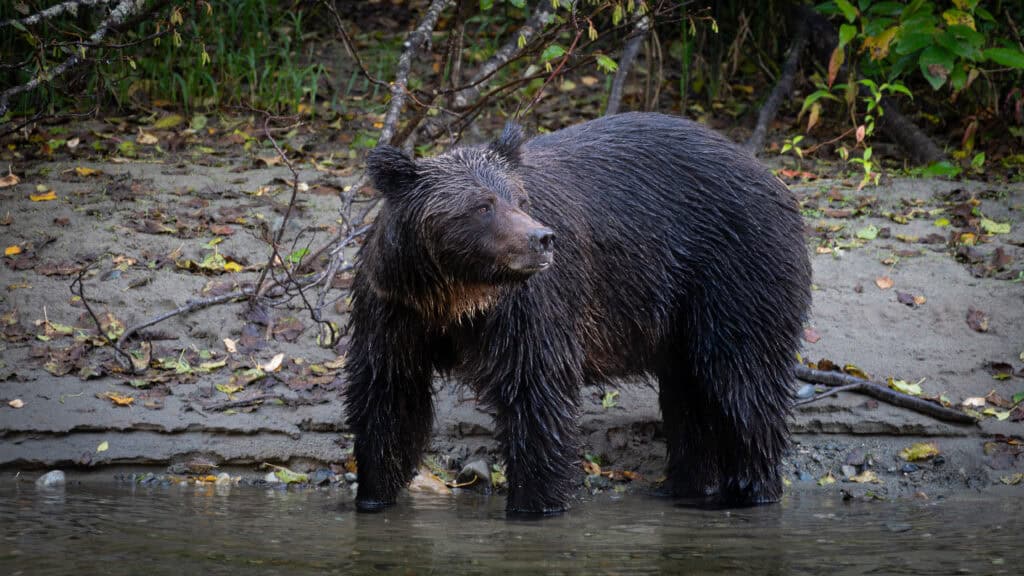
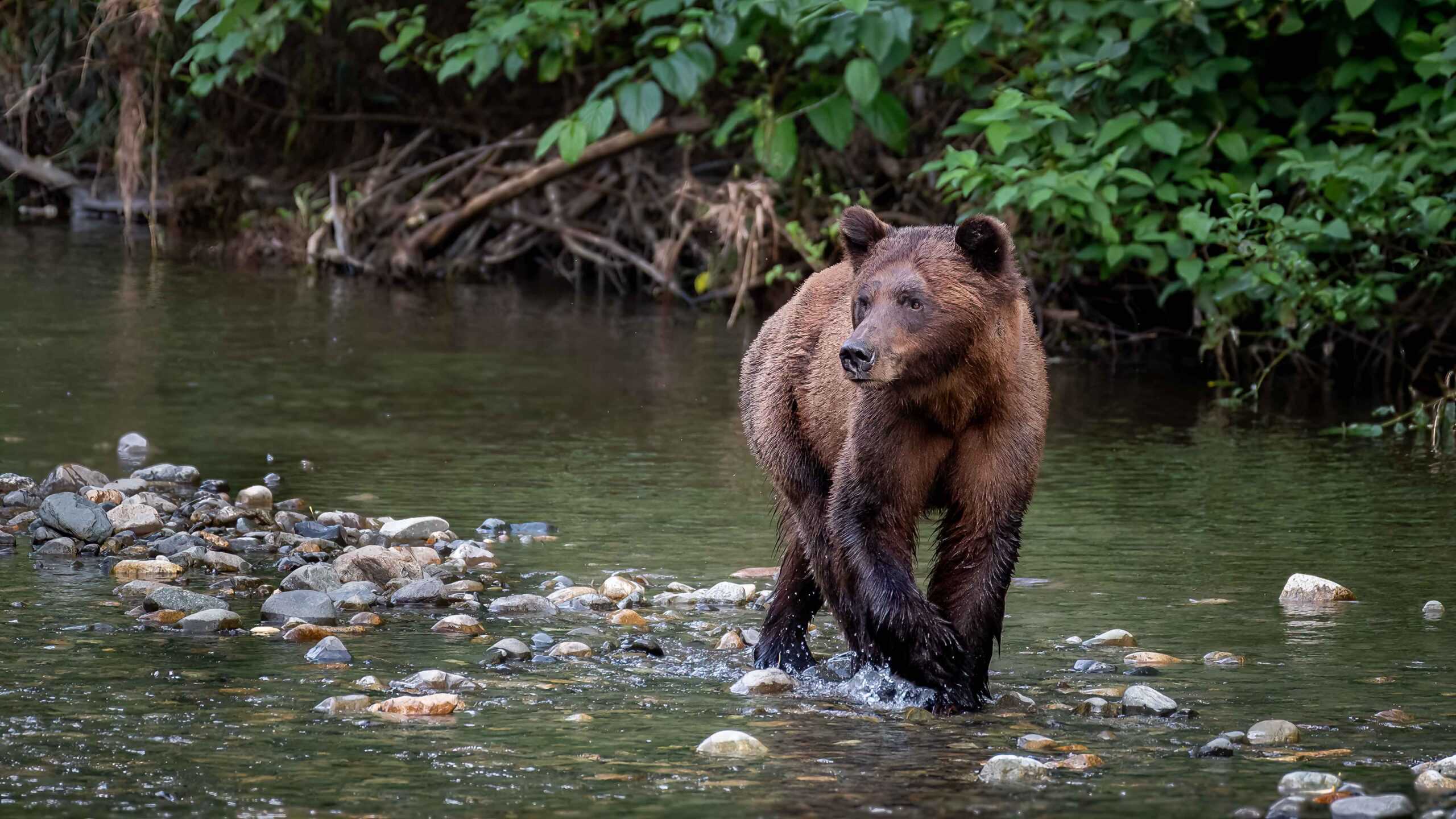
For grizzlies in parts of British Columbia, tourists are easier to tolerate when the bears are hungry—but not for the reason you’re probably thinking.

Wildlife managers from the Nuxalk Nation and British Columbia Parks wanted to see how tourism might be affecting bear behavior at popular viewing areas. To look for solutions, they worked with researchers to examine whether increasing numbers of visitors were affecting bears on the Atnarko River.

The researchers found that grizzlies (Ursus arctos horribilis) tended to avoid tourists except for times when salmon was in short supply.

“The strongest patterns linking human activity and bear activity were linked to salmon abundance,” said Kate Field, a PhD candidate at the Raincoast Applied Conservation Science Lab at the University of Victoria in British Columbia and the lead author of the study published recently in Conservation Science and Practice.

The researchers conducted field seasons in the summer and fall of 2019, 2020, and 2021 in Tweedsmuir Provincial Park, which is in Nuxalk Territory on the central coast of British Columbia. They set up trail cameras at various places where bears typically feed on salmon, including those near popular tourist viewing sites. The tourism season occurs in the pre-hibernation period when bears need to eat abundant salmon to stay healthy.

Credit: Emina Ida

Risk versus reward

They found that grizzly bear activity was affected by ecotourists in diverse ways that depended on how many salmon were present in the ecosystem. Bears were more likely to tolerate tourists when the fish were less available. This is likely because the bears don’t have much choice in the matter, Field said. They take the calculated risk of getting near humans because of the potential rewards.

“In a context of scarce salmon and high visitor numbers, bears have a choice: stay with a crowd of people and eat, or move and possibly forgo a meal,” says Field, “A low-food, high-human condition isn’t ideal for some bears that are less tolerant of people.”

When salmon was more abundant, however, many bears chose to avoid areas with lots of tourists—especially those less tolerant of people.

“When food resources across their range were high, when salmon were high, we saw a decrease in [bear] detections at the sites with many people,” Field said.

Females with cubs were more likely to be detected during daylight hours and when there were more people, the analysis showed. Field said this suggests a human shield effect. However risky people may seem to some bears, they may present a lower risk than male grizzlies, which sometimes kill cubs in an effort to coerce females to mate with them.

“We can use tools in wildlife ecology to understand how animals perceive people as one way, among many, to guide coexistence in the context of grizzly ecotourism” Field said.

Credit: Emina Ida

The findings could help officials manage human disturbance when food is less available to bears. The highest number of tourists occurred at a site not formally designated for bear viewing, and can be associated with less predictable human behavior, Field said. When salmon numbers are lower, it might be worth limiting visitation in some areas to give the bears a break.  

But those tourists also provide benefits, whether the grizzlies know it or not. Bear viewing not only provides a source of revenue for communities, Field said. “It provides people an opportunity to foster a relationship with wild places.”

Credit: Emina Ida

Giant pangolins rediscovered in Senegal after quarter century

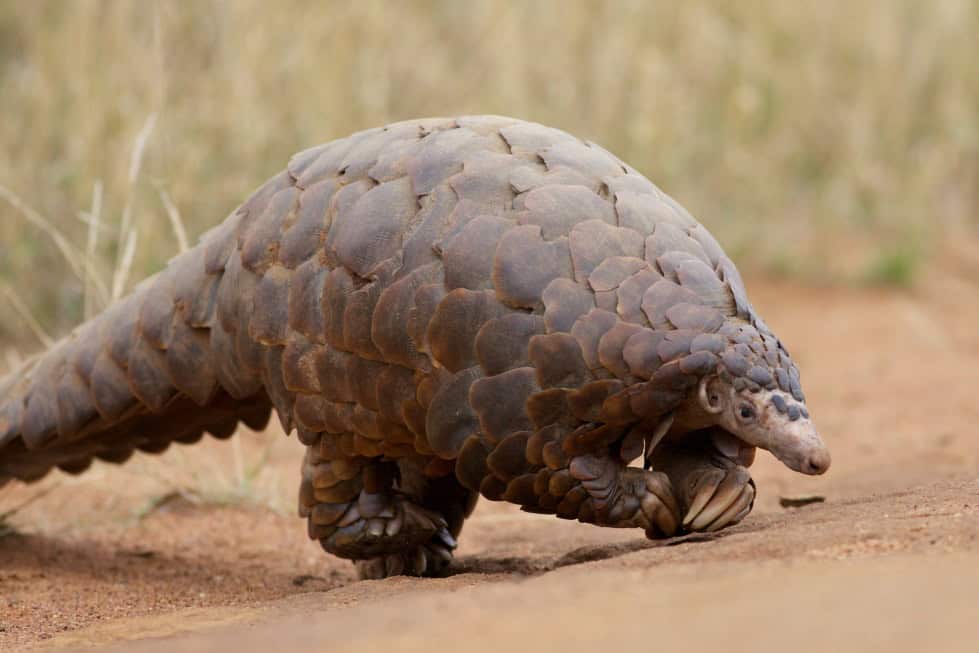
A large-scale camera trap survey in Senegal has revealed the first confirmed sighting of a giant pangolin since 1999. Researchers in Niokolo-Koba National Park found camera trap images of the giant pangolin (Smutsia gigantea) in 2023 during a larger study in the area.

The giant pangolin is one of many species in the area believed to have disappeared from parts of their former range. One researcher told New Scientist that finding the species in the park was a surprise. The giant pangolin is considered endangered by the International Union for Conservation of Nature due to factors like habitat loss and overharvesting for their parts for the illegal wildlife trade.

“Such rediscoveries not only underscore the importance of systematic biodiversity inventories, but also the critical value of West Africa’s large protected areas,” the authors wrote in the African Journal of Ecology.

Read the study in the African Journal of Ecology.

Parasitic worms are killing western moose

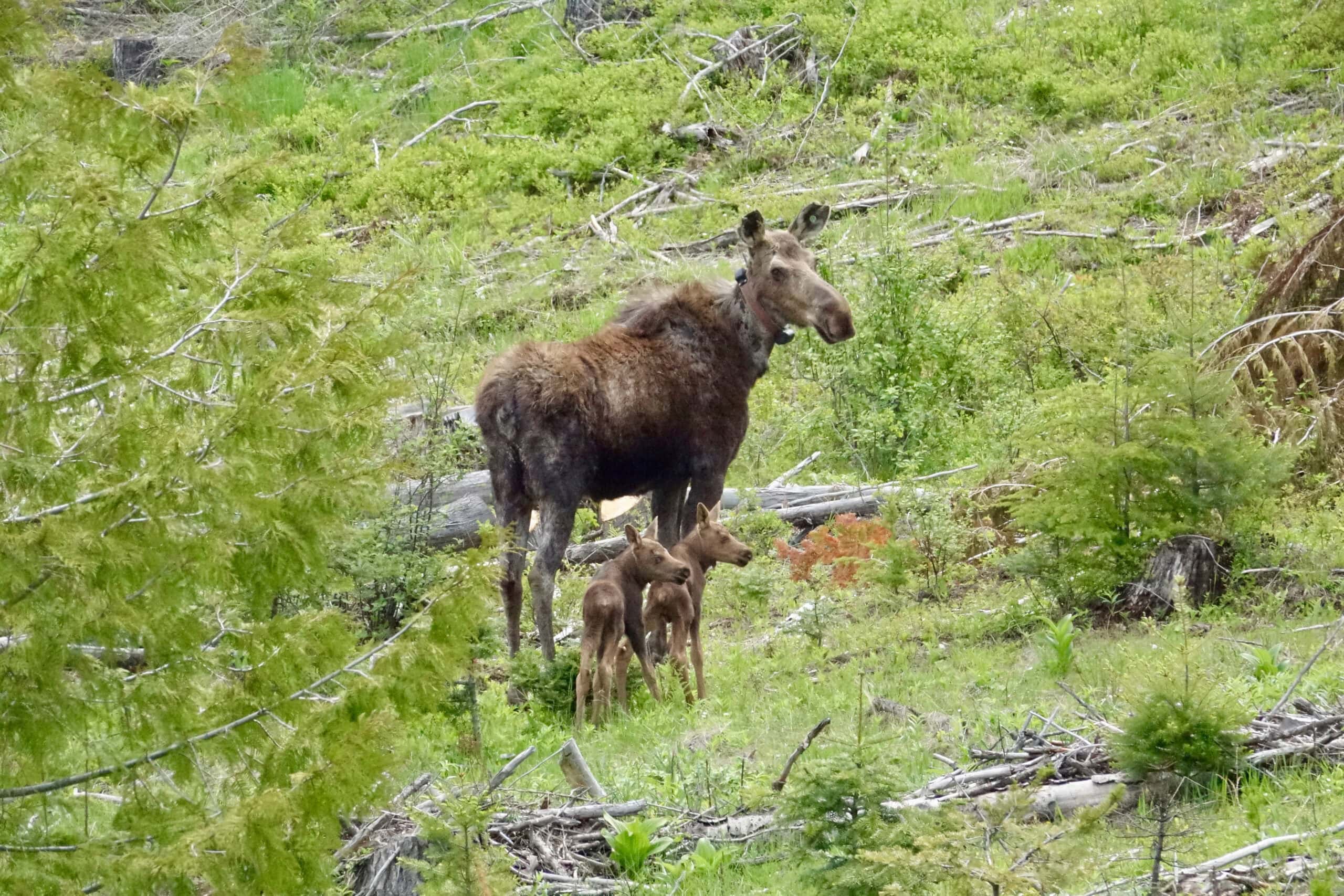
The sheer size of a moose can be daunting for predators to take down, but little creatures like ticks can be deadly. In some Western states, researchers have found an even smaller threat that may be reducing moose populations—microscopic, parasitic worms that are “shot-gunning” their brains.

Biologists looking into moose (Alces alces) declines in parts of Idaho found many of the animals had high numbers of adult parasitic roundworms—Eleaophora schneideri—in their carotid arteries, which supply blood to their brains. When they looked further, the scientists found that the blood vessels in the brains of affected moose were riddled with the worms’ microscopic offspring—or microfilariae—leaving lesions that can affect the ungulates’ behavior.

“Moose are dying for a variety of reasons, but this was a relatively consistent finding,” said Kyle Taylor, a pathologist at Washington State University’s Washington Animal Disease Diagnostic Laboratory and an author on the recent study published in the Journal of Wildlife Diseases.

The findings may point to why some moose in the region appear to mysteriously fall over and die with no apparent cause. “The microfilaria are just scattered throughout their brains, and even though the damage from each is miniscule, they’re basically shot-gunning the whole brain,” Taylor said.

The study was part of a three-year project funded by the Idaho Department of Fish and Game to better understand moose mortality. Moose in Idaho—as well in much of North America—appear to be declining, but the causes are numerous.

“Moose find a lot of different ways to die,” said Janet Rachlow, professor of wildlife ecology at the University of Idaho, who led the project.

Moose predation in Idaho appears to be low, but the ungulates have plenty of other threats to contend with, whether cars and trains or winter ticks. The impact of winter ticks on New England moose has gotten a lot of attention—the ticks can devastate calf numbers, and outbreaks appear to be on the rise due to climate change. But winter ticks also affect moose in Idaho, Rachlow said.

The warming caused by climate change likely benefits arterial worms, too, and it may impact the landscapes that moose favor.

“Any one on its own may not be the factor that tips moose over the edge,” Rachlow said, “but the effect of the combination is something to be concerned about.”

The latest study is the first to pinpoint the physical effects of the worms, but it’s not the first to suggest that the parasites may be killing moose. In an October 2023 study in the Journal of Wildlife Diseases, biologists in Montana correlated the presence of arterial worms—especially in high numbers—with the likelihood of moose deaths, but they couldn’t determine why.

“I was very excited to see the study from Idaho dive a lot deeper into those mechanisms of how these worms might be affecting moose,” said Nick DeCesare, research biologist with Montana Fish, Wildlife and Parks and lead author of the 2023 study.

Geography seems to play a role. In the Montana study, moose in the northwestern part of the state were less likely to be infected. In the more recent study, only moose in southeastern Idaho were infected. That makes sense, researchers say. The worm’s natural hosts include mule deer (Odocoileus hemionus), which are little affected by the parasite and are more plentiful in the southern parts of both states than they are in the north. The parasites are spread by horse flies and deer flies, which feed on both moose and deer.

Taylor suspects the brain damage caused by the worms may lead to reduced fitness, which could increase the risk of predation or more directly cause death. His team analyzed necropsy samples from 61 recently deceased Shiras moose (A. a. shirasi)—the smallest moose subspecies in North America—between March 2020 and July 2022. They found the roundworm in 10 of 20 adult moose taken from southeastern Idaho. Nine had both worms in their arteries—where they can measure 4.5 inches long—as well as microfilariae in their brains, and in some cases their eyes, tongues and major organs.

Most affected moose had brain lesions related to the worms, and in some cases, blocked blood vessels similar to those that can cause strokes. Three infected moose had cropped ears associated with infection. Some were seen behaving strangely.

“Not all of the moose in the study were observed prior to death, but we did have a couple moose that had some abnormal behaviors,” said co-author Christine Haake, an anatomic pathology resident at the Washington Animal Disease Diagnostic Laboratory.

Infections can also lead to blindness.

“Wildlife are full of parasites,” Rachlow said, “but being able to connect the dots from those parasites to the cause of mortality of individuals, that’s what’s really interesting about the paper.”

Salmon expand range into warming Arctic

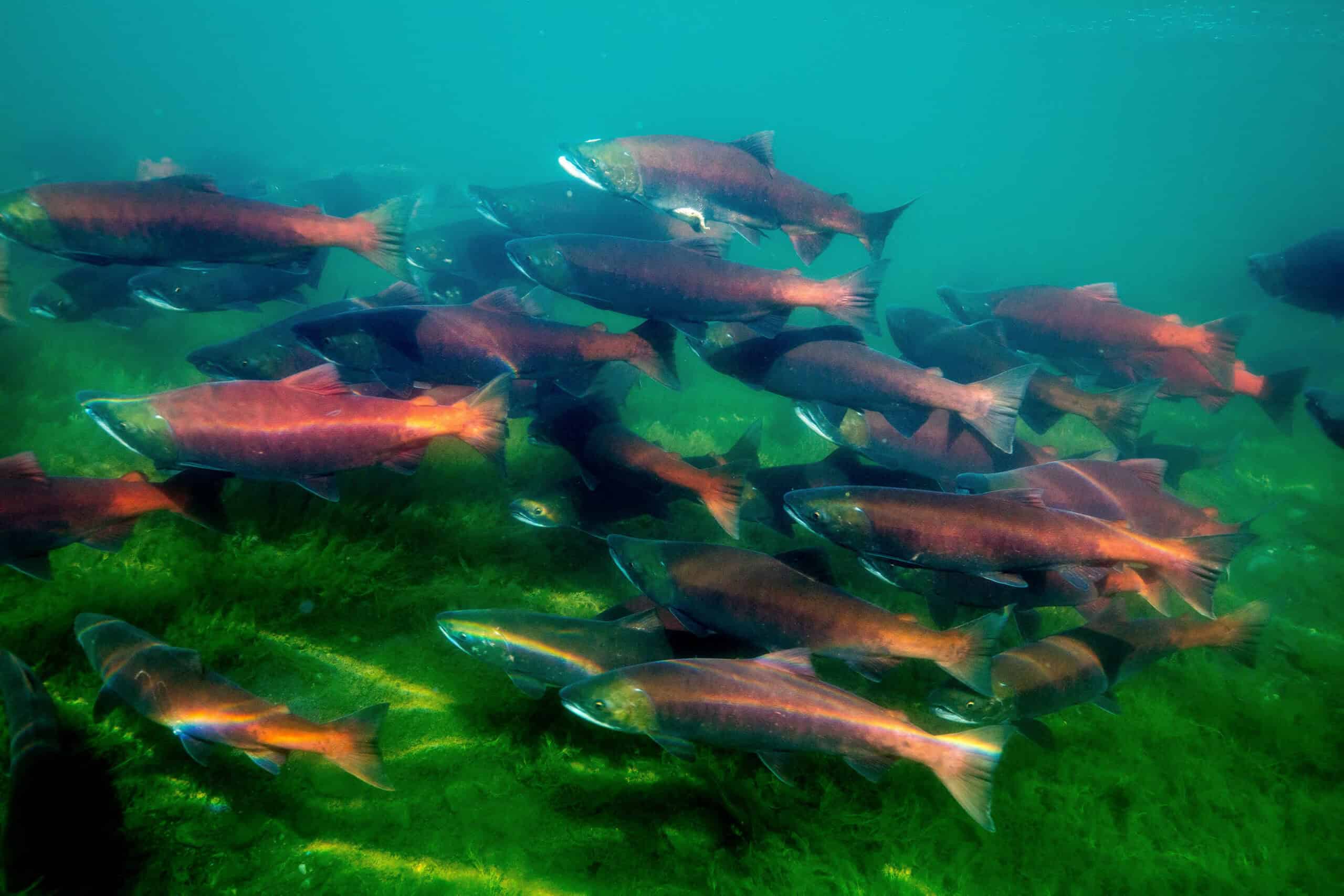
Warming ocean temperatures are increasing Pacific salmon abundance in the Canadian Arctic. Researchers say the growing number is an indicator that climate change is creating new corridors for the fish to expand their range.

Salmon haven’t historically been seen in large numbers in the Arctic, but incidental catches by subsistence fishermen have occasionally surged in recent years. Researchers working with communities in the western Canadian Arctic connected those booms with of warm, ice-free conditions in the Arctic Ocean north of Alaska.

The study, published in Global Change Biology, identified a two-part mechanism tied to the presence of salmon in the Canadian Arctic. Warm late-spring conditions in the Chukchi Sea, northwest of Alaska, drew salmon into the Arctic. When those warm conditions persisted in the summertime Beaufort Sea, northeast of Alaska, salmon could continue to Canada.

“You need both gates to be open, which is fascinating in itself,” said Curry Cunningham, an associate professor at the University of Alaska Fairbanks’ College of Fisheries and Ocean Sciences. “If they don’t align in terms of having open, ice-free water, salmon don’t turn that corner.”

Frankie Dillon, an Indigenous fisherman who helps conduct fish surveys for Fisheries and Oceans Canada, remembered seeing his first salmon in about 2010 on the Big Fish River in the northern Yukon.  “I had to ask, ‘What kind of fish was that?’” Dillon said. “It’s the first time I’d seen it in my life. I’d only seen them on TV before.”

Salmon sightings have become more frequent in the years since then, and climate models predict the conditions that allow salmon to migrate through the Chukchi and Beaufort seas will become common as early as the 2040s.

Read the study in Global Change Biology.

JWM: For barn owls, roads disrupt country living

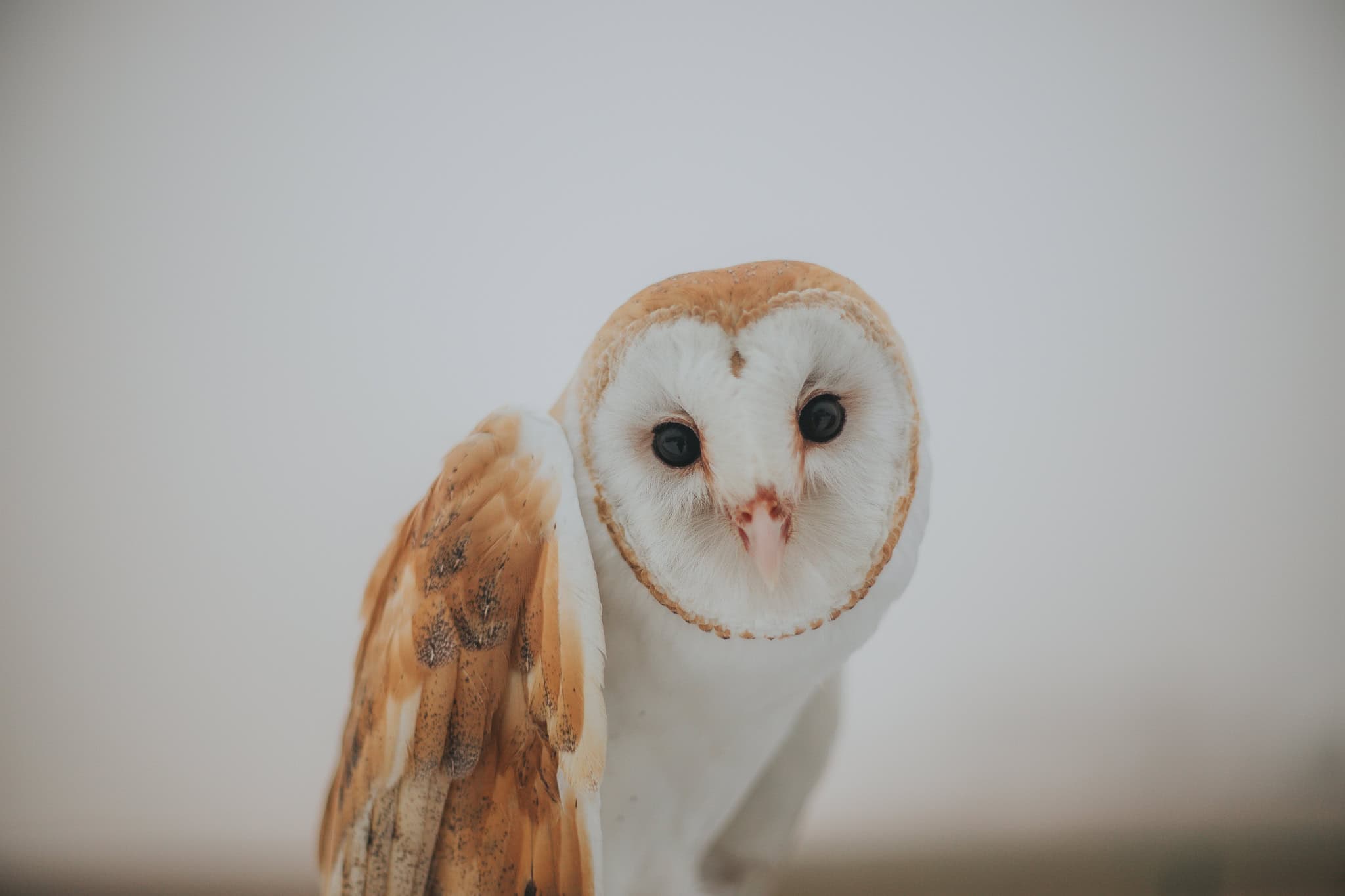
As Idaho’s Treasure Valley booms, residential development isn’t just on the rise for people. Barn owls have gotten a lot of new housing, too. But all the new development could carry costs for the owls, researchers found, especially when it comes to roads.

“Road mortality is such a huge thing affecting barn owls around the world,” said researcher Brian Busby. “In lots of places around the world, barn owls are declining.” That’s not the case in Idaho, where barn owl (Tyto alba) populations are thriving, but collisions with vehicles still take a toll.

One of five counties on the outskirts of Boise that make up Treasure Valley, Canyon County has seen a boom in urban growth. The region’s population of nearly 900,000 makes it the third largest metro area in the Pacific Northwest, and it’s rising numbers have made Idaho the second-fastest-growing state in the country. Since 2000, Canyon County’s residential population has more than doubled.

But the county has also seen a boom in nest boxes for barn owls. That has given Busby and other researchers at Boise State University a rare chance to study hundreds of next boxes and see how the owls are faring.

The nest boxes came thanks to Canyon County Weed and Pest Control. The agency launched a program encouraging farmers to put up the boxes to provide natural rodent control. The owls can be pretty effective. Researchers in California’s Napa Valley found a breeding pair of barn owls could remove 1,000 rodents during a season. Their work comes without the side effects of other pest control measures, like rodenticides and lead-based ammunition, which can end up poisoning other species.

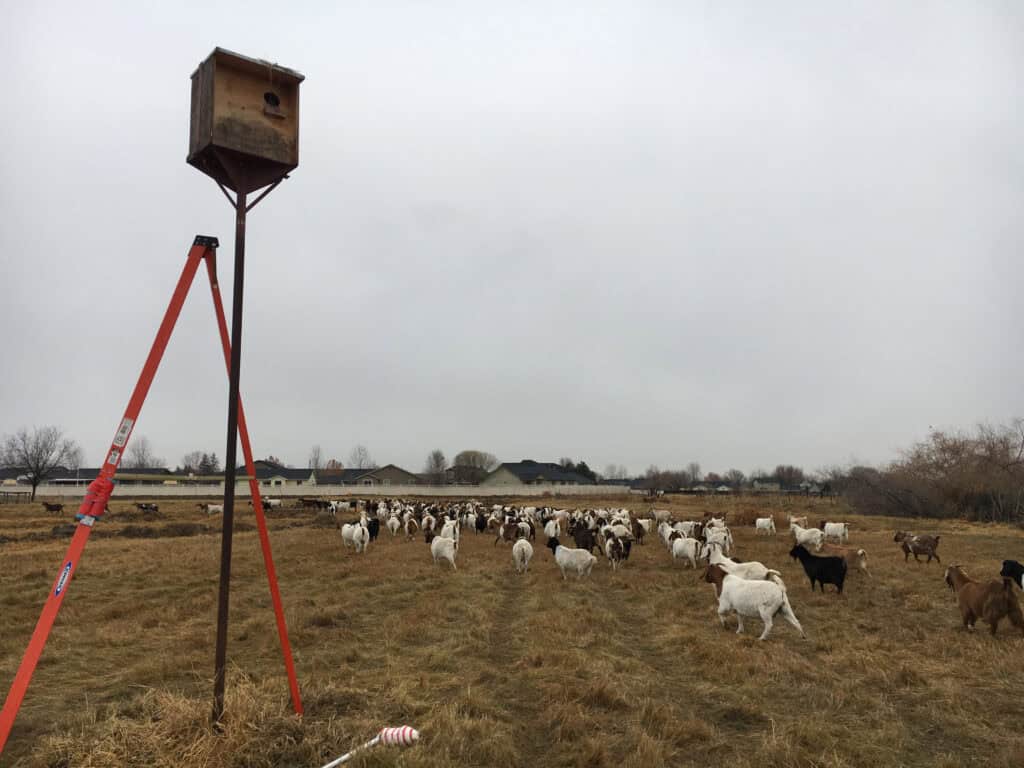
Goats graze beneath a barn owl nest box in Canyon County, Idaho. Credit: Brian Busby

Canyon County’s program was a hit. Residents hoisted more than 300 nest boxes, providing homes to a species that historically nested in Idaho’s rugged canyons. “People really got into it,” Busby said. “Not only farmers but people who loved birds and wanted boxes in their backyard.”

Barn owls have a delicate relationship with their human neighbors. As their name suggests, they have taken advantage of the spread of agriculture around the world. The species nests in barns and other buildings throughout every continent except Antarctica. That adaptation has allowed the raptors to thrive in human-dominated environments and occupy landscapes they previously avoided.

But while the birds have taken to country living, cities are more threatening and roads can be particularly problematic. When the raptors sweep over roadways in search of prey, it can lead to fatal collisions with passing vehicles.

“Barn owls are hit more in Idaho than anywhere else in the world, based on previous research at our lab,” Busby said. In a 2012 study published in the Journal of Wildlife Management, researchers Than Boves and Jim Belthoff—Busby’s advisor—estimated that up to six barn owls are killed per kilometer per year on some sections of Interstate 84 through southern Idaho.

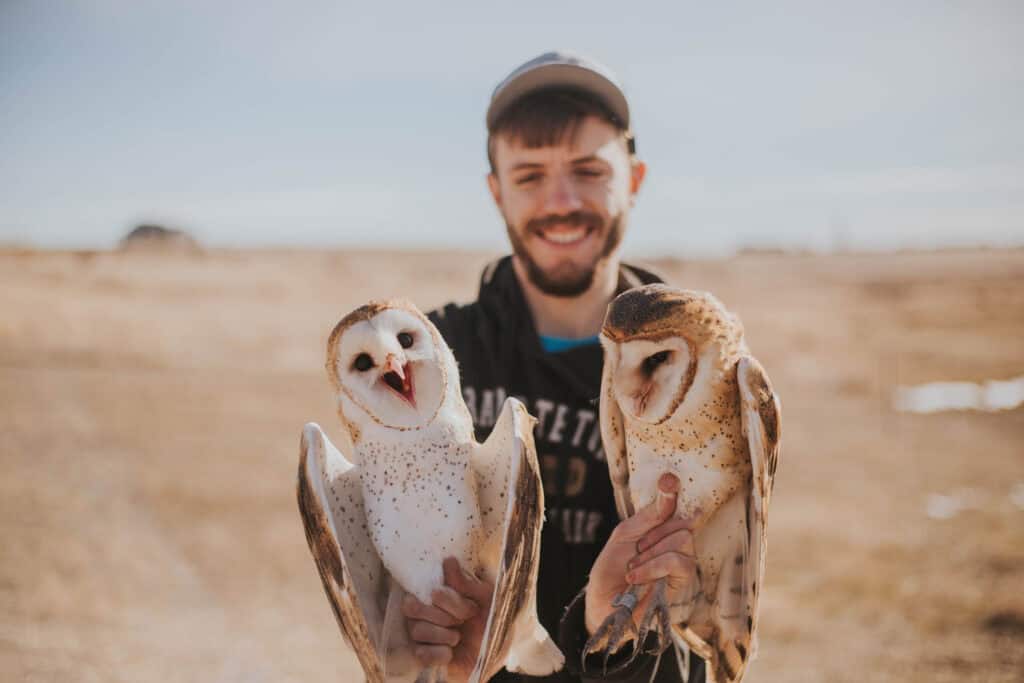
Researcher Brian Busby holds a pair of barn owls. Credit: Amanda Hancock

As part of his master’s thesis, Busby wanted to know how the presence of roads affected nesting. In a study published this month in the JWM, he and his lab monitored Canyon County’s nest boxes during the 2020 and 2021 breeding seasons.

They found that overall, barn owls occupied over 60% of the boxes, but the owls preferred to be away from roads. Boxes 500 meters off a road were over 90% likely to be occupied. Within 100 meters, the probability was cut in half.

It wasn’t just occupancy that was affected. Nests close to roads were likely to produce one fewer fledgling than those farther away.

“Basically, the boxes that were closer to roads were not only less likely to be occupied, but if they were occupied, they were producing less young,” Busby said. That could be because traffic noise or passing cars distract owls from caring for their young, he said, or it could be that less experienced pairs are relegated to these less desirable nests. Road mortality may also play a role, he said.

Biologists in Switzerland recently reached similar conclusions. In a study published in the August issue of Global Ecology and Conservation, researchers studying nearly 400 nest boxes placed on farms on the Swiss Plateau since 1993 found that barn owls surrounded by agricultural fields were more likely to be occupied and have higher fledgling success than those in more developed areas. “These insights show barn owls’ high reliance on the agricultural landscape surrounding their nesting sites,” the researchers concluded.

That doesn’t mean that people close to roads shouldn’t put up nest boxes, Busby said. But for farmers and others with large properties, choosing a site farther from roads will probably be more successful.

“Put it out in the field,” he said. “Give it some more distance.”

This article features research that was published in a TWS peer-reviewed journal. Individual online access to all TWS journal articles is a benefit of membership. Join TWS now to read the latest in wildlife research.

Aging one-eyed wolf has 10th litter

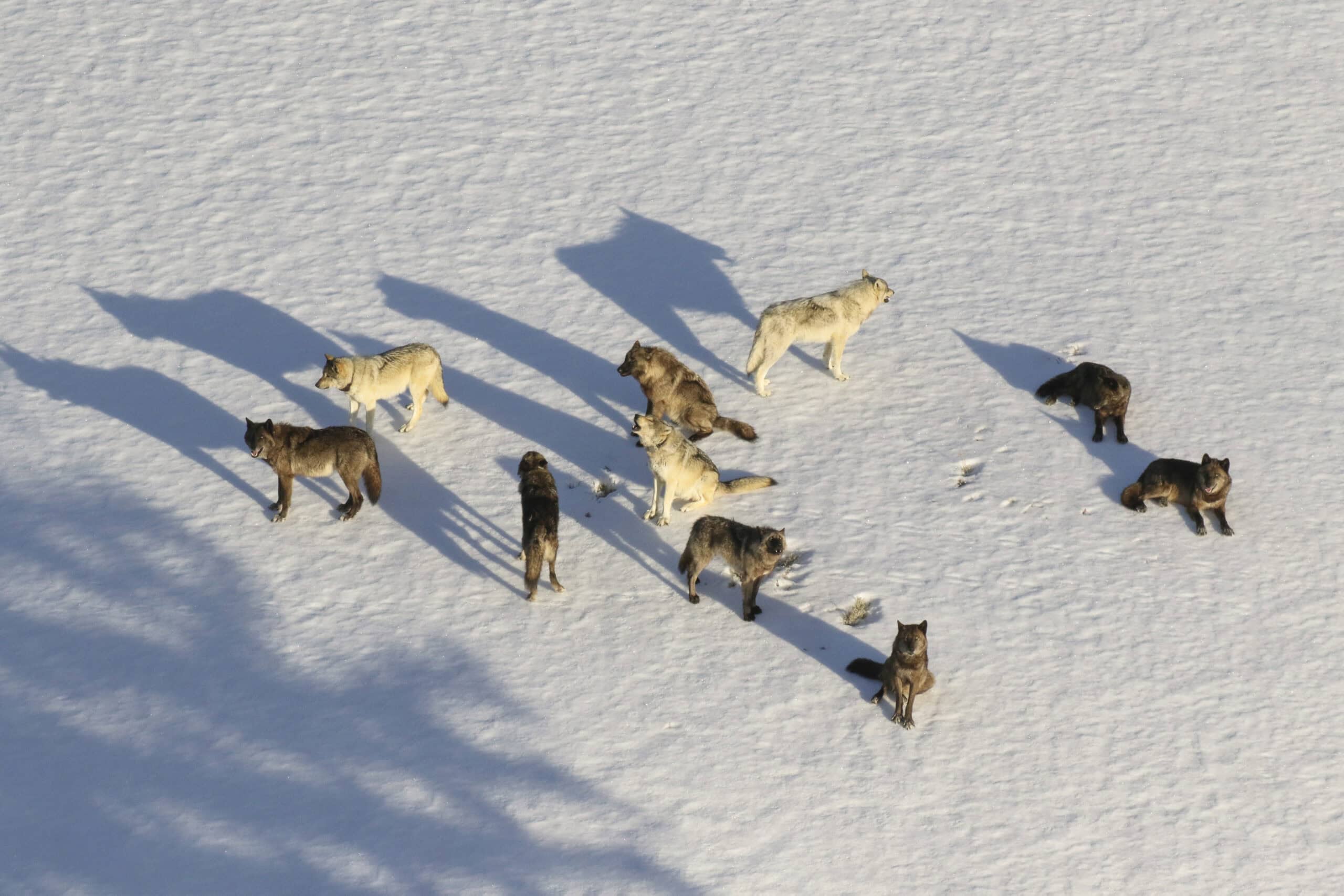
At 11 years old, it’s unusual enough that Yellowstone’s one-eyed wolf known as 907F is still alive. But she recently gave birth to her 10th litter—a feat not previously documented in the park.

“Every day, I expect that she might die just because she is so elderly, but I’ve been thinking that for the last few years, and she keeps going,” Kira Cassidy, a research associate at the Yellowstone Wolf Project, told Live Science.

Gray wolves (Canis lupus) typically live just three or four years. Yellowstone’s longest-living wolf survived more than 12 years. Typically, Yellowstone wolves are killed in competition with other wolves.

Wolf 907F is the alpha female of the Junction Butte pack. The pack’s large size—between 10 and 35 individuals—reduces the threat from competing packs, Cassidy said.

Researchers have counted three pups in her current litter.

“The fact that 907 is still having pups is amazing, and her litter being small is expected given that she is so old,” Cassidy said.

Read more from Live Science.

Wildlife Vocalizations: Mitzi Reed

Wildlife Vocalizations is a collection of short personal perspectives from people in the field of wildlife sciences.

It may be a little cliche, but the best advice I give to the youth that I have had the pleasure to work with is to “do what you enjoy to do”!

I’m a big believer in doing something you love because when you love it, it is not work. Having an interest in something only fuels your want to learn more about it.

Speck, a speckled kingsnake (Lampropeltis holbrooki) and I give a talk on the introduction of native snakes with June 2017 Choctaw Youth Conservation Corps students Damien Mesteth, Beeman Farmer, Cy McMillan, Xena Willis, Benjamin Baccus and Isias Joe. The talk took place at the Nanih Waiya Cave Mound, a culturally significant site for the Mississippi Choctaws. Credit: Tim Pauls

I use the same story all the time. When I speak to youth, I tell them that I used to check the same book out of the library (yes, I’m revealing my age a little) so much that I wore the book out. Eventually, my mom presented me with the same book. It happened to be a snake identification book, and now I’m called, texted, or messaged almost daily with questions on snakes.

When speaking one-on-one with these students, I tie in real-life situations along with this advice to show that it applies in everything they come into contact with. Whether it be the outdoors, athletes, music, arts or even academics, putting your all into something gives you returns that cannot be taken from you.

The rewards of accomplishing so much based on your own motivation is worth more than what someone else can reward you with.

I end all my youth talks with the same phases: “Love what you do, learn all you can about it, have fun, and don’t be afraid to get dirt on your hands!”

Wildlife Vocalizations is a collection of short personal perspectives from people in the field of wildlife sciencesLearn more about Wildlife Vocalizations, and read other contributions.

Submit your story for Wildlife Vocalizations or nominate your peers and colleagues to encourage them to share their story.

For questions, please contact tws@wildlife.org.

Removing debris as part of beaver (Castor canadensis) damage remediation on the outflow structure of a retention pond. Credit: Mitzi Reed

New Jersey seeks to remove bald eagles, ospreys from endangered list

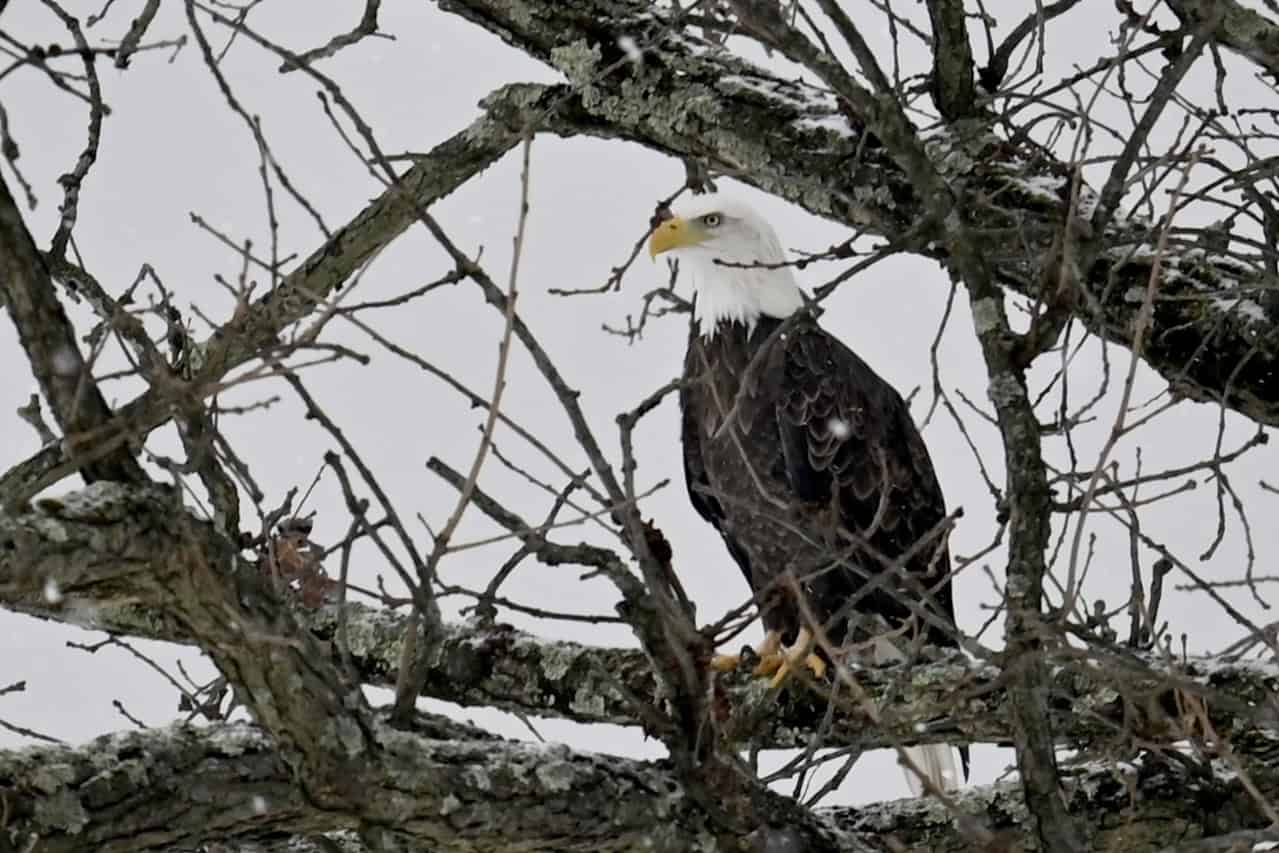
New Jersey officials are proposing to remove bald eagles and ospreys from the state endangered species list. In a proposal published June 3, state Department of Environmental Protection officials say both birds’ populations have recovered to the point where their survival is no longer in jeopardy.

“The de-listing of eagles and ospreys is a milestone in the history of wildlife conservation in New Jersey and is a testament to the dedication of DEP professionals and volunteers who over the years stood watch over nests in all forms of weather, nurtured hatchlings, and worked tirelessly to educate the public about the importance of sustaining wildlife diversity,” said Environmental Protection Commissioner Shawn M. LaTourette, in a statement.

New Jersey’s bald eagle population has rebounded since the early 1980s, when the use of the pesticide DDT reduced the population to just one nest. In 2023, biologists counted a record 267 nesting pairs in the state.

Also affected by DDT, osprey nests dwindled to about 50 by the early 1970s. Last year, biologists for documented a record 800 nests.

“The recovery and de-listing of bald eagles and ospreys is a huge milestone for our state,” said Chief Kathy Clark, chief of the state Endangered and Nongame Species Program. “Many people have worked for years and decades to bring these species back from the brink, including biologists, volunteers, and all those who protect and steward habitat for rare wildlife.”

In addition to delisting bald eagles (Haliaeetus leucocephalus) and ospreys (Pandion haliaetus), New Jersey plans to downlist the bobcat (Lynx rufus) from endangered to threatened. Thirty species would see greater protections, including the green sea turtle (Chelonia mydas), tri-colored bat (Perimyotis subflavus), rusty-patched bumble bee (Bombus affinis) and King rail (Rallus elegans).

The proposed rule is open for public comment until Aug. 2.

Read more from the state of New Jersey.