Citizen Scientists Build Online Mammal Atlas in Pennsylvania

What kinds of mammals live in your backyard?

If you’re in Pennsylvania, a new website powered by citizen scientists’ photos may be able to tell you.

“The general public can go and look to see what might be in their county,” said Lindsey Heffernan, coordinator of the website, the Pennsylvania Mammal Atlas, for the Pennsylvania Game Commission (PGC).
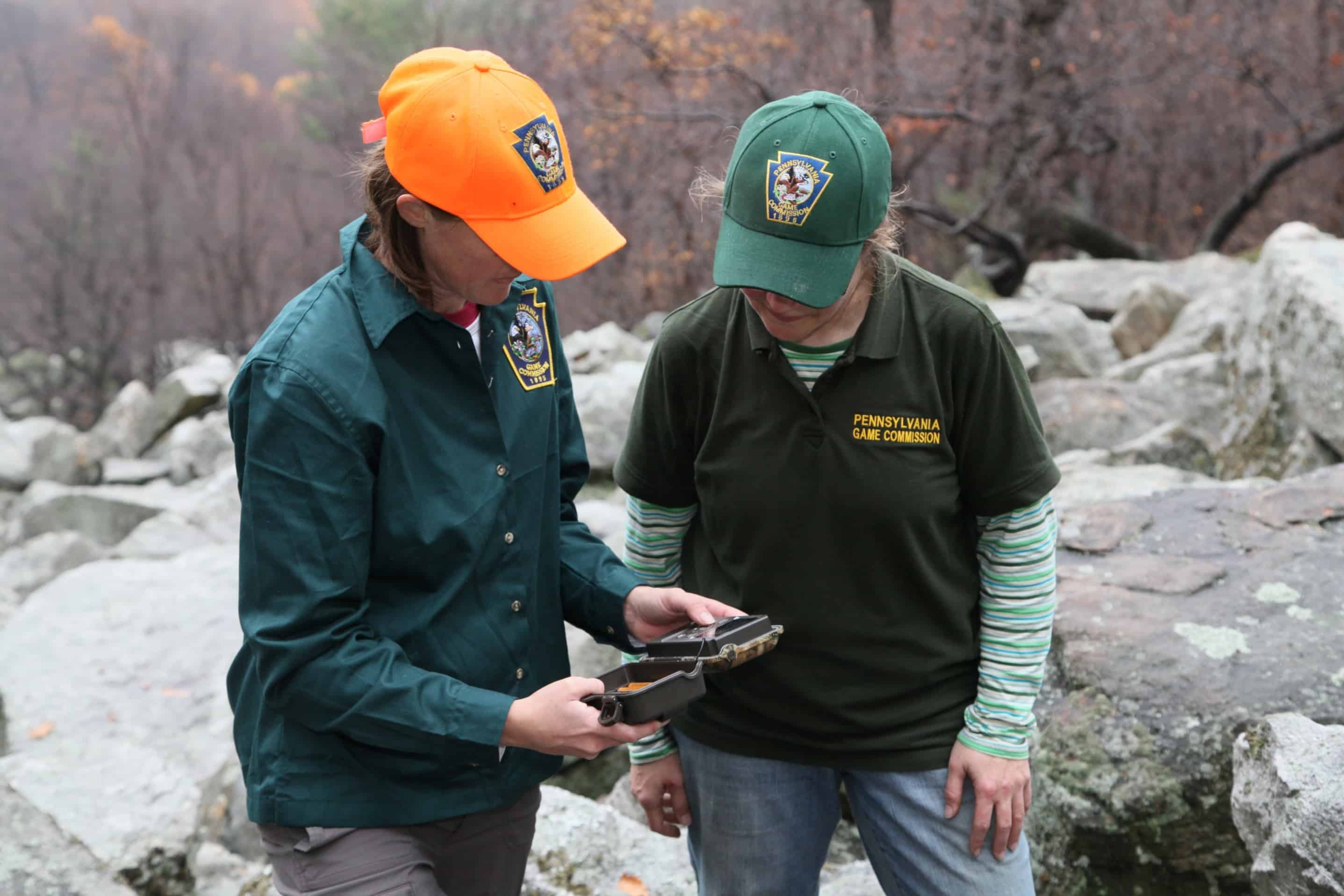
2.Biologists Lindsey Heffernan and Julie Mibroda bait a live-capture Sherman trap as part of their multi-technique trapping effort. Image Credit: Hal Korber/PGC Photo

Biologists Lindsey Heffernan and Julie Mibroda bait a live-capture Sherman trap as part of their multi-technique trapping effort. Image Credit: Hal Korber/PGC Photo

Here’s how it works: You sign up on the website using your email address. Once you have taken a photo of a mammal, or otherwise observed one, you upload it and give data based on species, what county and what date you took the picture, as well as any more specific data such as exact coordinates, the township where you saw it or information on age and sex of the animal.

At this point a biologist with the PGC will verify the information and, if approved, the photo and information will appear on the website.

The site can be divided in a number of different ways —by county, species or a combination of both. The date and name of the volunteer who took the photos are also displayed on the website.

The project has only been online about a month but Heffernan says that they have already had around 300 volunteers sign up, submitting around 400 observations that state biologists have approved.

“It’s great to see what the public is out there seeing,” Heffernan says. Some are more noteworthy than others such as volunteer-submitted photos of river otters (Lontra canadensis), fishers (Martes pennanti) and bears with radio-collars.

One particularly surprising observation came when a hunter saw an eastern spotted skunk (Spilogale putorius) — a rare sighting of an animal thought to be extirpated in Pennsylvania. In cases like these, Heffernan said there was follow up, with biologists going into the area in an attempt to verify the sighting. While it has yet to be confirmed — in this case the hunter couldn’t get a photo of the animal — Heffernan hopes biologists will now be able to confirm the presence of a spotted skunk through trail cameras.

“It was a surprise and it was a great example of how the citizen science website can really help us,” she said.

All of this information will be useful in determining the range and distribution of some mammals, particularly the small ones, for which little is known.

“Our agency is responsible for all mammals,” she said. “Some of these smaller nongame species, there’s not much we know about them.”

Barred Owls Intensify Northern Spotted Owl Decline

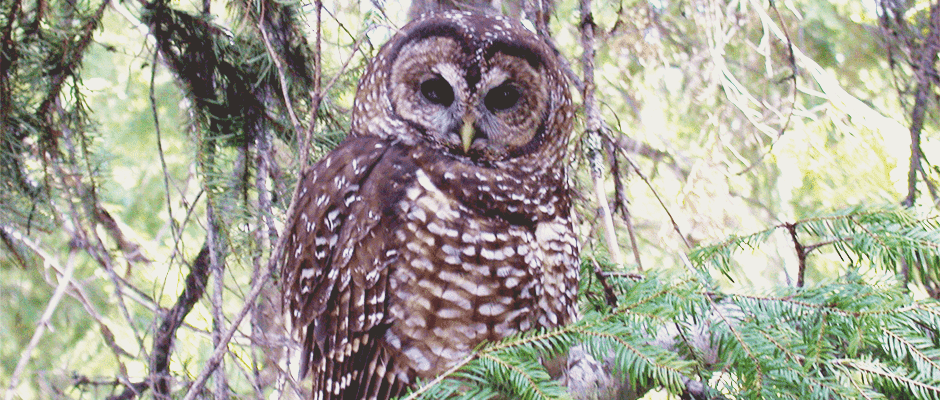
Populations of federally threatened northern spotted owls (Strix occidentalis caurina), a subspecies native to the western United States, continue to dwindle.

The reason? Competition with the barred owl (Strix varia) — a highly adaptable species that has expanded its range westward from the eastern United States and Canada, according to a study led by Katie Dugger, assistant unit leader at the USGS Oregon Cooperative Fish and Wildlife Research Unit and an associate professor at Oregon State University. The study was recently published in The Condor: Ornithological Applications.

“In our most recent analysis, we got better data on barred owls in particular,” said Eric Forsman, a coauthor in the study who is a retired U.S. Forest Service Research biologist and member of The Wildlife Society. Dugger, Forsman, and their colleagues examined the most recent spotted owl population data from 11 long-term demography study areas in California, Oregon and Washington State. They used mark-recapture models and occupancy models to examine relationships between trends in the owl population and variables such as the amount of old forest cover, climate conditions and the presence of competitors such as barred owls. “Barred owls now outnumber spotted owls on some of our study areas and in some areas, spotted owls are just about gone,” Forsman said.

Barred owls originally occurred in the eastern U.S. and eastern Canada. They began to expand westward sometime in the late 1800s or early 1900s and showed up in Washington State and Oregon in the 1960s and 70s. One hypothesis for this range expansion is that fire exclusion by European settlers allowed forest riparian corridors to become more extensive in the Great Plains region and these areas served as a stepping stone for barred owls to move westward, Forsman said. While researchers didn’t know for sure that barred owls would be a problem when they first began sharing spotted owl habitat, “it now appears that it is a catastrophe for spotted owls,” he said.

Barred owls, a species just slightly larger in size than spotted owls, appear to compete with them for habitat and other resources. For example, barred owls can occur at densities that are four to five times higher than spotted owls and they have a very broad diet that includes many of the same species that are important to spotted owls, including flying squirrels, woodrats, and tree voles, Forsman said. Barred owls also have larger broods and breed more frequently than spotted owls, allowing them to easily outnumber northern spotted owls.

Limited Management Options

Barred owls are taking over to the extent that, on some study areas, the biologists who monitor spotted owls are having a difficult time finding any spotted owls. This is especially true in Washington State, where barred owls have been present the longest.

However, the conservation options appear to be limited. “If you look at the data right now, the outlook is pessimistic,” Forsman said. “As for a solution, we’re not sure. Agencies such as the Forest Service, the BLM and Fish and Wildlife Service are working on it.”

One potential measure is to remove barred owls from certain areas. In fact, researchers completed a small scale removal of barred owls in 2013 in the Green Diamond study area in California by shooting them and found that northern spotted owls began to recover in the removal area. “It’s not yet clear how effective that approach will be in federal lands or remote areas,” Forsman said. Further, this approach is controversial since not everyone agrees that shooting barred owls is a good idea.

Forsman suggested that other possible approaches are to continue with the status quo or increase habitat protection for the northern spotted owl and let the two species work it out. “This is where I fall in this whole debate,” Forsman said. “I can’t see us shooting barred owls forever. But that decision is up to the management agencies, not me.”

Migratory Birds Lack Adequate Habitat Protection

Migratory birds are always on the move and, as a result, rely on habitat protection — of breeding grounds, nonbreeding grounds and stopover areas.

“I realized that in large conservation initiatives, we’re just not seeing that happen,” said Claire Runge, lead author of a recent study published in the journal Science. Migratory birds have faced significant declines over the past three decades and Runge, a researcher at the National Center for Ecological Analysis and Synthesis at the University of California-Santa Barbara, and colleagues wanted to determine the extent to which migratory bird habitat is protected across the globe.

After looking at a database of protected areas for both non-migratory and migratory birds around the world developed by Birdlife International, a global partnership of conservation organizations that strive to conserve birds, the researchers developed maps of migratory routes and found that only 9 percent of 1,451 species of migratory birds receive adequate protection of their habitat across their entire range. In some species, it was their breeding grounds that weren’t receiving adequate protection and in some species it was their nonbreeding grounds or the places they use to get between the two that weren’t doing so well.

“It was really surprising because I expected that breeding grounds would always be more protected than their nonbreeding grounds,” Runge said. “When we looked at threatened species of migrating birds, they were even worse.”

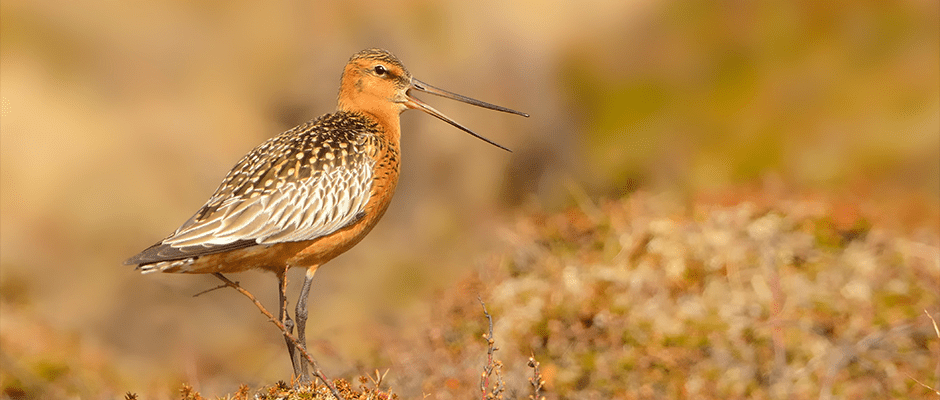
A mere three percent of threatened migratory birds were adequately protected. In order to determine if the birds are adequately protected, the researchers set a target for protected area coverage based on the size of their range. Species with a smaller range had a higher target for protection than species with larger ranges as they are more vulnerable to threats, Runge said. One of those threatened birds is the far eastern curlew (Numenius madagascariensis) that migrates from Siberia and Australia, stopping over at sites in South China and North and South Korea.

“This study seems like it has a depressing message, but there’s cause for hope,” Runge said. This is because there’s still a chance for countries around the world to protect these areas, which they’re already starting to do, according to Runge.

“Unless you consider migratory species, these protected areas are put in the easiest places where there aren’t any people, where it’s cheap and there isn’t any agriculture,” she said. “For migratory species, we need to consider that those areas might not be in the best places. We want to try to fill those gaps for migratory species across the world.”

Runge hopes that this study will help get the message out that it’s important to focus on key protected areas. “We don’t know where the key places are, but we can make guesses. It would be great to have a lot more information on the key locations,” she said.

Brown Tree Snake Research Wins DoD 2015 Project of the Year

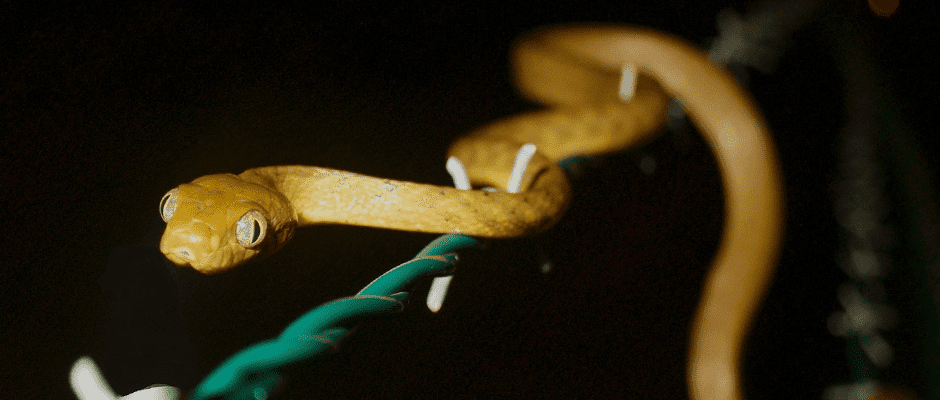
This month, experts with the USDA-APHIS Wildlife Services (WS) program were honored with the 2015 Project of the Year Award for Resource Conservation and Climate Change from the Department of Defense’s (DoD) Environmental Research Programs. The award recognizes WS’ achievements toward the aerial application of acetaminophen-treated baits for the control of brown tree snakes in Guam.

“The successful aerial delivery of toxicant bait is a critical next step toward developing a method for large-area control of the invasive snakes, particularly in remote and inaccessible areas on Guam,” states team leader Dr. Brian Dorr, CWB®, of WS’ National Wildlife Research Center. “The new technique uses dead mouse baits inserted with 80-mg tablets of acetaminophen, which are fatal to the snakes.”

Earlier WS research shows brown tree snakes readily accept dead mice and acetaminophen as bait. The bait is fitted to a biodegradable streamer-like device designed to snag onto branches in the dense tree canopy where the snakes feed. Given the fact that the bait is hung in trees, distributed at low densities, and eaten quickly by the snakes, nontarget species exposure to the bait is very limited.

USDA Wildlife Services research has led to the development of an aerial bait to control invasive brown tree snakes on Guam.  The effort was recently awarded the Department of Defense’s 2015 Project of the Year Award for Resource Conservation and Climate Change.

USDA Wildlife Services research has led to the development of an aerial bait to control invasive brown tree snakes on Guam. The effort was recently awarded the Department of Defense’s 2015 Project of the Year Award for Resource Conservation and Climate Change.

The damage wreaked by invasive brown tree snakes on Guam is hard to imagine. Infestations have led to the loss of all but two of the island’s 12 native forest birds, millions of dollars in damages its electrical power grid, and physical injuries to residents from snake bites. As a large port and home to several military bases, another major concern is the accidental spread of the snakes to other islands, such as Hawaii and Saipan, where they could cause similar damage. The development and use of this innovative, new tool will assist the DoD and others in reducing the environmental and economic risks caused by the snake and potentially aid wildlife restoration efforts on Guam.

Researchers are currently working with a private company to scale-up the manufacturing process by designing a biodegradable bait cartridge and delivery system that can disperse a bait cartridge every 15 meters (4 bait cartridges/second at a flight speed of 125 knots) via helicopter or fixed wing aircraft. Tests of this new system will begin early next year.

To learn more, please visit the National Wildlife Research Center’s brown tree snake webpage and FLICKR site. View several videos related to this research here.

Wildlife Services is a Strategic Partner of TWS.

Are Bison Adopting Sedentary Eating Habits?

Bison that once roamed the continent in search of nutritious grass may be adapting to a wider diet to suit a more sedentary lifestyle.

“If you’re going to be keeping bison either for conservation or commercial use it’s nice to know they can feed on other stuff besides grasses or forbs,” said Gaddy Bergmann, a PhD student at the University of Colorado-Boulder and lead author of a study recently published in PLOS ONE.

Bergmann and his coauthors collected bison scat samples from April to the end of October in 2011 at the Konza Prairie Biological Station, a field research reserve operated by Kansas State University and the Nature Conservancy in the Flint Hills of northeastern Kansas.

They found that the diet of the bison (Bison bison) there changed during the seasons. The herbivores grazed mostly on grasses and forbs in the summer, when these plants are most nutritious due to their fresh shoots. But come fall, these plants become overripe and bison browse more on shrubs and more tree-like vegetation.

“They were browsing more in fall and spring and grazing more in the summer,” Bergmann said. “We don’t have data on what their diet was like 100 years ago when they were still migrating and there were millions of them,” he continued, but adds that they have likely changed their diet since then.

The researchers also found there was a shift in the makeup of their gut microbes over the seasons, potentially as the bison responded to a change in diet. When compared to grain-fed bison, the gut microbe content changed significantly, staying the same over the year to match the consistent diet.

Bergmann said that the wide mouths of bison are better suited to grazing than those of species like giraffes (Giraffa camelopardalis), whose mouths are adapted to picking leaves off trees.

But he said this may be good news for bison ranchers as it means they may not always need to supplement their grassy diets in the fall and spring with hay.

“The bison numbered about 30 million up until the 1880s when they were almost exterminated,” he said. Now, bison ranges are fragmented by fences, roads and other, and the animals have to make some shifts in diet as a result.

New Mexico Chapter Encourages Mexican Wolf Releases

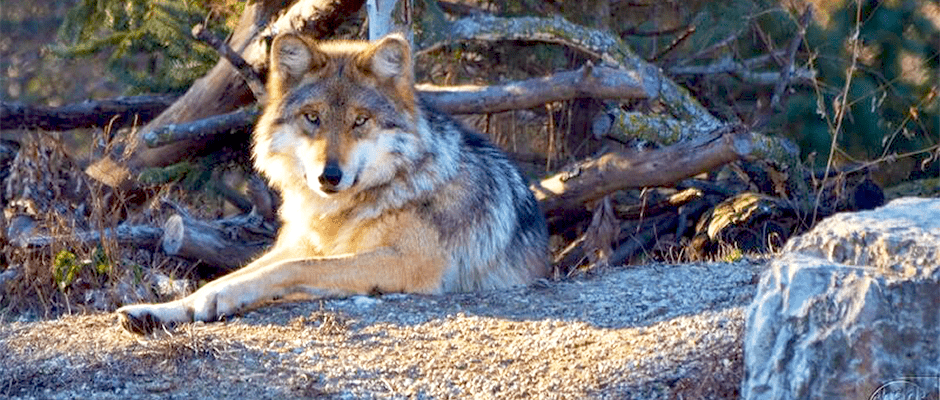
The New Mexico Chapter of the Wildlife Society sent a letter on November 21 to the New Mexico Game Commission and the New Mexico Department of Game and Fish encouraging them to reconsider their decision to deny permits to the U.S. Fish and Wildlife Service for releases of Mexican wolves (Canis lupus baileyi) into New Mexico. They also encouraged issuing permits to Ted Turner’s Ladder Ranch, which would allow them to continue to breed captive Mexican wolves.

New Mexico’s Game Commission upheld the Department’s rejection of FWS’ permit applications in October. The Department denied the permits because the application did not specify how many wolves would be released or where the wolves would be released. Without that information, the Department stated it could not determine if issuing the permits would conflict with their own policy.

In November, the Commission rejected Ted Turner’s Ladder Ranch’s renewal application for hosting captive Mexican wolves. The ranch has raised Mexican wolves for FWS to be used for reintroductions for the past 17 years. The Turner Endangered Species Fund has appealed the decision, and is waiting for the Commission to rule on the appeal.

The Chapter’s letter supports the release of captive bred Mexican wolves into the established wild population in New Mexico. The Chapter expressed concern that lack of genetic variation in the wild population could lead to reduced vigor, reproduction, and survival as well as impede its ability to adapt to environmental change. The letter argues the wild population’s genetic health can be improved by releasing captive bred wolves whose genetics have been closely monitored.

The letter goes on to discuss the integral role predators like the Mexican wolf have in an ecosystem. Citing multiple research articles, the letter says that the lack of large apex consumers have extensive cascading effects on the ecosystem. Studies found that the lack of predators in an ecosystem can lead to an increased presence of disease and diminish biodiversity. Research at Yellowstone found that a lack of predators altered the riparian structure, but reintroduction of wolves led to recovery in the aspens, willow, and cottonwood browse species.

Brian Hanson, chairperson for the Conservation Affairs Committee in New Mexico stated, “The recovery of the Mexican wolf has been a long, difficult path and yet again, two more obstacles appear; genetic concerns for the wild population and lack of a state permit for the Ladder Ranch captive population. The New Mexico chapter submitted comments to help get the approvals that would remove these obstacles.”

Students Reflect on Native American Assistantship

From studying bats and sharp-tailed grouse habitat to attending fire ecology workshops and meeting with tribal leaders, students involved in the first Native American Assistantship offered by The Wildlife Society and the U.S. Forest Service learned more than they could have imagined about wildlife and ecology through Native American culture.

The 14-week assistantship, which launched this past spring, provides Native American students aspiring to become wildlife biologists with the opportunity to work with wildlife professionals on individual projects, get hands-on experience, and meet with Native American tribal leaders. Three students —Raymond Gutteriez, Jessica Lackey and Alayna Johnson — took advantage of this year’s assistantship, working with USFS Research and Development scientists Jonathan Long and Deahn Donner on wildlife ecology projects.

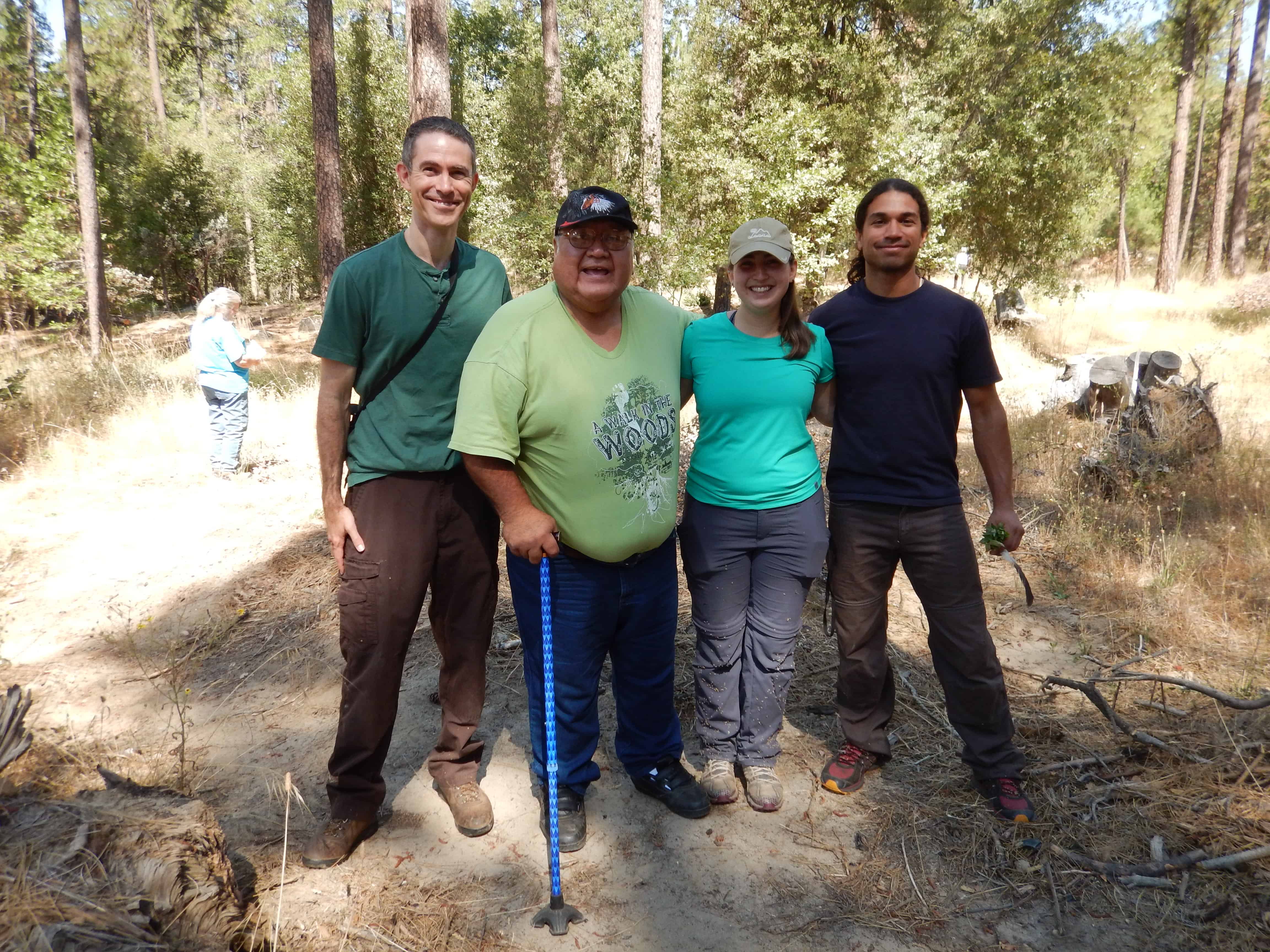
For instance, Gutteriez, a graduate student at SUNY-College of Environmental Science and Forestry, and Lackey, a graduate student at the University of Minnesota-Twin Cities, focused on restoring California black oak to support tribal values and wildlife habitat in the Sierra Nevada. Changes in natural fire processes, an increase in conifer trees, and browsing by species such as deer, have all caused California black oak to suffer. As part of their project, the students worked on collecting and organizing information on how Native Americans traditionally managed the trees.

Pictured L-R: Jonathan Long, North Fork elder, Jessica Lackey, and Ray Gutteriez. Image Credit: US Forest Service

Pictured L-R: Jonathan Long, North Fork elder, Jessica Lackey, and Ray Gutteriez. Image Credit: US Forest Service

The assistantship opened Lackey’s eyes to the avenues in which Native American tribes and the Forest Service can work together in natural resource management, she said. Lackey, a citizen of the Cherokee Nation of Oklahoma, was born and brought up in the Sierra Nevada and, as a result, issues affecting the region were particularly pertinent. “I was looking at native species and tribes from my home state that I really wasn’t aware of when I was growing up there,” she said. In particular, Lackey enjoyed working on a meadow restoration in the Sierra National Forest with Ron Goode, the tribal chairman of the North Folk Mono tribe.

Meanwhile, Gutteriez, a member of the Wuksachi Band of Mono Indians, appreciated the opportunity to learn to apply Native American knowledge in the wildlife biology field, although he grapples with the need for western science to validate traditional ecological knowledge before it can be implemented in the field. “There’s a struggle with identity in how we are trained as academics and how we’re trained as scientists, and who we are and how we are raised,” he said. That was a source of personal internal conflict for me.” Gutteriez said that the assistantship reinforced his desire to work in the field more.

Johnson, a student at the University of Minnesota-Morris and a member of the Red Cliff Band of Lake Superior Ojibwe, worked with research ecologist and project leader at USFS Northern Research Station Deahn Donner in Ottawa National Forest to gather data on bat populations within the forest using acoustic monitoring devices.

“This experience has confirmed that I would like to make a great effort to work with and alongside tribal governments in whichever agencies I am employed with in the future,” Johnson said. “I believe this would be a very personally fulfilling and crucial line of work.”

Native Americans in their junior and senior years of college as well as graduate students can apply for this annual assistantship. Click here to download the application form. The application period has closed, but students may apply for the 2016-2017 program starting in August or September of 2016.

The U.S. Forest Service is a Premier Partner of TWS.

Seasonal Migrations for Monarchs Keep the Doctor Away

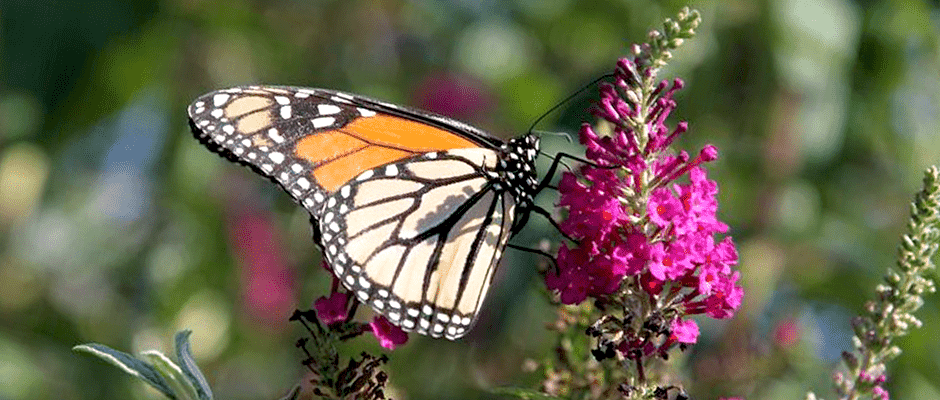
Because North American monarch butterflies (Danaus plexippus) can’t survive cold winters in the United States, they often migrate south in the fall to places such as Mexico. Now, a new study published in the journal PLOS ONE shows that these long-distance migrations may help lower the amount of infections in the butterflies.

A research team led by Sonia Altizer, an ecology professor at the University of Georgia, examined wild monarch butterflies in search of the parasite Ophryocystis elektroscirrha, a protozoan parasite that commonly infects monarchs. After collecting the butterflies from two wintering cites in central Mexico, they determined how many were infected with the protozoan parasite and compared the infection status of each butterfly with their hydrogen isotope measurements, which indicate the latitude of the butterflies’ origin when they began their migration.

“The chemical markers allowed us to estimate where the monarchs started and how far they travelled to reach the wintering sites in Mexico, something that would not be possible using other currently available methods,” Altizer said in a press release.

After analyzing their data, the team discovered that uninfected monarchs had lower hydrogen isotope values than butterflies that had been infected with the parasite. This lower hydrogen isotope value suggested that the uninfected butterflies traveled farther, from more northern latitudes in order to reach their wintering sites in Mexico.

The team concluded that these fall migrations may be helpful in lowering infection levels in North American monarchs. The authors suggest that recent observations of monarchs being sedentary may mean more risk of infection in the species.

New Award to Recognize Leadership in Climate Adaptation

The National Fish, Wildlife, and Plants Climate Adaptation Strategy recently called for nominations for the Climate Adaptation Leadership Award for Natural Resources. This is a brand new award that will recognize those who have taken action against climate change threats to make America’s natural resources more resilient.

The Strategy was released in 2013 after Congress requested a national strategy to help fish, wildlife, and plant resources become more adaptive to the impacts of climate change. The current strategy has set desired goals for dealing with the impacts of climate change on these resources by engaging with federal, state, local, and tribal governments as well as private groups.

In 2014, a Joint Implementation Working Group with representatives from four federal departments, five state wildlife agencies, and one tribal fish and wildlife agency published a progress report on the current status of the Strategy. In the report, 50 case studies were used to demonstrate effective implementation of the strategy’s recommended actions, such as the targeting of research to address gaps in knowledge as well as the reduction of non-climate stressors so natural resources can better deal with climate-related stressors.

This annual award is designed to recognize the progress made since the release of the Strategy and the 2014 report. The Joint Implementation Working Group will be tasked with judging the awards, which are sponsored in part by the Department of the Interior, US Fish and Wildlife Service, National Resources Conservation Service, National Oceanic and Atmospheric Administration, U.S. Forest Service, and Association of Fish and Wildlife Agencies.

Both government and non-government organizations as well as individuals are eligible for the three to five awards that will be given this year. The deadline for nominations is January 8, 2016.

Visit the Climate Adaptation Leadership Award nomination form for more information on criteria and nominating procedures.