Study finds no domestic dogs in Mexican wolf lineage

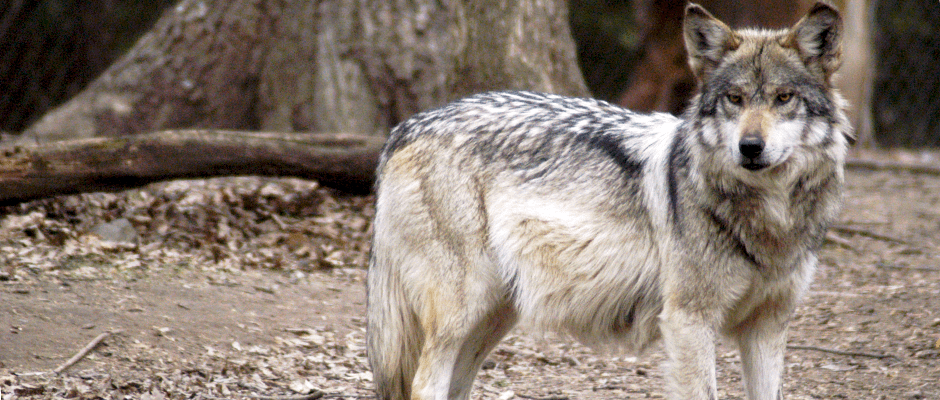
Controversy has surrounded the reintroduction of Mexican gray wolves (Canis lupus baileyi) into the mountains of Arizona and New Mexico, including questions about the purity of their genetics. Are these truly wolves, some skeptics have wondered, or are they hybrids with domestic dogs?

Previous genetic techniques have found almost no shared genetics with domestic dogs, but genomic technology has evolved in recent years, giving scientists better tools to look more closely than ever before.

“This is an issue that keeps getting thrown around,” said Robert Fitak, lead author on a study published in the Journal of Heredity that used modern genomics to examine wolf ancestry.

Once widespread in the mountains of the Southwest, the Mexican gray wolf was brought to the brink of extinction by predator removal campaigns in the early 20th century. To begin reintroduction efforts in 1998, three captive lineages were used to create breeding populations.

Uncertainty about these populations, however, left skeptics wondering if some of these wolves descended from hybrids with domestic dogs. The evidence was anecdotal, Fitak said, but traits like floppy ears, which occasionally appeared, provided fodder to challenge the reintroduction program.

As part of his PhD work at the University of Arizona, Fitak and his team genotyped 87 Mexican wolves, mostly using blood and tissue samples from the Museum of Southwestern Biology in Albuquerque, New Mexico. The samples came from individuals from each of the captive linages and from cross-lineage wolves. Researchers examined more than 172,000 variances throughout the genome — far more than the few dozen markers that researchers previously were able to look at. They compared what they found in these wolves with genotypes from other studies of wolves in Alaska and Europe and with domestic dogs.

They found Mexican wolves shared an average of 0.06 percent ancestry with domestic dogs. What little shared genetics they found was most likely due to ancient ancestors shared by both Mexican wolves and domestic dogs, not hybridization.

“Overall,” they concluded, “our results suggested that Mexican wolves lack biologically significant ancestry with dogs.”

Some hybridization has occurred with domestic dogs since the reintroduction program began, Fitak said, but managers have worked to remove those from the breeding population.

“We don’t want to say there aren’t concerns and issues — and there should be more communication and networking between ranchers and managers — but this should hopefully provide a lot of support that hybridization with dogs is not one of them,” Fitak said.

The July/August Issue of The Wildlife Professional

Poachers and smugglers try to outwit wildlife conservation officers on a daily basis. Efforts to combat wildlife crime and change these illegal behaviors are the focus of the July/August cover feature of The Wildlife Professional, “Tracking Crime in the Wild.”

A companion article from the U.S. Fish and Wildlife Service also describes the work of federal agents at ports of entry like Atlanta’s Hartsfield-Jackson International Airport to help the United States fulfill its commitment to wildlife conservation. It’s a fascinating look at what’s legal and what’s not.

You will also want to read how one woman in British Columbia is working to protect connectivity for grizzly bears in the Kootenay Region. Gillian Sanders works with residents to properly install electric fences to keep the bears from depredating livestock and crops and avoid lethal removal of offending animals.

Is wildlife management really based on science? Five wildlife leaders take on a discussion of this topic, challenging readers to think about how wildlife science influences wildlife policy decision makers.

In Idaho, a group of wildlife biologists is taking steps to save the state’s tiny threatened ground squirrel though strategic habitat restoration activities. And in Arizona and northern Mexico, dedicated wildlife biologists are fighting to save endangered jaguars from poaching. The story of the big cat’s uncertain future is one you won’t want to miss.

You can read these and other articles in our new 64-page issue.

Watch for it in your mailbox soon!

White-nose fungus found in South Dakota

The fungus that causes white-nose syndrome has turned up for the first time in South Dakota. The National Park Service reports that the fungus Pseudogymnoascus destructans was found on five bats at Badlands National Park in May. The discovery included the first known time the fungus was found on a western small-footed bat (Myotis ciliolabrum).

Read more in the Rapid City Journal or from the National Park Service.

Boone and Crockett Club joins TWS Partner Program

A new Leading Sponsor relationship between The Wildlife Society and Boone and Crockett Club has further strengthened ties within the conservation community. An agreement between the two organizations will go into effect on July 1 with the start of the new fiscal year.

As a Leading Sponsor, Boone and Crockett Club will sponsor TWS programs and conference events, such as the Aldo Leopold Keynote Address and the Student Chapter Leaders Lunch. In a mutually beneficial component of the agreement, Boone and Crockett will share news and other information with TWS and its members through wildlife.org and the weekly eWildlifer newsletter. Moving forward, both organizations will be able to reach an even greater number of advocates for wildlife science, management and conservation through the TWS Partner Program.

“We are proud to stand shoulder-to-shoulder with the Boone and Crockett Club, working together to emphasize the importance of science-based wildlife conservation and the role of hunter conservationists in maintaining healthy wildlife populations,” said Ed Thompson, CEO of The Wildlife Society.

Connections between the two organizations run deep, from their emphasis on science-based wildlife management to their ties to the legendary conservationist Aldo Leopold. Founded by Theodore Roosevelt and George Bird Grinnell in 1887, Boone and Crockett Club is the oldest conservation organization in North America. Leopold, a club member, was an instrumental leader in pushing for the passage of laws and policy, designation of conservation lands, and establishment of institutions, including the founding of The Wildlife Society in 1937.

“As champions of science-based wildlife management efforts and policy, the Boone and Crockett Club is pleased to partner with The Wildlife Society, a leader in wildlife stewardship through science and education,” said Ben Hollingsworth Jr., president of the Boone and Crockett Club.  “The greatest conservation issues of our time, such as the management of chronic wasting disease, challenges to the future of hunting, and pressures on the North American Model, require collaborative approaches that effectively meld sound science, education, and policy actions.”

TWS co-hosts briefing to promote conservation

On June 21, The Wildlife Society, American Fisheries Society and National Wildlife Federation hosted a briefing on Capitol Hill on Reversing America’s Wildlife Crisis.

The June 21 briefing informed legislators and staffers about the decline of multiple wildlife species in America and the need for dedicated funding to combat these trends. According to a March report released by these groups, Reversing America’s Wildlife Crisis, 150 U.S. species have already gone extinct and more than 1,600 species are protected under the Endangered Species Act. Habitat loss, pollution, invasive species and climate change are listed among the threats causing wildlife declines.

“Although the Endangered Species Act (ESA) is in place to prevent U.S. species from going extinct, more needs to be done to prevent the decline and endangerment of wildlife in the first place. Addressing these declines before ESA listing is warranted not only results in more successful conservation outcomes, but saves money and reduces possible impacts to other sectors of society,” the report says.

Recovering America’s Wildlife Act (H.R. 4647) would create the mechanism to reliably fund proactive conservation action. The Act would dedicate $1.3 billion annually to state fish and wildlife agencies to implement their State Wildlife Action Plans. The funds would be sourced from existing federal oil and gas revenue.

The bipartisan bill is was introduced to the House by Rep. Jeff Fortenberry (R-NE) and Rep. Debbie Dingell (D-MI) in December 2017 and had generated 73 cosponsors by mid-June.

Dingell opened the briefing and emphasized that conservation efforts can and have succeeded when there is dedicated funding.

Bruce Stein, NWF chief scientist and lead author of the Recovering America’s Wildlife Crisis report, spoke to species declines.

“This concept of extinction risk is not just hypothetical but, in fact, we already have experienced a large number of extinctions here in the U.S,” Stein said. He pointed to the eastern population of the monarch butterfl (Danaus plexippus) which has declined by more than 90 percent over the last two decades, and little brown bats (Myotis lucifugus) that are heavily impacted by white-nose syndrome as examples of recent population declines.

“The crisis calls for strong science, actionable plans, well-leveraged partnerships and sustainable and reliable funding,” said Carter Smith, executive director of Texas Parks and Wildlife, speaking on the importance of State Wildlife Action Plans.

“In the aggregate, those provide the roadmap to recovery,” he said. “They are our blueprint for conservation. They compel the states, working with partners, to identify species of greatest conservation need, to assess their population biology, abundance and distribution, to map the threats and chart out strategies to evade and mitigate those threats across the country.”

“For The Wildlife Society, this legislation would be a game changer,” said Caroline Murphy, TWS Government Relations Program Coordinator. “It would provide the needed funds to monitor and conserve at-risk species and for wildlife professionals to hold wildlife species in the public trust for generations to come.”

Following the briefing, attendees had the chance to meet some of America’s wildlife up close. David Mizejewski, NWF Naturalist and media personality, introduced the audience to an alligator snapping turtle (Macrochelys temminckii), a barn owl (Tyto alba), an American beaver (Castor canadensis) and a juvenile American alligator (Alligator mississippiensis).

Attendees were given several handouts, including copies of the Reversing America’s Wildlife Crisis report, and Congressional offices were encouraged to support the Recovering America’s Wildlife Act as co-sponsors.

DNA helps biologists monitor rare Korean ungulate

Deep in the remote mountain crags and valleys of the eastern Korean Peninsula, an imperiled goatish herbivore called the long-tailed goral (Naemorhedus caudatus) persists despite the pressures of development and agriculture. This elusive species remains a bit of a mystery to scientists, but new sample collection methods could help shed light on its few, fragmented populations and inform its conservation.

“We would like to identify the number of individuals, so we tried to develop methods like hair trapping because it is very difficult to get information of the goral,” said Sungwon Hong, corresponding author on a paper published in the Wildlife Society Bulletin comparing some of these techniques.

A doctoral candidate at South Korea’s Pusan National University, Hong and his fellow researchers deployed noninvasive barbed and hooked hair traps in the Wangpi River Basin between 2008 and 2010 to obtain genetic material from gorals for population analyses. They lured the animals to the traps, which have been commonly used on carnivores, at 15 locations with mineral blocks that the gorals lick to acquire salt. The team ended up gathering hundreds of hairs.

“The hairs from the traps show high genetic information,” Hong said.

The hair traps replaced previous methods that relied on presence data from carcasses, often animals that died from vehicle collisions or severe snowfall, to learn about the gorals’ population size and genetic diversity.

The long-tailed goral is classified as vulnerable on the International Union for the Conservation of Nature’s Red List of Threatened Species owing to population declines of more than 30 percent over recent decades. It also inhabits North Korea, Russia and China.

In South Korea, Hong said, conditions for the ungulate have advanced since the 1970s, and its population may have surpassed 1,000 thanks to better wildlife research, protection and reintroduction to parts of the country where it once roamed. “There are societies for the conservation of the goral,” Hong said.

Even so, he said, the gorals’ population growth is slow because they only reproduce every few years and give birth to just one or two offspring at a time. While older threats like subsistence hunting have waned, Hong said, he and his colleagues are investigating the intensifying impacts of climate change on the mortality of the species.

House committee discusses cormorant culls

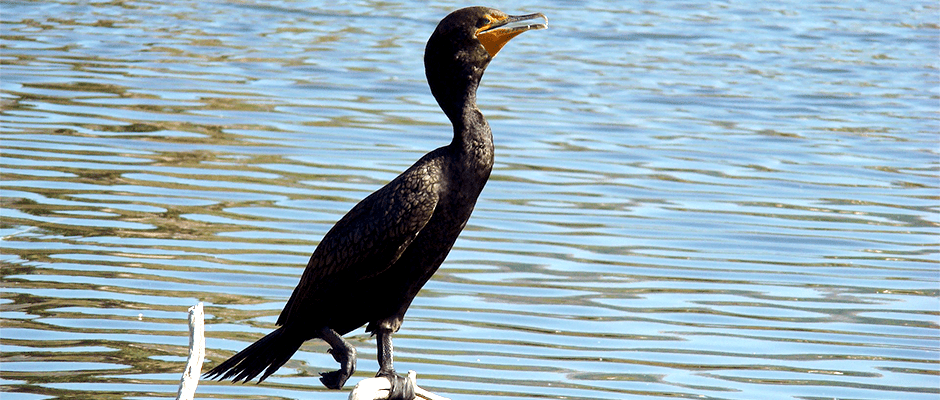
The House Natural Resources Committee met in Alpena, Michigan for a field hearing on double-crested cormorant (Phalacrocorax auritus) management.

Cormorants are migratory birds and are therefore regulated under the Migratory Bird Treaty Act. However, recreational and commercial fishermen around the Great Lakes say growing populations have negatively impacted local fisheries.

Previously, managers were allowed to use lethal force to reduce the bird population in the Great Lakes. In 2014, the U.S. Fish and Wildlife Service extended the Public Resource Depredation Order for five years. In 2016, a federal judge vacated the order, saying it violated the National Environmental Policy Act, and ordered the USFWS to complete a new environmental assessment.

Soon after the assessment was released in November 2017, Rep. Jack Bergman, R-Michigan, introduced a bill (H.R. 4429) that would direct the Interior secretary to reissue the depredation order.

“Without the ability to effectively manage cormorant populations the livelihood of our recreational and commercial fishing industries is seriously threatened,” Bergman said during the hearing. “These industries are critical to our local economies.”

Tom Cooper, the USFWS Migratory Bird Program Chief for the Midwest Region, said that the 2017 assessment did not address the effects of cormorants on free-swimming fish due to a lack of scientific information. USFWS is currently collecting information from state and local stakeholders.

“Until this evaluation and potential NEPA review process is complete, the [Interior] Department supports legislation authorizing the take of problem birds through a temporary, short-term reinstatement of the depredation orders,” Cooper said.

Daniel Eichinger, executive director of Michigan United Conservation Clubs, said cormorants prefer fish around six inches or smaller. Primarily feeding on small or juvenile fish can affect annual recruitment for fish populations. Lack of recruitment has long-term effects on fisheries, and managers may not see the effects for more than a year.

Bergman’s bill was considered in a hearing with the House Federal Lands Subcommittee in February but has not been reported to the full House for consideration.

USFWS staffers honored with Science Awards

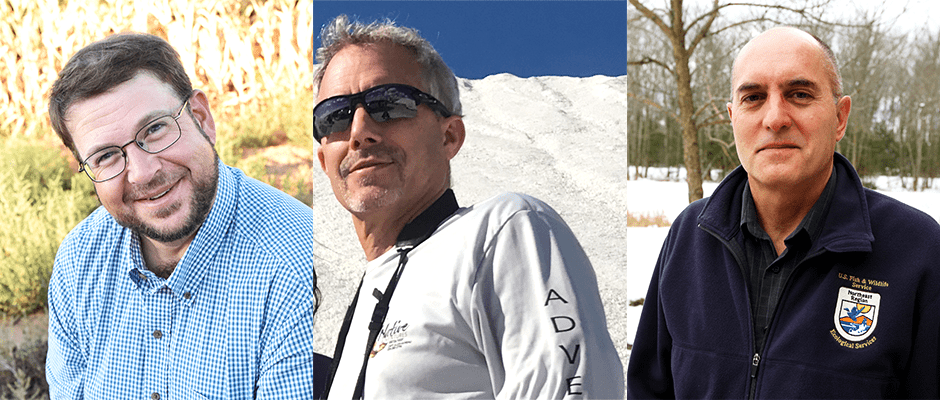
The U.S. Fish and Wildlife Service has recognized three staff members for their extraordinary work by awarding them the Service’s 2017 Science Awards.

The Science Awards were established to recognize that effective wildlife management and conservation is founded on innovative scientific inquiry and principles. They are awarded to recognize the outstanding efforts of the agency’s scientists and technical staff.

Biometrician Matthew Butler received the 2017 Rachel Carson Award for Exemplary Scientific Accomplishment, which recognizes scientific excellence through the rigorous practice of science applied to a conservation problem. He received the award for his work for whooping cranes and lesser prairie-chickens, helping ensure that the most appropriate, best available, high-quality scientific and scholarly information is available to advance stewardship for these species.

Butler led the development of an improved and peer-reviewed survey protocol for whooping cranes. He also conducted a population viability analysis, determined that juvenile recruitment most His contributions are steering management toward habitat protection along the Texas Gulf Coast and refocusing research toward understanding the declines of whooping crane recruitment on breeding areas in Canada.

For lesser prairie-chickens, Butler led a team that developed aerial survey techniques that have provided population estimates, new lek locations and areas to target for monitoring and conservation. This information informs on-the-ground conservation by identifying how energy development can be steered away from places favorable to lesser prairie-chickens.

Bill Uihlein, Region 4 assistant regional director, science applications, received the Sam D. Hamilton Award for Transformational Conservation Science, which recognizes innovative application of science. By stressing collaboration, Uihlein has been working to ensure landscapes in the Southeast can sustain populations of fish and wildlife range-wide at desired levels in the Southeast.

He helped unite conservation leaders from 15 state and 13 federal agencies in the Southeast Conservation Adaptation Strategy, which has helped federal, state, nonprofit and private organizations focus on common goals by using science to design and achieve a connected network of habitats and waters.

Region 5 Division of Endangered Species Chief Martin Miller received the Science Leadership Award, which recognizes supervisors who champion science in conservation decision making and empower their staff to accomplish scientific work and engage in the scientific community.

Miller was recognized for demanding the highest quality scientific work from himself and his team and for his dedication to ensuring the best science is appropriately applied to Endangered Species Act decisions, whether it is a listing determination, a habitat conservation plan or an ESA consultation with another federal agency. Colleagues lauded him for empowering his team to “be science leaders” and participate in the scientific community through collaborating with other scientists, serving as peer reviewers, serving on graduate committees, presenting at scientific conferences and authoring scientific publications.

The Service received 35 nominations for the awards.

The U.S. Fish & Wildlife Service is a Strategic Partner of The Wildlife Society.

Are conservationists ignoring culture?

Conservationists tend to focus on safeguarding species that are ecologically or economically beneficial, limited in number or suffering severe population decline. But are they leaving out other important values?

A team of researchers in the United Kingdom suggests that some species play vital roles in human culture, and conservation efforts ought to expand to protect these as well.

“Different species bring different things to the table, have different functions or are different in other respects we might value,” said Matthew Hiron, lead author on the paper published in Scientific Reports. It looked specifically at farmland birds and their value based on a range of criteria.

“The focus of this study was to quantify that different species of birds are culturally valuable,” Hiron said. “How many species in a community are important from different societal perspectives? Are the same species important for different values?”

A landscape ecologist with the Swedish University of Agricultural Sciences, Hiron and his team scored 38 farmland bird species according to various criteria of value, such as rarity, population decline and their economic significance due to pest control and other services they perform. But the researchers also ranked the birds’ cultural status based on the number of times they appeared in poetry by searching more than a million poems.

“Biodiversity has a greater role the more values you look at,” Hiron said. “Different species were important for different values.”

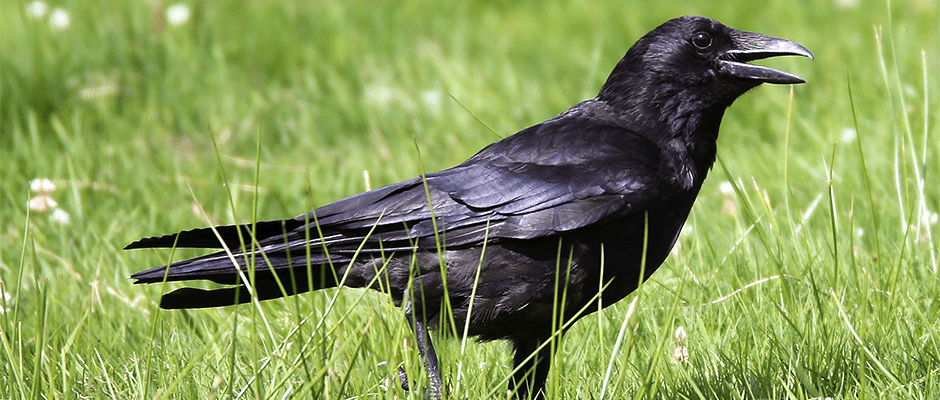
While the stone-curlew (Burhinus oedicnemus) came out on top in terms of rarity and the turtle dove (Streptopelia turtur) in terms of decline, the chaffinch (Fringilla coelebs) ended up first for economic contributions and the crow (Corvus spp.) for cultural mentions.

Conservationists often aren’t interested in common species, Hiron said, but they provide important services, including pollination, and many are declining. But they also hold cultural importance that ought to be taken into consideration, he said.

“Cultural ecosystem services are so important to motivate conservation,” Hiron said. “At the same time, they’re hard to quantify. Our job as ecologists is to quantify these things, take them to policymakers and say these species are important for this.”

31 changes recommended to Canada’s Species at Risk Act

The Committee on the Status of Endangered Wildlife in Canada (COSEWIC) recently evaluated 31 species of plants and animals, and now the Governor in Council is proposing to amend Schedule 1 of the Species at Risk Act to reclassify several of these species based on the new assessments.

The Species at Risk Act aims to prevent species from becoming extinct or extirpated from Canada and to aid in the recovery of species that are threatened, endangered or extirpated. Schedule 1 of the act is the official list of Species at Risk and currently includes 555 species.

COSEWIC is a nongovernmental independent scientific body created to determine the status of Canadian species and identify potential threats. The committee meets twice a year to review information about different species and assign them to one of seven categories under SARA. Species are uplisted or downlisted according to how they have fared since the last assessment.

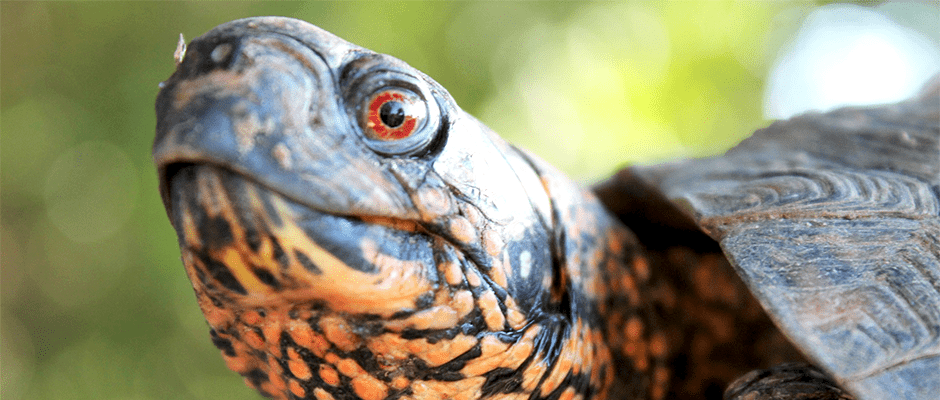
Under the new proposal, 17 species would be added to Schedule 1, 11 would be reclassified, one would be removed and another would be split into two distinct population segments. The wildlife species that would be affected are several reptiles, mollusks and arthropods, including the prairie rattlesnake (Crotalus viridis), which would be listed as a species of special concern, and the eastern box turtle (Terrapene Carolina), which would be listed as extirpated.

Read the order and learn more about SARA and COSEWIC in the Canada Gazette.