The Wildlife Society pushes for invasives work funding

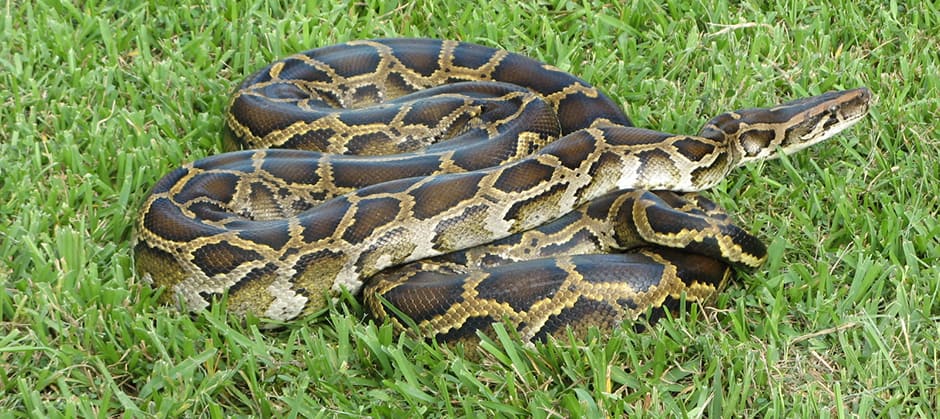
The Wildlife Society joined with partners from the National Environmental Coalition on Invasive Species to request that leaders of the Senate Interior Appropriations Subcommittee secure funding to address invasive species.

The letter requests that Senate appropriators reject the administration’s proposal to dramatically reduce funding for the National Invasive Species Council. That proposal would have cut appropriations for the program from $1.2 million in Fiscal Year 2019 to $600,000 in FY 2020.

Instead, the organizations urged the Senators to adopt the funding levels included in the House Interior appropriations bill, which has been approved by the full House Appropriations Committee and awaits a vote on the House floor. In the House bill, appropriators directed the Department of the Interior to provide at least $1.2 million to the National Invasive Species Council again in FY 2020.

The National Invasive Species Council is housed by the Department of the Interior, but its membership includes representatives from 12 federal Departments and four Executive Offices. Its role is to coordinate the nation’s responses to invasive species threats. Recently, this has included pilot projects exploring the benefits of Early Detection and Rapid Response at the regional scale, evaluating the cost of invasive species on the nation’s infrastructure and guarding against the threat of invasive species in the Arctic.

The letter notes that a 50 percent cut in funding for the council would have long-lasting impacts on implementation of the nation’s invasive species research priorities as laid out in the council’s recent National Invasive Species Management Plan.

Both the House and Senate are in the process of formulating their appropriations bills for next year. While the House Appropriations Committee has already drafted and voted on many of their spending bills, including the one to provide funding for the Department of the Interior, the Senate is still considering testimony and drafting its bills. The House expects to vote on its appropriations bill this month.

Read The Wildlife Society’s Position Statement on Invasive and Feral Species.
Can good enough be better than great?

Can high-quality habitat be too much of a good thing?

It might seem like having lots of resources for feeding and breeding would be an all-around benefit for wildlife, but researchers found that for some species, poorer habitat can be beneficial when it comes to movement and habitat connectivity. As a result, they found, urban environments can play a bigger role for some species than people might expect.

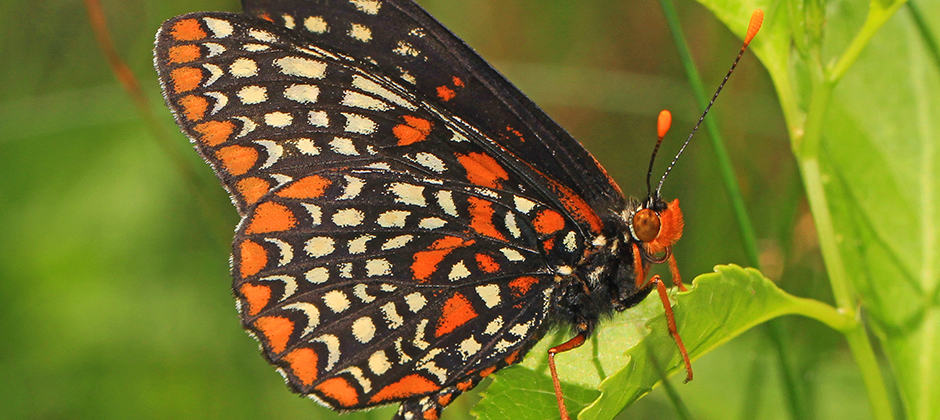
“There’s a lot of interest in conservation biology in making landscapes more connected,” said Elizabeth Crone, a professor at Tufts University and lead author of a study on the benefits of lower-quality habitat for the Baltimore checkerspot butterfly (Euphydryas phaeton) published in Ecology. “The way we think about doing that is building networks or corridors of habitat focused on the best places for species to live.” But Crone and her colleagues found the best habitat connectivity for the butterflies may actually be areas that have fewer resources.

“They move more slowly through high-quality habitat, partly because there’s more things for them to do, partly because it’s better for them to be spending more time there,” she said. “They move more quickly through lower-quality habitat.”

The team was especially interested in the ability of species to move quickly through corridors in the face of climate change. She and her colleagues completed a meta-analysis of around 70 species to determine movement in lower- and higher-quality habitat, then homed in on Baltimore checkerspot butterflies. They found that the best landscape for them, in terms of range expansion, would be composed of 15% high-quality habitat and 85% lower-quality hayfields and farm fields.

For species to expand their range, they need to reproduce and move quickly, Crone said. This is particularly important in the face of climate change when some species are shifting their ranges to places where they can more easily survive.

It’s not just butterflies. Crone said researchers can plug information from other species into the equation they used to determine what proportion of high- and low-quality habitat is optimal.

The findings have implications for conservation in urban environments, she said, by suggesting that even modest habitat improvements can help a species persist, and that urban and suburban landscapes can play important roles in connecting natural landscapes.

“Nearly everyone wants butterflies in their garden and are happy to see them in the city,” Crone said. While urban planners figure out how to convert green areas to benefit butterflies on a large scale, she said, “it’s also something you could do now by planting a butterfly garden in your yard.”

100 sea turtles stranded in Texas

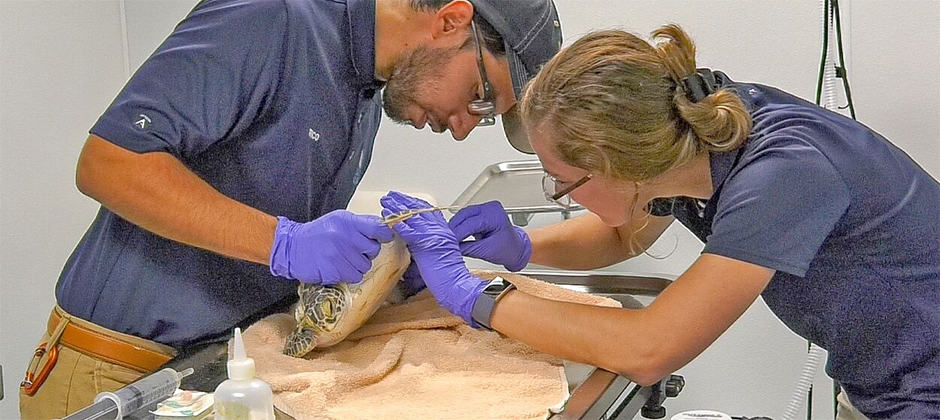
About 100 young green sea turtles have been stranded on the Texas coast due to high tides and flooding that followed May storms. The turtles “just couldn’t beat the waves,” Jesse Gilbert, chief operating officer of the Texas State Aquarium in Corpus Christi, told the Associated Press. In a typical year, he said, only about a half-dozen are stranded. The turtles ended up on Padre Island National Seashore where wildlife officials gathered them up and transported them to the aquarium for care. About 80 have been returned to the Gulf of Mexico, and the rest are expected to be returned soon.

Bronx River turtles persist, despite pollution

Hundreds of years ago, the Bronx River was rife with aquatic reptiles like common snapping turtles, musk turtles and painted turtles.

But only a few species have managed to survive centuries of heavy development and pollution in the Bronx, one of the U.S.’ densest urban areas. And just like the city’s human population, many of its current turtle inhabitants are immigrants from elsewhere.

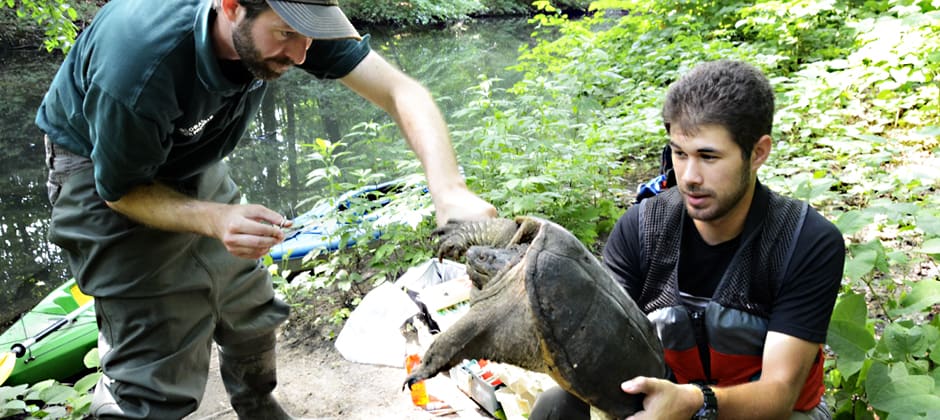
Researchers monitoring turtle populations in New York’s Bronx River found common snapping turtles (Chelydra serpentina) that had likely lived to be decades old. A large number of nonnative red-eared sliders (Trachemys scripta elegans), a species that originally hails from across the Southeastern U.S., occupied the river, but many native species were nowhere to be found.

“It’s pretty cool that the Bronx Park has been preserved since major development started,” said Valorie Titus, an assistant professor in wildlife biology at Keystone College in Pennsylvania and one of the co-authors of a study published recently in The Journal of Wildlife Diseases. Raymond Ditmars, a curator at the Bronx Zoo, which lies in the Bronx Park, had recorded historical information on the turtles in the river. Titus wanted to update these surveys.

She and her colleagues surveyed a section of the Bronx River in 2012 to understand the state of turtle diversity there. This part of the waterway winds through the New York Botanical Garden and the Bronx Zoo, more or less retaining the wandering trajectory it would have had centuries before the introduction of subways and skyscrapers.

“There are a couple waterfalls that have been put in there for electricity generation but, for the most part, it meanders quite nicely,” Titus said.

But the river is still polluted, she said, and it becomes brackish as it opens into Long Island Sound, where heavy boat traffic presents an additional danger to turtles.

She and her colleagues found only three species — native snappers, a single native painted turtle (Chrysemys picta) and the nonnative sliders. Several of the snapping turtles weighed 20 to 30 pounds, indicating that the reptiles, which can live to be 90, were quite old, even though specific ages couldn’t be determined. The lone painted turtle was unhealthy, Titus said, and the turtles they found generally had high levels of arsenic, mercury, selenium and lead.

Researchers also found the snapping turtles had a unique strain of mycoplasmosis, but since the bacterial respiratory disease occurs naturally in many turtle and tortoise species even in more wild areas, it was unclear whether the polluted waters played a role.

The large number of red-eared sliders speaks to the nonnative species’ ability to survive in adverse conditions alongside humans, she said, while the absence of species like common map turtles (Graptemys geographica) and musk turtles, (Sternotherus odoratus) which are commonly found in New York state waterways elsewhere, shows that these native species may be more sensitive pollution and human disturbance.

Titus said further research is needed to determine the specific reasons for this imbalance between native and nonnative turtle species. She hopes to go back in 2022 to perform a 10-year follow up on turtle diversity in the area.

For some songbirds, migration ends in a shark’s mouth

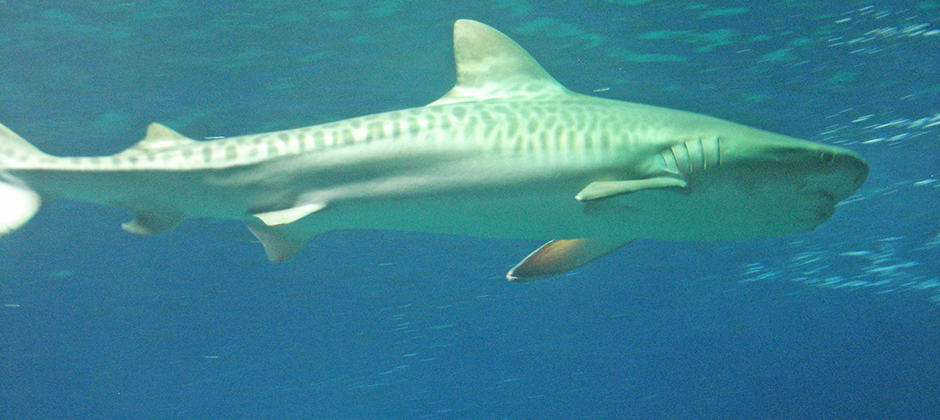
When Marcus Drymon was conducting his usual shark surveys in the Gulf of Mexico in 2010, he wasn’t surprised to catch a small tiger shark (Galeocerdo cuvier). The surprise was what came along with the shark.

He brought it onto the boat to measure it, weigh it and release it. But as his team was taking the measurements, he said, the shark “barfed up” some brown feathers.

“It was pretty wild,” said Drymon, a fisheries ecologist and assistant professor at Mississippi State University who led a study published in Ecology that came from this first observation.

Scientists gather stomach contents from a young tiger shark using gastric lavage. ©David Hay Jone

After poring through bird identification books and failing to identify the feathers, Drymon sent the feathers to his colleague Kevin Feldheim at Chicago’s Field Museum. Feldheim performed a DNA analysis and determined the bird was a brown thrasher (Toxostoma rufum) — a migratory songbird more associated with scrubby hedgerows than open water. “I was not expecting that at all,” Drymon said.

But after looking back through the literature, Drymon found similar anecdotal accounts dating as far back as the late 1940s. “We wondered how much this is occurring,” he said. “Is this just one random, one-off shark encounter with a small bird? Or is this happening with some regularity?”

Over the next eight years, Drymon and his colleagues sampled stomach contents from 100 tiger sharks. If they caught a dead shark, they removed its stomach and went through the contents. If it was alive, they performed a gastric lavage, inserting a PVC tube with a hose down the shark’s mouth, rinsing the stomach, turning the shark upside down and releasing its stomach contents.

Around 40 of the sharks they examined had consumed birds — 11 different species of them. But what surprised researchers most was the type of birds they discovered. These weren’t seabirds. They were species such as barn swallows (Hirundo rustica), eastern kingbirds (Tyrannus tyrannus), house wrens (Troglodytes aedon) and common yellowthroats (Geothlypis trichas).

“Of all 11 species, none of them were pelicans or marine birds,” Drymon said. “They were all terrestrial birds — not at all what we expected to see in a tiger shark stomach.”

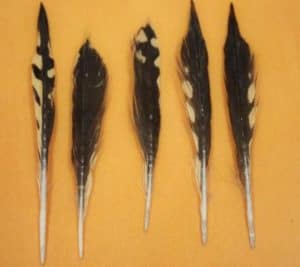
These songbird feathers were removed from the contents of a young tiger shark’s stomach. ©Marcus Drymon

He and his colleagues wanted to figure out how this was happening. Using eBird, they plotted the peak sightings in the area for the 11 species. It became clear that interactions between tiger sharks the species were occurring in the fall during these peak sightings, when many neotropical migratory birds leave North America for Mexico’s Yucatan Peninsula.

“This was a strong suggestion that these interactions were tied to migration,” he said.

But what really puzzled the team was that this wasn’t happening during the tail end of the birds’ migration when they may be exhausted and fall into the water. Instead, it was right when they were starting migration.

“Digging more, we found these strong weather events, like cold fronts and tropical storms,” he said. These were likely causing thousands of the 2 billion migratory birds taking wing in the autumn to plunge into the water, the team concluded. At the same time of year, tiger shark abundance in the Gulf was at its peak — three times higher than any other time.

Drymon suspects tiger shark mothers are using this area as a nursery since it’s a productive area, where there’s ample food sources for their first year of life.

TWS thanks House subcommittee for discussing biodiversity loss

The Wildlife Society, alongside the American Fisheries Society and the National Wildlife Federation, sent a letter to the leadership of the House Natural Resources Committee’s Subcommittee on Water, Oceans and Wildlife, thanking them for their efforts to highlight the global loss of biodiversity and the implications for fish and wildlife in the United States, and emphasizing the need for conservation programs.

The letter was in response to a subcommittee hearing held on May 22 entitled “Responding to the Global Assessment Report of the Intergovernmental Science-Policy Platform on Biodiversity and Ecosystem Services.” The summary of the report, commissioned by the United Nations, stated that approximately 1 million species are now threatened with extinction, more than any other time in human history. According to the summary, the average abundance of native species has decreased by at least 20% in the last century across many ecosystems.

Over the last three years, 145 experts from 50 countries helped develop the report, with another 310 authors contributing. Authors reviewed about 15,000 scientific and government sources, and also drew on indigenous and local knowledge to produce their conclusions.

Witnesses at the hearing included the past chair of the Intergovernmental Science-Policy Platform on Biodiversity and Ecosystem Services, which developed the report, as well as a report co-chair and a contributing lead author. They provided information about the main findings and content of the report, which has not yet been released in full to the public.

The Wildlife Society’s letter stressed the need for proactive conservation programs to address species extinction concerns highlighted in the report.  Programs in the U.S., like the State and Tribal Wildlife Grants program, provide state agencies the funding they need to prevent species from becoming threatened or endangered. The letter also referenced last year’s report released by TWS and partners on Reversing America’s Wildlife Crisis, which called for transformational change in the way we fund fish and wildlife conservation, and urged the lawmakers to consider this approach as they investigate solutions for the growing fish and wildlife crisis in the U.S.

The same day as the hearing, House Natural Resources Chairman Raúl Grijalva, D-Ariz., introduced legislation aimed at preventing extinction. The “Extinction Protection Act of 2019” is made up of four separate sections, each devoted to the conservation of North American butterflies, Pacific island plants, freshwater mussels and southwest desert fish.

That bill would provide $5 million annually for conservation projects involving those species to restore or protect ecosystems, species management plans or the enforcement of conservation laws, among other things. States, territories and tribal will be eligible to apply for the funding.

Can there be common ground on wild horses?

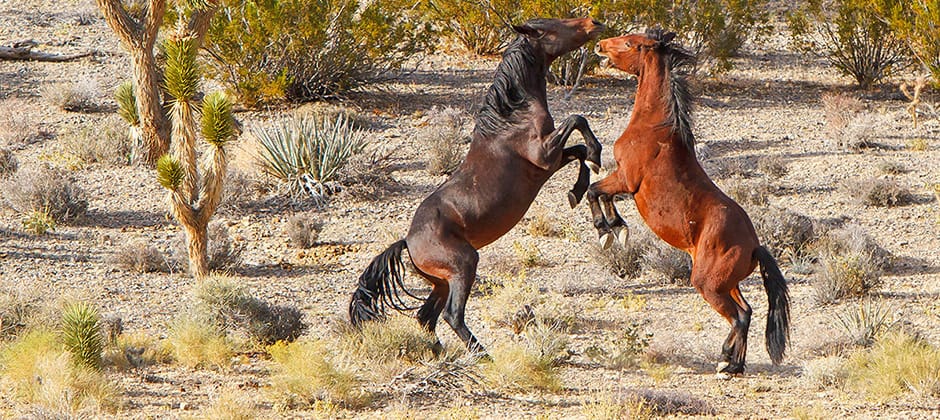
When it comes to managing wild horses on public lands in the West, it’s hard to find common ground. Proponents thrill at the sight of free-ranging horses, and they appeal to concerns about animal welfare to protect them. Critics point to the ecological damage that the invasive species can do the arid landscape and to the other wildlife that share it. All sides of the argument can get emotional.

“I think the piece that resounds with everybody is, no one wants to see horses die of starvation and dehydration,” said TWS member Erik Beever.

Are there ways to achieve that, and to manage wild horses on Western lands, that will get various interests on board? It’s a question that Beever, a research ecologist with the U.S. Geological Survey Northern Rocky Mountain Science Center in Bozeman, Montana, raises in a perspective published in Biological Conservation.

The challenges confronting wild horse management run deep, according to Beever and his co-authors, Lynn Huntsinger, of the University of California, Berkeley; and Steven Petersen, of Brigham Young University. Solutions, they say, may come from the realm of social science as much as biology.

“There’s a very broad diversity of user groups,” Beever said. “Everything from hunting groups, to folks that have to deal with threatened and endangered species, to state and federal agencies monitoring water quality, to livestock producers, to conservation advocates, to rural landowners, to those who love the enigma of the ‘Wild West’ and its horses. The power and charisma of horses are two characteristics that horses have that facilitate them being deeply appreciated by humans. They’ve also been used in human societies for millennia. There’s a strong connection there.”

But there’s also a strong connection to changes horses can bring to the environment. The authors note that according to past research, the list of alterations that horses can bring to arid landscapes is long, from soil degradation to vegetation loss to reducing native ungulates, small mammals and reptiles.

Removing the horses entirely isn’t much of an option. The 1971 Wild Free-Roaming Horses and Burros Act calls for them to remain on the landscape. But management options, constrained by lots of other laws and regulations, are limited. Grazing regimes that govern domesticated livestock use generally can’t be implemented. Neither can hunting options that are used to manage wild ungulate populations.

The two means of controlling population sizes are immunocontraceptives and removals of animals to off-range holding facilities, called gathers, and both have drawbacks, Beever said. Gathering up the horses is expensive, as is caring for tens of thousands of animals in holding facilities for the remainder of their lives. Contraceptives, usually fired from dart guns from the air, are difficult to apply and limited in their effectiveness.

“You only have two tools to provide solutions,” he said, “and neither of those are particularly easy to implement nationwide.”

Their paper lays out a series of “mismatches” that make managing wild horses so hard. Managers seek target population numbers that the ecosystem can support, but conditions on the ground can change in a matter of days or weeks. The political process can demand fast answers, but science takes time. And in the court of public opinion, science doesn’t necessarily win out.

Solutions to the wild horse dilemma, the authors argue, are caught between “contradictions, constraints and mismatches.” To work through them, they suggest that tools from social science may be as useful as those from biology. Decision-making techniques, including structured decision-making and other tools, may be the most useful ways to reach compromises on what can seem like an issue with little common ground.

“Society is going to have to increasingly be making hard choices,” Beever said. “They’ve always been hard, but the choices become more limited, more difficult and more vexing over time.”

Mexican wolf kills rise sharply

The number of cows and calves killed by Mexican gray wolves (Canis lupus baileyi) is rising dramatically this year. Federal reports show the wolves were blamed for the deaths of 88 domestic animals in New Mexico and Arizona in the first four months of the year. “That’s on pace to surpass the nearly 100 livestock kills confirmed in all of 2018 and significantly more than has been recorded over the same four-month period in any year since the predators were reintroduced in 1998,” the Associated Press reports. The growing number of kills follows an increasing number of the predators on the landscape.

Read more from the AP here.

Stressed tadpoles develop lower fitness as adults

For frogs, a stressful early life as a tadpole can lead to long-term fitness consequences in adulthood.

“Even though you have this huge change in body morphology through metamorphosis, that doesn’t mean you’re going to be a completely different animal,” said Evan Bredeweg, a PhD candidate at Oregon State University and the lead author of a study published recently in Frontiers in Ecology and Evolution. “There are still going to be legacy effects.”

Bredeweg and his co-authors wanted to see how stress early in life might affect the development of frogs.

The northern red-legged frog (Rana aurora) is an amphibian found in the Pacific Northwest from Northern California to southwestern British Columbia, and its populations are declining in Oregon. They spend their early lives as tadpoles in ponds, then move into upland forests after metamorphosing into adults.

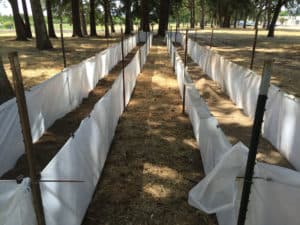
Researchers built runways to measure juvenile red-legged frog movement on land. ©Evan Bredeweg, Oregon State University

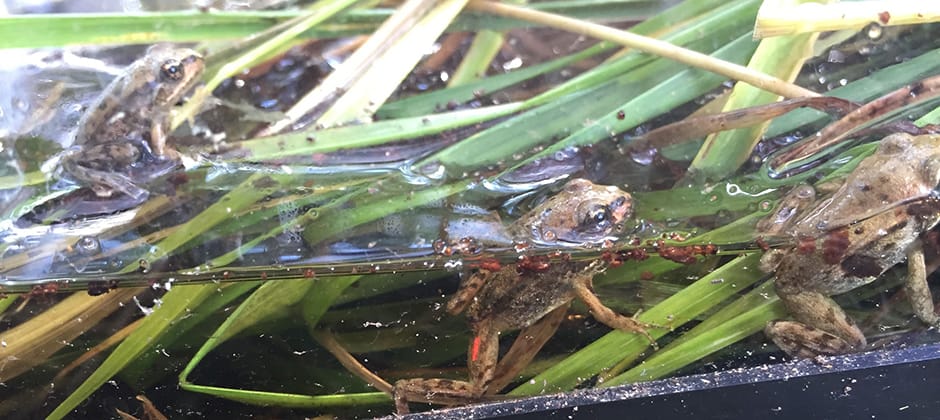
The researchers used tadpoles hatched from eggs gathered in the wild in Oregon in a series of small artificial ponds. To create a stressful environment, they reduced the water level of some ponds to about 20% of the starting level and left others at about the same level. The reduced water created higher maximum temperatures and lower minimum temperatures, left less area for the tadpoles to forage and led to more competition for resources.

They found that the water levels in the ponds had an effect on the size of the tadpoles after developing into frogs. “Animals in the permanent ponds were actually larger than the animals in the drier conditions,” Bredeweg said.

After the tadpoles developed, the researchers measured how quickly they moved up wet and dry runways made of topsoil to measure their movement behavior.

Smaller frogs, which were more often from the ponds with lower water levels, moved less quickly than those in high water. They were also slower to move from the get-go.

“In the wet environment, the animals were much more likely to move from the start,” Bredeweg said.

This lack of ability to move as much could have secondary impacts on a whole host of things important for survival. Frogs smaller in size and with less ability to move could be slower to escape from predators and might move shorter distances to find feeding or breeding opportunities.

Less movement might also mean they can’t move as far to find winter refuges and disperse to new areas in general.

These findings could have implications for the frogs under the changing climate.

“In the Pacific Northwest, the predictions for climate change is that there is going to be less summer precipitation and more precipitation during the winter,” Bredeweg said. If conditions are drier during key stages in tadpole development, it could mean whole populations of frogs are less physically fit and less able to survive the challenges of their environment.

But there is a positive side, Bredeweg said. The frogs managed to move even on the dry surfaces, which may be more common due to climate change. “Even in the face of dry conditions, they are still able to move,” he said.

Refuge’s ferrets wiped out after plague strikes prairie dogs

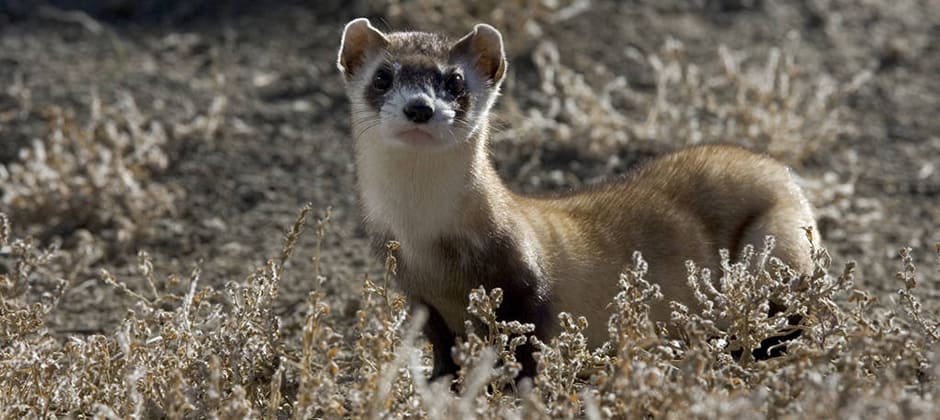
Biologists say a sylvatic plague outbreak that decimated prairie dogs in Montana’s UL Bend National Wildlife Refuge has nearly eliminated the refuge’s black-footed ferret (Mustela nigripes) population. Biologists counted just one ferret at the refuge this spring, following a plague event that killed nearly 70 percent of the refuge’s black-tailed prairie dogs (Cynomys ludovicianus) in the winter of 2017-2018. The ferrets rely on the prairie dogs for much of their diet. In the fall of 2017, biologists counted 24 black-footed ferrets at the refuge. Last fall, the number dropped to four. All of the ferrets were born in the wild but descended from ferrets raised in captivity and released, part of an effort to save the endangered species, which was once thought to be extinct.

Read more in the Great Falls Tribune.