


Share this article
Our favorite wildlife stories of 2025
Coyotes and badgers buddy up, saving salamanders from hurricanes and the viral origins of the jackalope
From Hickory Nut Gorge to the Big Cypress region of Florida’s Everglades, this year in wildlife has brought both heartbreaking and heartwarming stories of wildlife news.
Here is our team’s favorite news stories published on wildlife.org in 2025.
Wild Cam: Watch coyotes hunt with badgers
Graduate student and TWS member Emma Balunek saw something unexpected on her trail cameras—badgers and coyotes seemingly hunting together in the prairies of northeastern Colorado. Instead of writing it off as a coincidence like many scientists before her, Balunek set up more camera traps from New Mexico to South Dakota to answer basic questions about how, when and why the animals are cooperating. While badgers (Taxidea taxus) are strong diggers, coyotes (Canis latrans) are more lethal above-ground predators. Through her research and the observations of citizen scientists, Balunek has documented the pairs collaborating across the American west—and even in Mexico and Canada.
Wild Cam: Drought brings drinking problems for tequila bats
The lesser (Leptonycteris yerbabuenae) and greater (L. nivalis) long-nosed bats are good at what they do—pollinating the agave plants that mezcal is made from. But TWS member Mallory Davies noticed they were eating a decent number of insects and sugar water in their northern range. By analyzing fecal samples from the bats, Davies and her colleagues found that the bats were ingesting aquatic insects during times of drought. These dietary changes are possibly caused by a mismatch between agave bloom timing and travel patterns for the migratory species.
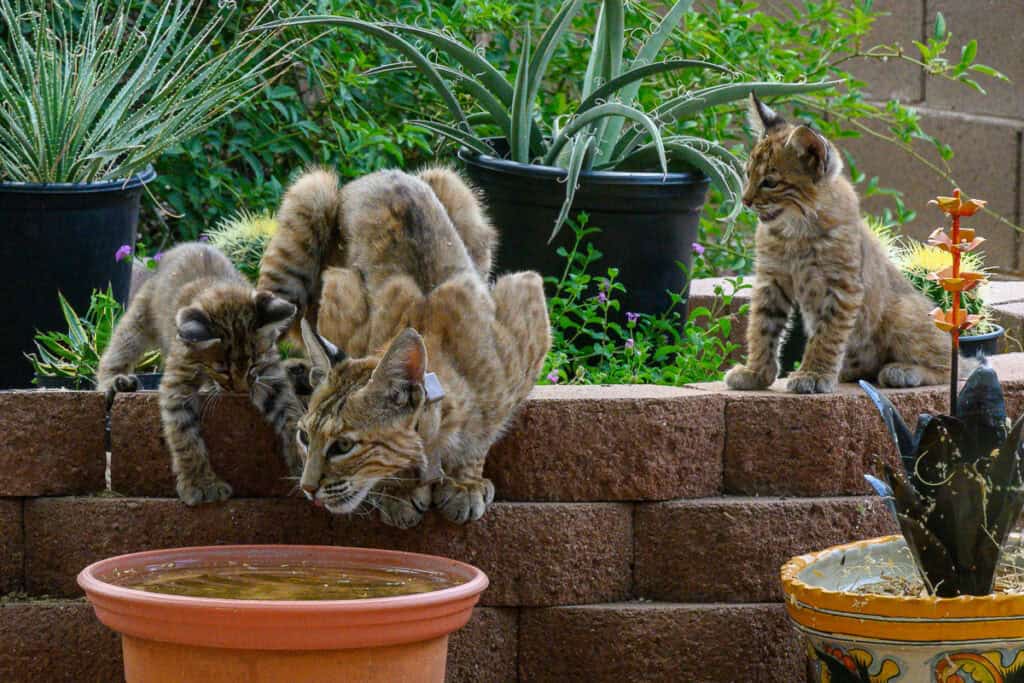
Bobcats and people coexist in Tucson
Researchers have found a surprising number of bobcats living in Tucson. TWS member Cheryl Mollohan helps tracks these felines through her Bobcats in Tucson Research Project, which has an online portal where residents submit sightings. During the study, her team caught 56 different bobcats and radio-collared 38 of them. Tucson residents recorded 1,400 bobcat sightings. One of their findings was that females went to the same backyards year after year to whelp their pups—and homeowners often welcomed the experience.
‘Alligator Alcatraz’ could threaten fragile ecosystem
In July, the Trump administration opened a new migrant detention facility in the Florida Everglades dubbed “Alligator Alcatraz.” The center sits within the ecologically sensitive Big Cypress region and has continued to operate without required environmental reviews or public input. Environmental groups and Miccosukee Tribal leaders have all raised concerns about the impacts of the facility on the ecology of the area, which is home to many endangered species, including the Florida panther (Puma concolor coryi), eastern indigo snake (Drymarchon couperi) and Florida bonneted bat (Eumops floridanus).
Tentacle bunny virus rebrands jackalopes in viral trend
With the body of a jackrabbit and the horns of an antelope, the jackelope is straight out of American folklore. But a strange virus called the Shope papilloma virus is causing Colorado’s cottontail rabbits to grow horn-like tumors out of their heads.
Why are there no rats in Alberta?
For most of North America, big cities are synonymous with rats. But not Edmonton—or all of Alberta, for that matter. Alberta’s success in rats has been thanks to a prevention campaign that declares the animals an agricultural pest. This means anyone with rats on their property has to control them. To keep rats from coming across the eastern provincial border with Saskatchewan, the government of Alberta created a buffer zone of intense rat management. Alberta’s rat management is a testament that the best offense is a good defense.
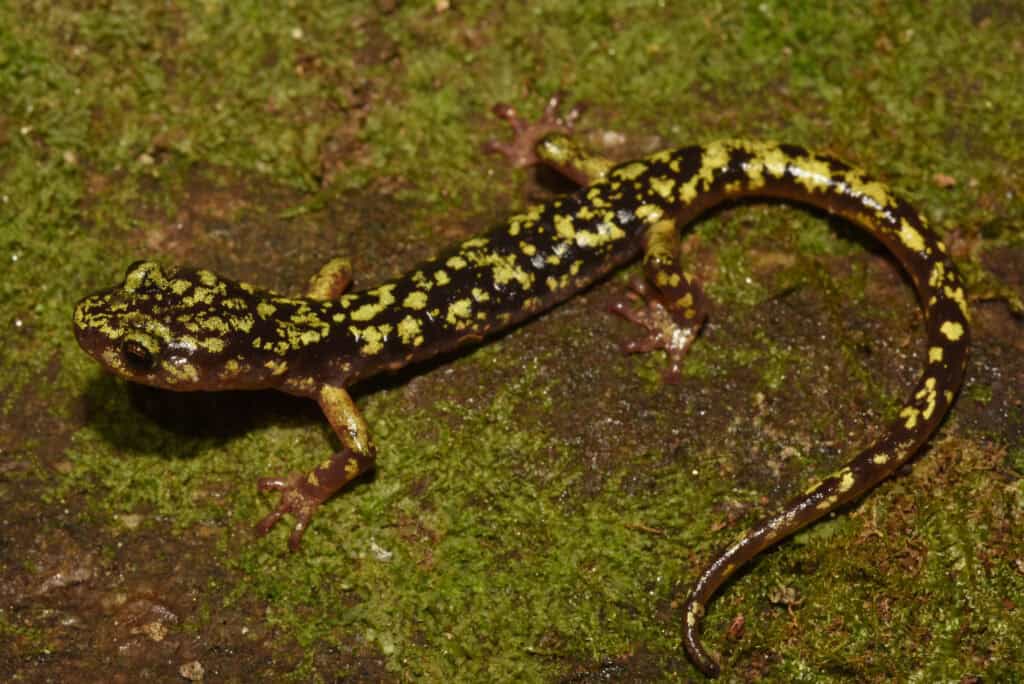
Wild Cam: Rescuing salamanders from hurricane destruction
Hurricane Helene wasn’t catastrophic only for human communities. A rare population of newly described salamanders in North Carolina suffered a huge setback after the storm and flooding washed through the Asheville area in September, 2024. The Hickory Nut Gorge green salamander (Aneides caryaensis) was first described in 2019. A team from the Amphibian and Reptile Conservancy went up the devastated mountain to collect individuals to build a breeding colony at the North Carolina Zoo in Asheboro.
Fireflies are blinking out in Mexican cities
In Morelia, Mexico, people are losing their memories of fireflies, according to a new study by Cisteil Pérez-Hernández. By surveying more than 100 people, Pérez-Hernàndez found that while most Morelians knew what fireflies were, they weren’t seeing as many fireflies, and didn’t see them in the same areas they used to. The decline is likely caused by rapid urbanization and is linked to the species’ societal extinction—where cultural knowledge and collective memory of a species gradually fade over time.
Are expanding armadillos a problem?
Over the last 10 years, armadillos have rolled into new areas and caused new problems. The nine-banded armadillo, considered an ecosystem engineer, is now established in 17 states. They dig large burrows that can disrupt agriculture, infrastructure and gardens. They are also vectors for diseases, including leprosy—but the fear and animosity towards the animal may be overblown.

TWS2025: Polar bears’ leftovers feed the Arctic
Polar bears are lethal predators and big eaters. But new research from TWS member Holly Gamblin shows they leave a lot of leftovers out on the ice. Polar bears (Ursus maritimus) hunt along the Arctic sea ice for fatty mammals like ringed seals (Pusa hispida) but typically only eat their high-energy blubber. By putting out seal carcasses at experimental sites and recording them with camera traps, Gamblin has observed a wide variety of Arctic scavengers like Arctic foxes (Vulpes lagopus) taking advantage of the leftovers.

Header Image: American badgers are formidable predators. Credit: Emma Balunek
Related Posts
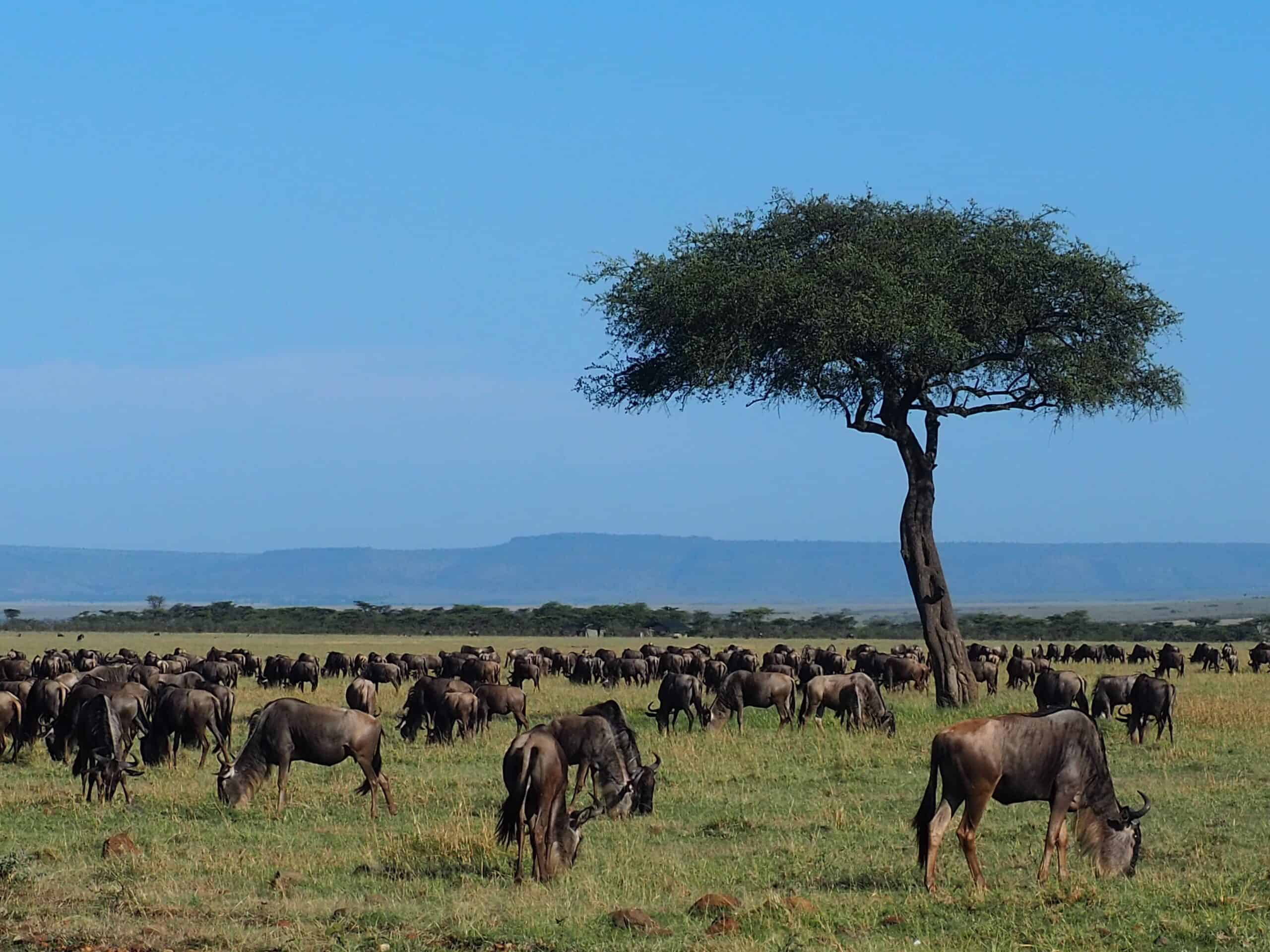
Wildebeest migration is collapsing in Kenya
Fences and other barriers are affecting connectivity for ungulates in the northern Serengeti
Code switching vampire bats mimic their closest friends
The creatures change their vocalizations based on their friend groups
Jungle cats take to trees to avoid food fights
Wild felines specialize on different prey in different layers of the rainforest