American bison becomes first national mammal

On Monday, May 9, President Obama signed the National Bison Legacy Act into law, making the American bison (Bison bison bison) the first national mammal of the United States. Millions of these massive — albeit extremely agile and fast — animals once roamed North America; however, by the late 1800s, hunting and habitat loss pushed them to the edge of extinction. Individuals worked with states, tribes and the Interior Department to restore bison — commonly referred to as buffalo — to their current status. Today, the U.S. Department of Interior leads the bison conservation effort and manages roughly 10,000 bison across 12 states. Bison also serve an integral role in tribal culture and, since the early 1990s, the Inter Tribal Buffalo Council has collaborated with the National Park Service to transfer bison from national park to tribal lands.

Go to the DOI website for 15 facts about American bison.

Views of future wildlife conservationists

Children are the future of wildlife conservation — a view that recently led researchers to examine how third and fifth grade students in North Carolina would prioritize the protection of different species.

“As wildlife professionals, we know we have limited resources available for how to allocate species conservation,” said Kristin Frew, lead author of a new study published in the journal Oryx. One potential way to address the issue is to prioritize conservation of wildlife species based on attributes such as ecological role or population numbers. As part of the study, Frew, a wildlife education specialist for the North Carolina Wildlife Resources Commission and member of The Wildlife Society, turned to the future — young students — “… to see what they want to do and what they want to be saved.”

The third and fifth-graders were asked to choose which attributes of wildlife were most important to consider when conserving species. They ranked the importance of conserving animals that are declining, animals that are important in nature, endemic species to North Carolina, species people like to watch and species that people like to eat.

Frew and her colleagues found the students prioritized endangered and threatened species above the other categories. A past study revealed that adults preferred to prioritize endemic species; however the students ranked endemic species as fourth most important out of five. “Conservationists tend to put endangered species ahead of others,” Frew said. “It’s interesting that kids do that same exact thing.”

It is possible that the students are learning about endangered or threatened species in the classroom putting it at the forefront of their minds or seeing more threatened or endangered wildlife on television, according to Frew.

Either way, since children can influence their parents’ ideas about wildlife conservation, according to Frew, it’s even more important to educate students about wildlife. “These kids will be making decisions for us in the future,” she said. “We want to make sure they’re set up in a good position to do that.”

Horse and burro coalition creates education materials

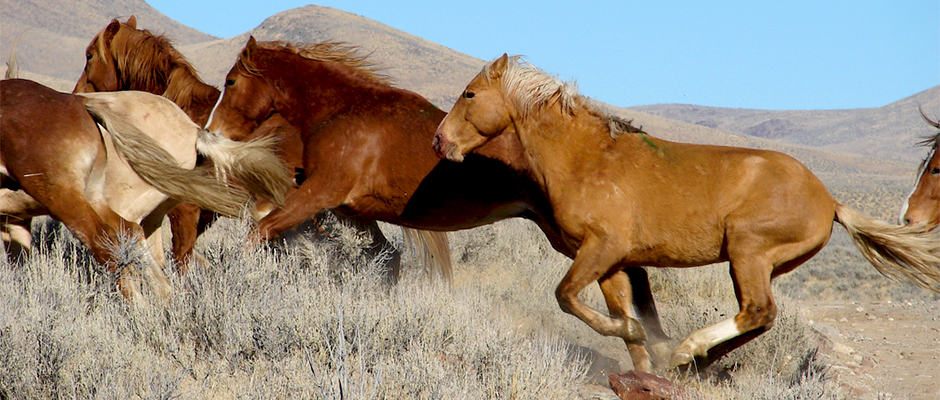
The National Horse and Burro Rangeland Management Coalition, currently chaired by The Wildlife Society, has published a series of fact sheets to the coalition’s website. The seven fact sheets provide an overview of the issue of wild horse and burro overpopulation, discuss possible management options, and address the specific impacts of excess horses and burros on taxpayer dollars, native wildlife, the rangeland ecosystem, and rural western communities.

As of March 2015, the Bureau of Land Management estimates that over 58,000 horses and burros live on BLM managed rangelands, despite the fact that the ecosystem can only sustain approximately 27,000 individuals. The coalition created the factsheets to aid in their advocacy for an ecologically-sound approach to managing the overabundance of free-roaming horses and burros.

In January, the coalition released informational commercials in the Denver, Colorado, area. These commercials are also available on the coalition’s website.

For more information on free-ranging horses and burros, see TWS’ position statement.

Students learn useful wildlife skills at TWS Conclave

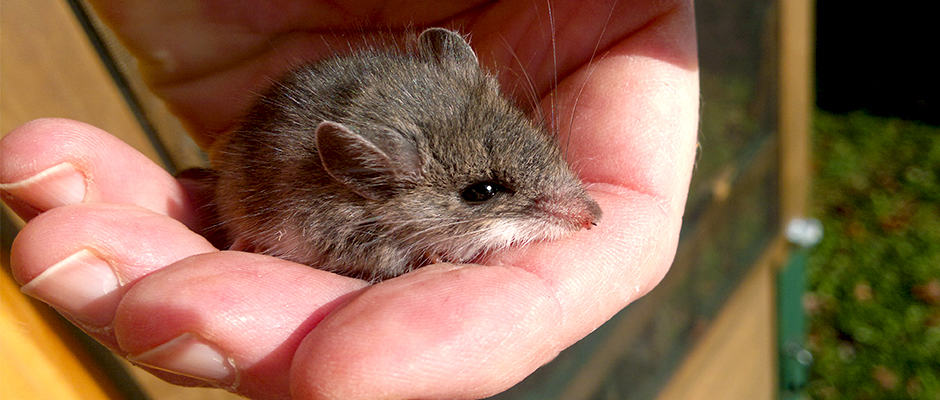
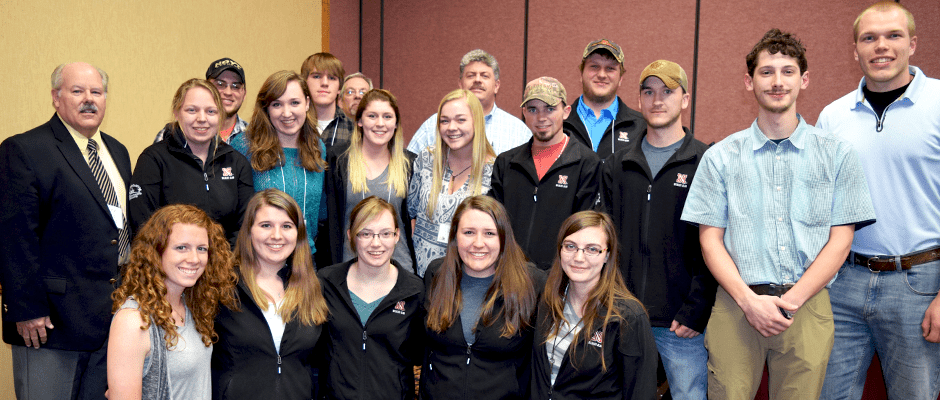
Members of the University of Delaware’s TWS student chapter got hands-on experience as well numerous networking opportunities at the TWS Northeast Student Conclave hosted by Juniata College last month. The conclave was held in Petersburg, Penn. where the aspiring wildlifers learned important skills that will help them in their future careers. Some activities included a rocket-netting workshop where students caught birds and helped identify their sex and age distribution, and a trapping techniques course where they learned how to fit ear tags on white-footed deer mice (Peromyscus leucopus). To learn more about the event, read the article on the UDaily website.

President’s Podium: Meeting with the membership

A key part of The Wildlife Society’s Strategic Plan is a commitment to support and encourage Council and staff to visit and interact with student and state/provincial chapters and sections. This year to date, thirteen Council and four staff members have attended 34 chapter and/or section meetings. In particular, our intention is to have either a Council or staff member present at each of the Section meetings, to interact with the numerous student, state/provincial chapters attending the Section meeting. This year we are on track to attend most of the section meetings.

We also have visited chapters in numerous states and provinces. These include Alaska, Arizona, California (6 chapters), Florida, Georgia, Idaho, Illinois, Kansas, Manitoba, Michigan, Minnesota, Nebraska, Nevada, New England, New Mexico, North Dakota, Oregon, South Dakota, Tennessee, Texas, Virginia, Washington and Wyoming.

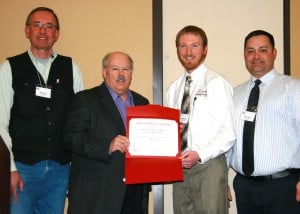
Presentation of the 50th Anniversary Certificate to the South Dakota State Chapter of TWS.  L – R Central Mountains and Plains Section Representative Bob Lanka, TWS President Gary Potts, SD Chapter President Nathan Baker and Past President John Kanta.

Presentation of the 50th Anniversary Certificate to the South Dakota State Chapter of TWS. L – R Central Mountains and Plains Section Representative Bob Lanka, TWS President Gary Potts, SD Chapter President Nathan Baker and Past President John Kanta.

In addition to Section and Chapter meetings, Council and staff also attended student conclaves in the North Central, Northeast and Western Sections where numerous student chapters were represented. Council and staff have given presentations to student chapters at California Polytechnic State University, New Mexico State University, University of WA, and University of WY.

This level of engagement represents a new emphasis in the Society on enhancing communications and interactions among its organizational Units. This is in keeping with development of the Conservation Affairs Network, enhanced integration of the Society’s web presence across Chapters and working groups, and a much more robust e-communications capacity for sharing information about activities among our organizational units and members.

The benefits of a stepped-up engagement in these meetings are numerous:

  • The face-to-face meetings allow everyone to get to know each other better which builds camaraderie.
  • They provide an opportunity for Council and staff to discuss member concerns, ideas, issues, and projects at the local and regional levels.
  • They allow Council and staff the chance to share information about parent society activities, including the annual conference, awards, membership benefits, Government Affairs and Partnerships and the Conservation Affairs Network, and publications.

I have benefitted a great deal from my visits to the North Central Section meeting, the NCS Student Conclave hosted by the University of WI Stevens Point, and chapter meetings in Illinois, Nebraska and South Dakota. I was excited about attending the NE and SD chapter meetings because both chapters were celebrating their 50th anniversary. I asked Mariah Simmons, Wildlife Programs Coordinator for TWS about how many chapters were having a 50th anniversary meeting this year, and she determined that nearly a dozen chapters were celebrating their 50th meeting! I asked Mariah to develop 50th anniversary certificates for the chapters. It was great to personally present two of the certificates to the NE and SD chapters, respectively. At both chapter meetings, talks were given on the history of the chapters. During the evening networking events, it was especially gratifying to see many long-term chapter members and officers discuss many of the past challenges and accomplishments of their chapter.

I know the students and early career professionals at these meetings benefitted significantly from discussions with and mentoring by older chapter members. Through these and other engagement opportunities, they learned about the importance of being involved in something bigger than themselves because “We are The Wildlife Society.”

How prairie birds respond to wind turbines

While several studies have highlighted the direct impact of renewable energy infrastructure on North American birds — think birds colliding with turbines, for instance — researchers don’t know as much about its indirect effects on the region’s avian species including prairie birds.

In an effort to address that knowledge gap, researchers recently examined the reproductive success of horned larks (Eremophila alpestris) and McCown’s longspurs (Rhynchophanes mccownii) in Wyoming. The study was part of a special section in the journal The Condor: Ornithological Applications that also looked at the effects of oil and gas development in Alberta and the Northwest Territories on Canada’s boreal birds, the risk that wind towers in the Great Plains pose to wintering sandhill cranes (Grus canadensis), and the behavior of migrating raptors in response to power line construction.

When Wind Blows Through the Prairie
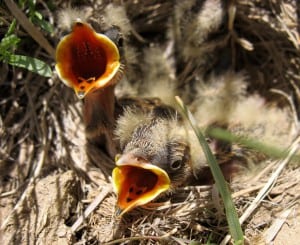
Horned lark chicks in their nest. Image courtesy of Anika Mahoney.

Horned lark chicks in their nest. Image courtesy of Anika Mahoney.

Horned larks and McCown’s longspurs both use short, sparse vegetation, however, other habitat preferences led researchers to believe that the birds potentially respond differently to wind energy development. While horned larks are often found along roadsides or agricultural lands, McCown’s longspurs choose sparse vegetation and habitat that’s less impacted by human activities.

One important similarity, however, is that populations of both species are declining across the U.S.

As part of the study, researchers examined the proximity of birds’ nests to wind turbines, the density of turbines in a given radius of each nest and the nests’ proximity to a developed habitat edge such as a road. They found that despite Horned Larks’ apparent tolerance to humans, the birds had less nesting productivity near higher densities of wind turbines, compared to McCown’s longspurs, which weren’t affected by turbine density.

“This is surprising, and we didn’t predict it,” said lead author Anika Mahoney, an ecologist with Lowham Walsh, LLC., who expected the Horned Larks to be more adaptable. “This really illustrates the need for more research into what’s going on at wind farms for a broad array of species.”

While studying the two species, Mahoney found the density of wind turbines was the best predictor of nest productivity. As a broader management strategy, Mahoney suggests building wind turbines in places that are already developed such as agricultural fields. Further, managers could help reduce scavengers by making sure human trash is collected and disposed of properly and collecting bird carcasses that were killed and left under turbines. Preventing rodents that can prey on nests from infesting turbines could also o help along with ensuring there are native plants in the areas the birds use.

Further Management Suggestions

As part of the special section, Jennifer Smith, a post-doctoral research associate at Virginia Polytechnic Institute and State University and lead editor of the section, along with her coauthor James Dwyer, an environmental scientist with EDM International, Inc., provide additional suggestions for management decisions regarding wind and solar energy development. For example, they suggest avoiding building infrastructure in areas with heavy bird use or where there are federally listed species or those of conservation concern. In addition to avoiding areas of high biodiversity, Smith recommends building conservation buffers as well as developing guidelines that provide ideal distances to install renewable energy infrastructures.

Mainly, Smith suggests that in addition to considering the direct impacts of renewable energy on wildlife when siting renewable energy facilities, managers should also consider indirect effects on, for example nesting success. “Ultimately, what we would like is for our results to inform siting guidelines so that any potential effects of future renewable energy facilities on birds are minimized,” she said.
Misconceptions, challenges of wildlife biology profession

One thing sportsmen should know about wildlife biologists is that they aren’t out of touch with hunters and landowners — they just simply ­cannot be everywhere all the time, according to four state wildlife biologists who recently participated in a Q&A with Outdoor Life magazine. “We can’t be everywhere, so we often have to rely on surveys to reach out to a large amount of hunters and find out what they are seeing on the ground,” said David Stainbrook, deer & moose project leader at the Massachusetts Division of Fisheries and Wildlife, in his interview with Outdoor Life. Ryan Walker, Tex Creek District Habitat Biologist at the Idaho Department of Game and Fish, echoed Stainbrook’s sentiments, noting that it is a matter of scale, where biologists are focusing on entire populations. The four biologists are all members of The Wildlife Society from each corner of the U.S., and they covered a range of topics from other aspects of their relationship with sportsmen to the best and worst part of their jobs.

Wild leopards less abundant than thought

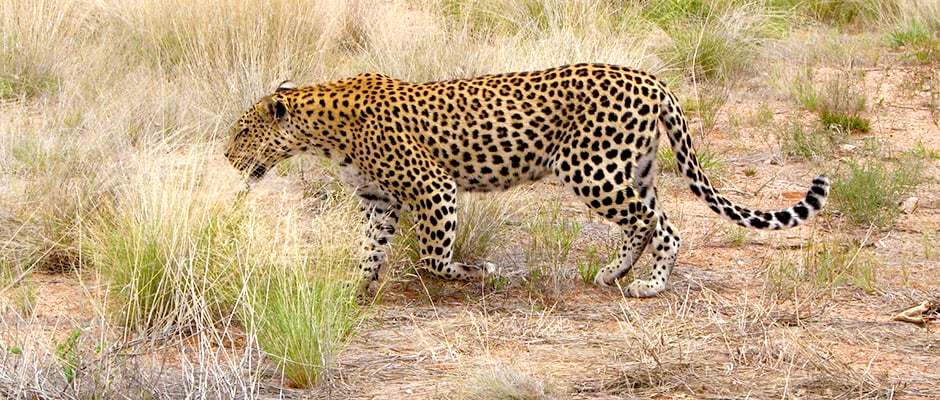
While researchers previously assumed leopards are abundant in the wild as a result of their adaptability, new research suggests this may not be the case. In what’s believed to be the first study to assess leopards’ status globally, researchers — including TWS member Jan Kamler — found leopards have lost up to 75 percent of their historic range since 1750. “Within the past year my work with Panthera has shown that the Indochinese leopard has lost 95 percent of its former range in Southeast, and this unique subspecies is rapidly heading towards extinction,” said Kamler. “This was a little shocking, because the rapid decline of leopards has gone under the radar of all governments and NGOs in the region, and most assumed this subspecies was still doing well.” Partly because of these findings, which recently appeared in the journal PeerJ, the International Union of Conservation of Nature’s cat specialist group has recommended reclassifying the leopard as vulnerable as it is currently listed as “near threatened” on the IUCN Red List. Read more in the New York Times.

2016 TWS Leadership Institute participants announced

Congratulations to the participants who have been chosen for the 2016 TWS Leadership Institute! These promising early-career wildlife professionals, selected from a competitive pool of applicants, will participate in a variety of distance learning projects over the coming summer. The program culminates in October, with intensive hands-on mentoring activities and leadership workshops during the 2016 TWS Annual Conference in Raleigh, North Carolina.

“The Wildlife Society established the Leadership Institute in 2006 to enrich the future of our membership and our profession,” says TWS Executive Director Ken Williams. “The program has garnered widespread support because it has been very successful in preparing our early-career members to adopt active professional leadership roles both within and outside TWS.”

A committee of TWS members and staff selected participants based on the applicants’ academic record, demonstrated leadership capability, and demonstrated level of excellence, either in their current position or in their position as a leader of a Chapter or Section of The Wildlife Society.

This year’s participants are:

  • Adam Ahlers, Kansas State University
  • Krisha Faw, F&W Forestry, Georgia
  • Shelby Hiestand, Michigan Department of Natural Resources
  • Jennifer Kanine, Pokagon Band of Potawatomi Indians, Michigan
  • Brian Kiss, Manitoba Conservation and Water Stewardship
  • Andrew Little, University of Georgia
  • Rebecca Mowry, Montana Fish, Wildlife, and Parks
  • Anthony Roberts, U. S. Fish and Wildlife Service, Maryland
  • Anthony Sipes, Indiana Department of Natural Resources
  • Julia Smith, Arizona Game and Fish Department

“Many young wildlife professionals entering leadership positions have not necessarily been trained in the skills needed for successful management of large groups or complicated programs”, says Laura Bies, coordinator of TWS’ Leadership Institute. “The Leadership Institute introduces these exceptional young people to the management, mentoring, and organizational skills they need to become exceptional leaders.”

From May through October, participants will complete a wide variety of exercises, which include reading and reflection on leadership topics, presenting to peer groups, leading seminars, and developing summary documents regarding their professional leadership goals. During TWS’ Annual Conference in Raleigh, the participants will meet for focused analytical discussions, serve as mentors for students, be mentored by Institute alumni and Council members, and attend Council meetings.

The Wildlife Society received funding for this year’s Leadership Institute Class from the Dallas Safari Club, whose mission is to conserve wildlife and wilderness lands; to educate youth and the general public and to promote and protect the rights and interests of hunters worldwide.

Learn more about the Leadership Institute here.

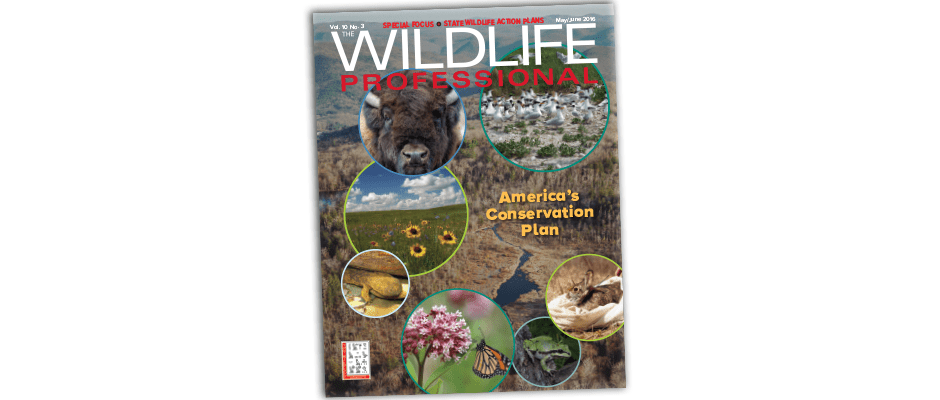
The Wildlife Professional’s special issue on State Wildlife Action Plans now online

The Cost of Conservation — Priceless

A few years ago, an advertising campaign for a credit card company featured a series of commercials with the heart-warming theme, the best things in life can’t be bought. This thought strikes me as one that should be applied to wildlife.

Last October, states and territories submitted the second generation of their State Wildlife Actions Plans to the U.S. Fish and Wildlife Service. The plans not only highlight species of greatest conservation need in each state, but also prioritize protection of habitats and species. Collectively, they represent a blueprint for conserving valuable wildlife and habitat before they become too rare or costly to restore.

Given the enormous amount of time and effort that went into constructing each plan and what they mean to future generations of Americans, we have dedicated the entire May/June issue of The Wildlife Professional to the 2015 State Wildlife Action Plans.

Seven states — Alaska, Indiana, Iowa, Massachusetts, North Carolina, North Dakota and Virginia — responded to our invitation to write an article for the issue. We thank them for their participation and for sharing their stories, which describe diverse species ranging from hellbenders to wood bison as well as the complexities and challenges of developing a state wildlife plan.

But as the wildlife community knows, funding conservation efforts outlined in the plans is a major concern, not only for financially strapped states but also for the federal government — which is where the price tag for priceless wildlife becomes a reality.

With hundreds of species of greatest conservation need at stake — and in some cases at risk of federal listing under the Endangered Species Act — wildlife professionals need to make their voices heard in Congress where the funds to support the plans are appropriated. A Blue Ribbon Panel assembled by the Association of Fish and Wildlife recently called for increased funding for the State and Tribal Wildlife Grants Program that help support state conservation efforts (see page 14). Obviously, this considerable increase hinges on convincing congressmen and senators that the money will be put to good use and has value to Americans.

As Congress allocates taxpayers’ money to the needs of hundreds of worthwhile programs, will there be enough to support wildlife conservation efforts? In this time of political gridlock, the prospects look grim unless more is done to convince legislators to back sustainable funding.

But let’s remember that success stories like that of the New England cottontail have been written and more are possible with the cooperation and support of partners and citizen scientists.

I hope you will enjoy reading this issue as much as we have enjoyed putting it together.

Nancy_headshotNancy Sasavage
Editor-in-Chief
editor@wildlife.org

Log in to access the latest issue of The Wildlife Professional.