NM joins program to enhance waterfowl breeding habitat

Fast Facts: 

  • The New Mexico Department of Game and Fish recently joined other states in contributing to habitat conservation in Canada, where most of the waterfowl that winter in the U.S. are produced each year.
  • NMDGF will contribute $5,000 a year to fund habitat projects in western Canada.
  • The state’s contribution will be matched by Ducks Unlimited and leveraged through the North American Wetlands Conservation Act, resulting in at least $20,000 a year for conservation projects.

SANTE FE, NM – March 10, 2017 – The New Mexico Department of Game and Fish recently joined other states in contributing to habitat conservation in Canada, where most of the waterfowl that winter in the U.S. are produced each year. Thirty-seven states made contributions in 2016.

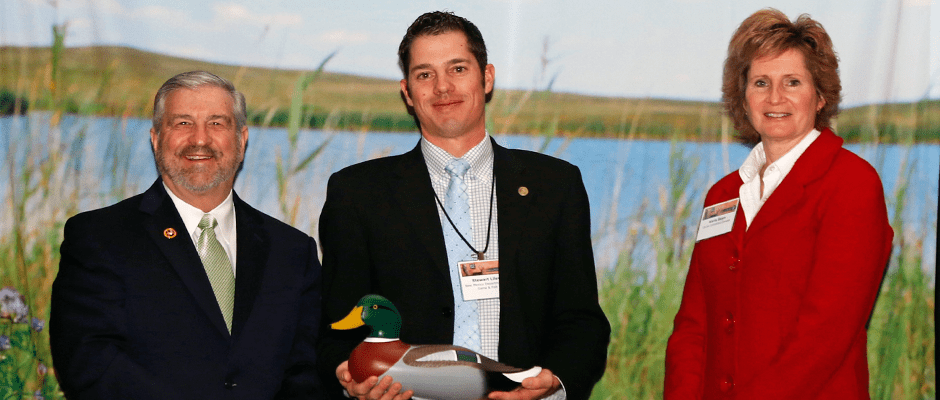
“This is New Mexico’s inaugural participation in the Association of Fish and Wildlife Agencies’ program, which funds North American Waterfowl Management Plan habitat projects in Canada,” said DU Canada Director of International Partnerships Pat Kehoe. “We are very pleased to have them as a partner in waterfowl habitat conservation in Canada, and we are confident they will see tremendous returns for their investment.”

As part of the agreement, NMDGF will contribute $5,000 a year to fund habitat projects in western Canada. The state’s contribution will be matched by Ducks Unlimited and leveraged through the North American Wetlands Conservation Act, resulting in at least $20,000 a year for conservation projects. This conservation work will restore and enhance breeding and staging habitats that are important to waterfowl that winter in New Mexico.

The funding will come from state hunting licenses sales revenue, continuing the long tradition of hunters being chief funders for conservation work that benefits all wildlife and people.

“New Mexico residents understand the habitats that benefit waterfowl also benefit many other species of nongame migratory birds,” said NMDGF Chief of the Wildlife Management Division Stewart Liley. “Sportsmen have long borne most of the costs of conservation. We see this arrangement as an opportunity to maximize our investments through the leveraging power of Ducks Unlimited.”

Read release online »

Ducks Unlimited Inc. is the worlds largest nonprofit organization dedicated to conserving North America’s continually disappearing waterfowl habitats. Established in 1937, Ducks Unlimited has conserved more than 13.8 million acres thanks to contributions from more than a million supporters across the continent. Guided by science and dedicated to program efficiency, DU works toward the vision of wetlands sufficient to fill the skies with waterfowl today, tomorrow and forever. For more information on our work, visit www.ducks.org.

Media Contact:
Andi Cooper
601-956-1936
acooper@ducks.org
@DUSouthernNews

Trump administration releases 2018 budget blueprint

On Mar. 16, the White House released the President’s budget blueprint, which gives a preliminary outline of the proposed topline budget for fiscal year 2018 (FY18). In keeping with the administration’s resolve to heavily reduce government spending, deep cuts were seen across non-defense budgets, including the proposed elimination of some programs altogether.

In the “America First” Budget, President Trump states, “There is a $54 billion increase in defense spending in 2018 that is offset by targeted reduction elsewhere. This defense funding is vital to rebuilding and preparing our Armed Forces for the future.”

Agency and department heads, like Environmental Protection Agency Administrator Scott Pruitt and Interior Secretary Ryan Zinke, vowed to fight for their respective budgets, but ultimately received larger proposed cuts than originally expected.

Department of the Interior

At the Department of Interior, targeted reductions are reflected by a 12 percent decrease from FY17 funding levels. Further, the proposed budget would refocus DOI spending toward energy development programs.

The budget proposed an up to 15 percent cut for the U.S.Geological Survey. The budget would prioritize USGS essential science programs — including funding for the Landsat 9 ground system and research and data collection to inform sustainable energy development. The USGS Coalition has requested USGS funding levels of $1.2 billion for FY18 and at least $1.08 billion for FY17. USGS was funded at $1.1 billion in FY16 and the FY17 continuing resolution.

The proposed budget did not mention specific funding levels for the U.S. Fish and Wildlife Service, National Park Service, or Bureau of Land Management, but stated its support for stewardship capacity for land management operations. Funding for federal land acquisition was reduced by more than $120 million which could limit funding for programs like the Land and Water Conservation Fund.

On Mar. 21, a group of Senate Democrats sent a letter to the administration urging Trump to reconsider the proposed cuts to Interior and to revisit infrastructure promises made during his campaign.

Also included in Department of the Interior, Environment, and Related Agencies Appropriations bill is funding for the U.S. Forest Service (an agency within the U.S. Department of Agriculture). The proposed budget would fund wildland fire preparedness and suppression activities at the 10-year average level of $2.4 billion while reducing funding for National Forest System activities, including major federal land acquisition.

Department of Agriculture

The USDA has seen a proposed decrease of $4.7 billion, or 21 percent. Senator Debbie Stabenow (D-MI), Ranking Member of the U.S. Senate Committee on Agriculture, Nutrition, & Forestry, released a statement last week opposing these cuts to the budget and pointing to concerns for negative impacts on voluntary conservation efforts on farmland. The proposed budget may also hinder efforts to expand programs, like Conservation Reserve Program lands, under the 2018 Farm Bill. A reduction in funding for staff at service centers would limit the agency’s ability to effectively administer programs like those provided through the Natural Resources Conservation Service.

Environmental Protection Agency

The Environmental Protection Agency’s funding was reduced by 31 percent in the proposed budget. This cut would eliminate funding for regional efforts like the Great Lakes Restoration Initiative (GLRI) and cleanup of the Chesapeake Bay. The GLRI is a bipartisan effort to protect and restore the Great Lakes region. Part of the major focus of the GLRI Action Plan is the prevention and control of invasive species as well as restoration of habitat to protect native species. During a recent hearing discussing innovative control of invasive species, the Great Lakes Fishery Commission Chairman David Ullrich and Senator Tammy Duckworth (D-IL) stressed the importance of funding initiatives in the Great Lakes Region. Ullrich believed that loss of funding would have devastating effects.

Climate Funding

Climate change is not a priority outlined in the proposed budget. In reference to climate change-related programs, Office of Management and Budget Director Mick Mulvaney recently stated, “We are not spending money on that anymore. We consider that to be a waste of your money to go out and do that.”

The proposed budget would follow through on previous discussions to stop U.S. funding to United Nations climate change programs. The U.S. would also discontinue funding to the Green Climate Fund and Climate Investment Funds, thereby eliminating the Global Climate Change Initiative. Funding for efforts like the Clean Power Plan, international climate change programs, and climate change research and partnership programs would also cease in FY18 under the proposed budget.

Initial Reactions

While this is not the final budget for FY18, several members of Congress and other organizations have expressed their initial reactions to the proposed cuts. Both Republicans and Democrats see a need for major negotiations before Congress approves a budget.

In a statement, House Agriculture Chairman K. Michael Conaway (R-TX) discussed the important work of farmers and ranchers, saying, “Agriculture has done more than its fair share. The bottom line is this is the start of a longer, larger process. It is a proposal, not THE budget.”

House Committee on Appropriations Chairman Rodney Frelinghuysen (R-NJ) reiterated the power of Congress in the federal budget process, “As directed under the Constitution, Congress has the power of the purse.”

Organizations, like the Ecological Society of America, have created streamlined methods to stay up-to-date as the federal budgeting process progresses and to help put the impacts on conservation funding into context.

National Wildlife Federation President and CEO Collin O’Mara released a statement saying, “The massive cuts outlined in this budget would be the opposite of what scientists say is needed to reverse America’s wildlife decline.”

Learn more about the U.S. Federal Budgeting Process in Section 5 of TWS’ Policy Toolkit.

Seeing birds can help people de-stress

Could birds help keep us sane? Recent research into nature’s impact on mental health gives us reason to believe so.

The opportunity to see a higher number of birds outside is linked to less depression, anxiety and stress, according to a new paper in BioScience.

Researchers from the University of Exeter and the British Trust for Ornithology measured the population and species diversity of birds at morning and lunchtime in a variety of neighborhoods in three towns in southern England. Testing five different nature characteristics in the neighborhoods, they found afternoon bird abundance was positively correlated with less depression, anxiety and stress. Vegetation cover also had a positive correlation.

“One possibility is that the greatest benefits are provided by characteristics that are most visible during the day and so most likely to be experienced by people,” the researchers concluded. The research was part of a broader project on biodiversity and ecosystem services in urban regions.

Between May and June 2013, researchers collected mental health surveys from a representative sample of local residents, taking into account factors that might influence their experience with nature, including gender, age, education, income, personality and attitude toward the natural world.

The results showed that people who spent less time outside than usual in the previous week were more likely to feel depressed or anxious.

“We chose birds because they’re mobile, visible and relatively well-known,” said Daniel Cox, research fellow at the University of Exeter. “They’re components of nature people are more likely to notice in their daily lives.”

Seeing a greater number of species of birds did not appear to be correlated with less depression, he said.

“Species doesn’t matter as much as forming that connection to nature, that well-being feeling people get,” Cox said.

“Being able to regularly experience nature is important,” he said. “With the intense urban environments we have, nature allows you to unwind, focus and recover from directed-attention fatigue [mental exhaustion].”

Further studies are needed to understand why bird abundance and human mental well-being are positively associated, Cox said.

UND students reflect on state chapter meeting

Seeing many of my fellow students get more and more involved throughout the year, especially at the North Dakota Chapter of The Wildlife Society annual meeting February 8-10, 2017 brought me an immense amount of joy. I always keep in mind that no two people share the same path through life. We all have a unique background that contributes to our life “story”, and ultimately how we perceive and respond to things today. Our morals, work-ethic, and drive are all shaped by the things we’ve been through and experienced thus far in life.

The Wildlife Society has given me a strong sense of community, primarily through the friendships and relationships I’ve made. Over the past six months I’ve seen many new friendships spark and grow, and I give full credit to The Wildlife Society for facilitating wonderful opportunities to connect and grow. At a place like the state conference, we see students come from all over with a great diversity of backgrounds, hobbies, research interest, internship experience, and goals for the future. Many would agree when I say that we all have one thing in common; an overwhelming passion for our natural resources and wildlife. This passion is something many will never understand, unfortunately because they’ve never gotten the opportunity to experience the joy of these wonders.

“It’s a great way to meet professionals and you get to learn a lot about the research that’s occurring in the area around us. Not only do I go to learn about other people’s research, but every year I have presented research of my own,” said Conrad. “Without the state TWS meeting it would be very hard for us as students to get our names out there to professionals in the field.” This was Nick Conrad’s, Treasurer of the UND TWS Student Chapter, third time attending the ND Chapter annual meeting.

It is my priority to foster this connection that we share. Being able to congregate around the common goal of conservation continues to bring us as TWS members together, making us a stronger entity. Whether it is an aviation student at the University of North Dakota (UND) wanting more time outdoors, or a fisheries and wildlife biology major planning to dedicate his or her career to the field, we can all reach that common ground and express excitement in the pursuance of our wildlife passions, regardless of how different our backgrounds may be. Getting just one person to fall in love with wildlife and the outdoors is a notable feat. Years later, that person may introduce their children or someone they know to these resources in hopes that they too will find happiness from the outdoors. If we can’t conserve our wildlife and promote outdoor recreation for future generations, then there will be no demand or appreciation for it. As less and less people appreciate these resources, there will be less and less advocation for funding. It’s scary to think that future generations may never get to experience the things that I have been fortunate enough to, which is why I am so thankful for and confident in actions of The Wildlife Society.

“I love hearing the different presentations about the current research that is taking place within North Dakota,” said Amor. “It allows me to have a better understanding of what is going on. Being from Florida, I did not grow up in North Dakota so I really enjoy hearing about local research and to be more aware of what is happening in conservation at the state level.” Attending the North Dakota annual meeting allows UND student Jacqueline Amor to network with professionals and professors at different universities, and ask questions about current research and job opportunities.

As we came together at the North Dakota TWS annual meeting in a time of uncertainty for the things we love, we were surrounded by those who share our same passion. Hearing from so many respected professionals and leaders reminded us that there are still many people that care as much as we do. We’ve overcome adversity such as this in the past, and this just another opportunity to do so. We are capable of great things when we come together.

I want to say thank you to the North Dakota Chapter for a wonderful conference!

USFWS rule ending ‘otter-free’ zone upheld by federal judge

 In 1986, Congress authorized the U.S. Fish and Wildlife Service to regularly remove and relocate federally threatened southern sea otters (Enhydra lutris nereis) from an “otter-free” management zone south of Point Conception, California to a translocation zone around San Nicolas Island to reduce predation impacts on shellfish fisheries. In 2012, the USFWS decided to officially end the Southern Sea Otter Translocation program after an extensive review found it to be ineffective. In 2013, the California Sea Urchin Commission and three other commercial fishermen’s groups filed a challenge to the USFWS’ decision, arguing that Congress had not granted the agency the authority to end the program. On March 3, following cross-motions for summary judgment, U.S. District Judge Dolly Gee ruled in favor of USFWS, thereby upholding the 2012 final rule to terminate the Translocation Program and eliminate the “otter-free” management zone.

Read more at Courthouse News Service.

Passion drives McDonough Award winner

Nominations for the 2017 Jim McDonough Award will be accepted through May 1. Click on the link above to visit the McDonough Award webpage, or visit www.wildlife.org/awards to learn more about all TWS awards.

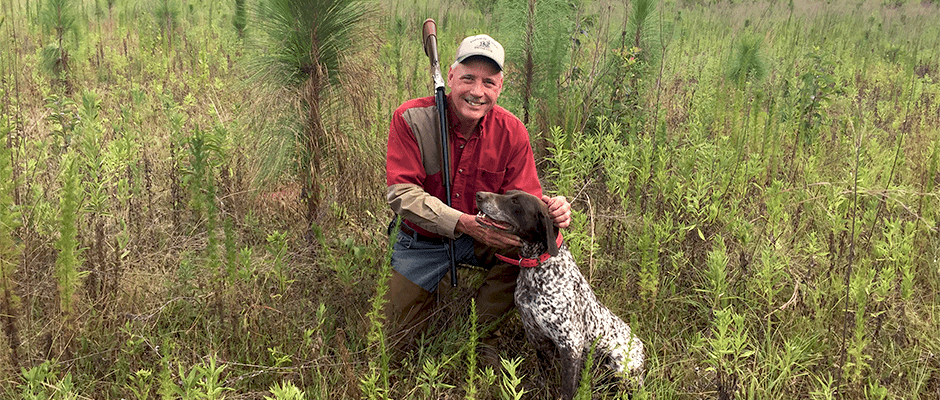
The day after Reggie Thackston retired from the Georgia Wildlife Resources Division of the Department of Natural Resources where he worked for 27 years, he immediately took a half-time position with the Tall Timbers Research Station & Land Conservancy.

This devotion to wildlife is part of what helped Thackston win the Jim McDonough Award at last year’s TWS annual conference in Raleigh. “Most of us who go into the wildlife profession do it because it’s a passion, and we can’t just walk away from a passion,” he said.

The Jim McDonough Award was established in the name of the longtime biologist and TWS member to honor his generosity and support for professional excellence in wildlife management. The award is presented to TWS members who are Certified Wildlife Biologists, members of the section and chapter where they live and have made important contributions to the field. This description is easily reflected in Thackston’s story.

Thackston has been a member of The Wildlife Society since he got his associate certification in 1979 and full certification in 1985. He loved wildlife since he was a child. “The genesis for my interest in a career in conservation was growing up with a family that spent time outdoors,” Thackston said. He recalls camping, fishing and hiking in the North Georgia mountains with his family when he was growing up and quail hunting with his father from the age of 4.

Since then, Thackston has been a member of the TWS chapters of every state he’s lived in, including Oklahoma, South Carolina and Georgia.

Winning the McDonough Award has allowed Thackston to reflect on his career and involvement in TWS. “It’s almost always a team effort,” he said. “This has certainly been the case in my career. I’ve been really fortunate to work with people who are just as passionate as I am. And to have that kind of relationship with your peers and that kind of unity and mission focus is just something that you don’t run into everywhere you go.”

Thackston hopes to continue to contribute to wildlife conservation, in particular with bobwhite quail restoration and management. With Tall Timbers, he currently oversees the Carolina Regional Quail Project where he works with private landowners in the Carolinas to manage lands for northern bobwhites in fire-dependent systems.

“It’s important to have passion as the driver and we are fortunate in wildlife conservation to have peers that are like that as well,” Thackston said. “We are all working for a cause which is stewardship of natural resources.”

Camera network could offer snapshot of world wildlife

A group of biologists is calling for a network of remote cameras to share images of animal behavior around the world.

Sixteen authors published a paper published in Frontiers in Ecology and the Environment calling for an expansion of remote cameras ­­— or camera traps — and a standardized system to share data from them.

“There is a pressing need for increased coordination of remote-camera surveys to effectively monitor global biodiversity,” they wrote.

The paper stemmed from a workshop at a 2014 meeting of the Society for Conservation Biology in Missoula, Mont., said TWS member Robin Steenweg, the lead author of the paper. The workshop brought together biologists who were working on networks of remote cameras to discuss their experiences.

Those networks included Parks Canada, which deploys hundreds of remote cameras throughout its nine national parks; the Smithsonian’s eMammal project, which shares camera trap data from scientists and citizen scientists at sites around the world and Tropical Ecology and Monitoring Network, which gathers data from monitoring sites in 16 tropical forests in Africa, Asia and Latin America.

“There are tens of thousands of cameras — probably hundreds of thousands — that are already collecting data,” Steenweg said. “We just need to bring that data together.”

Steenweg, a recent PhD graduate from the University of Montana who now works as a species at risk biologist for Alberta Environment and Parks, imagines a system similar to weather stations that could coordinate information gathered by scientists and citizen scientists around the world to paint a picture of factors that influence wildlife and biodiversity at a larger, global scale.

“A lot of the drivers of biodiversity loss — climate change, but also habitat destruction and fragmentation — are common across ecosystems,” Steenweg said. “We want to match the scales of data collection and analysis with the scales of the drivers of biodiversity loss.”

Remote cameras are effective, Steenweg said, because they’re inexpensive, they can monitor wildlife without interrupting their behavior, and they often capture multiple and often under-studied species.

“In Parks Canada, we’ve been putting up cameras to monitor grizzly bears,” he said, “but we’ve gotten amazing photos of, for example, wolverines.”

Steenweg and his co-authors urged this network to help countries that signed on to the Convention on Biological Diversity’s 2011-2020 strategic plan monitor global biodiversity trends.

“We envision a global network of remote cameras that not only provides real-time biodiversity data but also serves to connect people with nature,” they wrote.

The expansion of remote cameras in wild areas has raised privacy concerns, Steenweg said. Parks Canada has addressed it by placing information signs at all trailhead and having a policy to immediately delete all images of humans.

“I understand the change in perspective of how ‘wilderness-y’ a place is if there’s a camera up,” he said, “That’s why we take these privacy concerns seriously because we don’t want to lose access to this important tool for monitoring, and for collecting wildlife images that really resonate with people”

Wolves and coyotes play different ecosystem roles

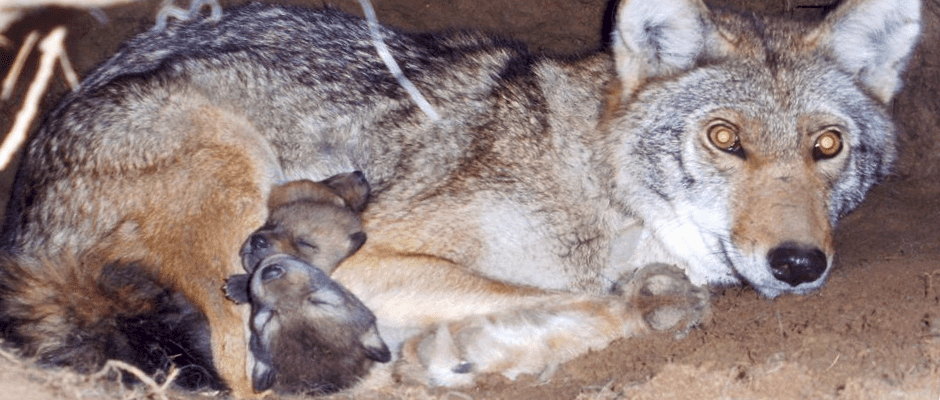
While eastern coyote populations are abundant in Ontario, researchers recently found the canids play a different role than wolves in predator-prey interactions.

Ontario is one of only a few areas where wolves, coyotes and hybrids of the two live side-by-side but they also exhibit territoriality with one another, according to John Benson, an assistant professor at the University of Nebraska-Lincoln and the lead author of the recent study published in Ecological Applications. “We were looking at hybridization of wolves and coyotes and the ecology of both species, and as part of that, we needed to understand predator-prey dynamics,” said Benson, a TWS member.

Four wolves surround their moose kill in Ontario. ©John Benson

In the study, Benson and his colleagues investigated whether eastern coyotes (Canis latrans) — which are larger than western coyotes — kill large prey as eastern wolves (C. lycaon) do. Large prey consisted of moose and deer in this study system.

The researchers first caught wolves, coyotes and hybrids and fitted them with GPS collars. During the winter from December 2005 to the end of March 2010, the team examined the GPS data as it came in to determine where wolves and coyotes were spending their time. They then put on their snowshoes or got on snowmobiles to investigate what the animals were up to.

“Sometimes they were just kind of hanging out. Other times they were in beds in the snow resting. Sometimes it was not entirely clear what they were up to,” Benson said. “Every so often we came across kills of moose or deer.”

They recorded which species were consuming the kills and completed modeling to determine what factors, such as genetic ancestry, snow depth, prey availability, or pack size, may have influenced the prey selection.

The researchers found that wolves play a different ecological role than coyotes. Overall, they concluded that wolves require large prey to survive while coyotes kill large prey on occasion but don’t rely on it as consistently for their main food source. For instance, researchers found, some coyote packs ate garbage left by humans.

“Coyote packs are effective at killing deer and occasionally moose, but they don’t do it with the frequency that wolves do,” he said.

Given their more consistent and predictable predation on ungulates, wolves could have a more stabilizing influence on prey populations than coyotes, Benson said. That could be an important consideration for management when thinking about interactions between predators and white-tailed deer populations in North America, he said.

Former JWM editor awarded for contributions

Evelyn Merrill didn’t realize she wanted to be a wildlife professional until she took an ecology class during the senior year of her undergraduate career in government and art history. But her recent contributions to the wildlife field earned her The Wildlife Society’s 2016 Special Recognition Service Award.

A biology professor at the University of Alberta, Merrill received the honor, presented to a person or group for outstanding work in wildlife conservation, management or science, at the 23rd Annual Conference in Raleigh last fall. She believes the award recognizes her achievements from 2014 to 2015 as the first female editor-in-chief of The Journal of Wildlife Management in its 76-year history.

“I did editor’s messages I thought were valuable for the society and how we look at publication,” Merrill said. “I did background research to help them through the changing publication venue going on for the last 10 years — things like access and reviewer burnout.”

“The past editors, associate editors and staff of the publications, they are a dedicated team,” she said. “I’m proud of the emphasis the Society has put on its publications since 1937.”

Merrill said she has “grown alongside TWS,” which she joined while pursuing a master’s degree in wildlife ecology at the University of Idaho. She went on to become the faculty advisor of the University of Wyoming student chapter.

Merrill has been a member of the Wyoming, Wisconsin and Idaho chapters, and completed two terms as an associate editor for The Journal of Wildlife Management. She currently serves as the president of the Alberta Chapter and Canadian Section.

After working for the Bureau of Land Management and Idaho Fish and Game, Merrill enrolled in a PhD program in wildlife resources at the University of Washington.  She has remained in academia since and has taught at the University of Alberta for almost two decades.

“I’m humbled to be considered among all those other people who have gotten this in the past,” Merrill said.

President’s Podium: Working for you!

In early March, many members of The Wildlife Society met in conjunction with the North American Wildlife and Natural Resources Conference in Spokane, WA. This is a long-standing partnership that we are pleased to maintain. This joint gathering with the Wildlife Management Institute, Association of Fish and Wildlife Agencies, National Military Fish and Wildlife Association, and many other natural resource professionals is a fantastic forum to maintain our presence in wildlife policy and applications of science to management of wildlife resources. A fitting contribution to the program was TWS’s key role in organizing a Workshop on Bridging Science and Management: Maintaining Relevancy Through Organization Transformation and Professional Development.

Also important to member interests is that TWS Council met on 6-7 March 2017 in conjunction with the North American Conference. During those two days, Council considered contents and recommendations in nearly 40 reports from administrative, award, and oversight committees that engage in the day-to-day business of the Society.  Much of that discussion led to Council actions to move our interests forward. Immediately preceding the Council Meeting, the Search Committee conducted interviews of candidates for the TWS Executive Director, a position that will be vacated when Ken Williams retires in summer 2017.

Significance of all these activities in early March warranted devotion of this Podium to updates on achievements during those several days, which include:

  • Approved the FY2018 Operating Budget (begins 1 July 2017) with $2,785,562 in projected revenue, $2,691,794 in estimated expenses, and a projected $93,769 operating surplus for replenishing the Permanent Reserve Fund
  • Adopted Policy Priorities for use during the 115th Congress to focus actions on (1) incorporating wildlife science into decision making, (2) enabling wildlife professionals by providing sufficient funding for management, conservation, and research, and (3) assisting wildlife professionals by bringing science to on-the-ground conservation
  • Approved an option for temporary use of reserve funds to ensure that annual conference experiences are not diminished by planning uncertainty a few months before the conference when event commitments must be made but all conference fund-raising is not complete
  • Acknowledged that the online TWS Member Directory was recently activated for member use
  • Approved a Group Achievement Award recipient and 10 individuals to become TWS Fellows (all will be announced at the Annual Conference in September)
  • Approved additional mathematics courses for use in meeting Certification requirements and clarified that remedial math does not meet Certification requirements
  • Approved an option for Associate Wildlife Biologists to apply for a three-year extension to meet professional experience requirements as long as they can demonstrate continued dedication to the wildlife profession and intention to advance to CWB status
  • Approved further consolidation of position statements to enhance flexibility and responsiveness in use of TWS policy position documents
  • Approved five recommendations of the Awards Subcommittee to enhance award nominations and recognition of recipients
  • Approved Cal DuBrock (NE Section) to fill the Certification Review Board position that will be vacant in September 2017
  • Reviewed current status of the “Canada Initiative” started in October 2017 to enhance strategic services for TWS members in Canada
  • Approved further preparation of Guidelines for Professional Conduct (initiated by Ethnic and Gender Diversity Working Group) to be finalized by Council by 15 May for implementation at the 2017 Annual Conference
  • Approved an author survey among TWS members and others to evaluate planning needs for TWS journals
  • Extended the contract for two years for Dr. Paul Krausman, Editor-in-Chief of The Journal of Wildlife Management
  • Affirmed ongoing work by the Working Group Communication Ad Hoc Committee to improve interactions with and among TWS Working Groups and Council
  • Reviewed work of the Organization Integration Ad Hoc Committee regarding options for chapter members that aren’t TWS members to be embraced within a distinct TWS affiliation
  • Approved a name change to Conservation Education and Outreach Working Group
  • Confirmed that a letter was transmitted recently to Universidad Andrés Bello in Santiago, Chile to begin collaborative planning of an International Wildlife Management Congress there in 2019
  • Interviewed five finalists from among 31 applicants for the Executive Director recruitment; announcement of a final selection is expected in April

I think you will agree that TWS Council and membership have been active on your behalf. Further, this work attests to how your Section Representatives, Council Officers, and TWS staff have been engaged with continued implementation of the Strategic Plan for the Society.

Given our continued success, it is fitting that I dedicate this Podium to the memory of Jane Jorgensen, a stalwart TWS employee of 30 years who we learned passed away suddenly as we were gathered for the Council Meeting. Jane was the force behind keeping our financial accounts in order for decades; her work touched many within the organization. I knew and relied on Jane for most of her time with TWS; she will be missed.