On July 18, the Environmental Protection Agency announced the dissolution of its Office of Research and Development, replacing it with the Office of Applied Science and Environmental Solutions. The Office of Research Development (ORD) conducts tests on how pollutants affect wildlife and lead to broader ecosystem and risk assessment research. The move follows a March report that the EPA presented to the House Committee on Science, Space and Technology detailing the closure of ORD and termination of up to 75% of its staff to improve effectiveness and align with the administration’s goal to cut the federal workforce. The Office of Applied Science and Environmental Solutions (OASES) will house a smaller portion of the displaced staff within the office of administration. EPA Administrator Lee Zeldin said the reorganization will save $748.8 million and “put science at the forefront” of regulatory decisions, ensuring the agency is better equipped for their core mission while “powering the great American comeback.” Jennifer Orme-Zavaleta, a former senior ORD official, warned in March that eliminating the office would leave both people and the environment “at greater risk.” Responding to the recent announcement, she said, “At the end of the day, I think the American public is going to be underserved.”
Clashes over critical natural resource policy and who gets to make decisions on their implementation took center stage during hearings and markups in the House earlier this week.
On July 15, the House Appropriations Subcommittee on Interior, Environment, and Related Agencies advanced its FY2026 spending bill. The legislation includes sweeping cuts that could have serious implications for wildlife, public lands and environmental protection.
The bill proposes a 23% cut to the Environmental Protection Agency (EPA) and a 6% overall reduction—or $108.7 million in cuts—to the U.S. Fish and Wildlife Service. The National Park Service will also face a 6% cut amounting to $2.54 billion less than FY2025. The Bureau of Land Management, which oversees over 245 million acres of public land, faces an 8% cut, or $110.4 million. The U.S. Geological Survey, a key science agency supporting wildlife research and land management, would be funded 5.6% below FY2025 levels. Meanwhile, the U.S. Forest Service would receive $16.8 million less in funding compared to FY2025.
Deep divides were visible over how, and by whom, the Endangered Species Act (ESA) should be executed. Major cuts to the Environmental Protection Agency, especially those that impact the Clean Water and Clean Air Acts, were a major point of discussion. Cuts were framed as part of a broader effort to limit regulatory burdens and redirect resources toward American energy independence. Rep. Chellie Pingree (D-ME) pushed back on this assertion, warning that stripping EPA’s support would leave state and local governments facing “unfunded mandates,” forcing them to raise taxes, scale back essential services and cut important research on emerging pollutants, such as PFAS—so-called “forever chemicals.” The conversation widened into a broader reckoning with legislative overreach and the growing use of appropriations bills to rewrite environmental policy by decree.
In addition to setting spending levels for federal agencies, such as the U.S. Fish and Wildlife Service, the Bureau of Land Management and the National Park Service, part of the significance of appropriations bill lies in the policy riders embedded throughout. Policy riders are provisions added to appropriations bills that direct, limit and prohibit how federal agencies use the funds they receive. As written, the bill will cut funding for endangered species by two-thirds, impacting a variety of currently listed species under the ESA, such as the grizzly bear (Ursus arctos horribilis), gray wolf (Canis lupus) and wolverine (Gulo gulo luscus), as well as managed hunting, fishing and land use. It would also mandate issuing at least four onshore oil and gas lease sales in any state with available land, including Wyoming, New Mexico, Colorado, Utah, Montana, North Dakota, Oklahoma, Nevada and Alaska.
These riders reflect a broader legislative push seen in bills like H.R. 281, which seeks to delist Yellowstone grizzlies and bar judicial review, and H.R. 556—the Protecting Access for Hunters and Anglers Act of 2025. Those bills were discussed during this week’s House Committee on Natural Resources full committee markup of 12 bills supporting outdoor access, science-based species management, outdoor recreation and more. Lawmakers on both sides invoked “science-based management” but arrived at vastly different conclusions while discussing the bills.
Discussion about the use of lead ammo and tackle on public lands was also charged. H.R. 556 would prohibit blanket restrictions on lead ammunition and tackle unless federal agencies can prove that wildlife declines on specific units of land are primarily caused by lead exposure. In addition, the act states that agencies may not issue regulations relating to the level of lead in ammunition or tackle to be used on federal land or water. Rep. Rob Wittman (R-VA) defended the bill as a call for “science-based, site-specific decision-making,” emphasizing the need for better data rather than “arbitrary and capricious” restrictions. He criticized his opponents, who he accused of “only [using] science when it supports your argument.”
Opponents, however, argued the bill would tie the hands of land managers, create unattainable scientific thresholds and dangerously delay protective action. “The science on lead is clear,” said Rep. Maxine Drexlerac (R‑VA), noting the contradiction of demanding more data while underfunding monitoring. “We’ve fired the data gatherers across the country,” she said. She remarked that “it’s a false choice.” To ask for more data while firing those that collect it. Huffman echoed concerns and asserted that “It’s a bad bill.” Wittman insisted that the bill isn’t a denial of science but a call for its appropriate use.
Committee members discussed H.R. 281, the “Grizzly Bear State Management Act of 2025,” introduced by Rep. Harriet Hageman (R-WY), which seeks to remove ESA protections for the Greater Yellowstone Ecosystem grizzly bear population and shift management authority to the states. The bill also includes a provision to block judicial review of the delisting decision. These are in line with Rep. Bruce Westerman’s (R‑AR) H.R. 1897 ESA Amendments Act of 2025, which aims to shift authority to the state and limit judicial interactions.
This multi-pronged effort signals a coordinated effort to reshape environmental policy by changing bedrock environmental legislation, policy, and associated sources of federal funding. Lawmakers are employing every available tactic, including appropriations, legislation, and political messaging, to advance a deregulatory agenda with long-lasting consequences for wildlife, public lands, and conservation policy in the U.S.
TWS chapters, sections and working groups have identified the conservation of global biodiversity and conservation funding as policy priorities for The Wildlife Society. TWS is actively following and engaged in the U.S. congressional appropriations process and encourages member engagement. Visit the Conservation Affairs Network Policy Toolkit to learn more about using your voice to support the implementation of critical legislation for conserving biodiversity, like the ESA.
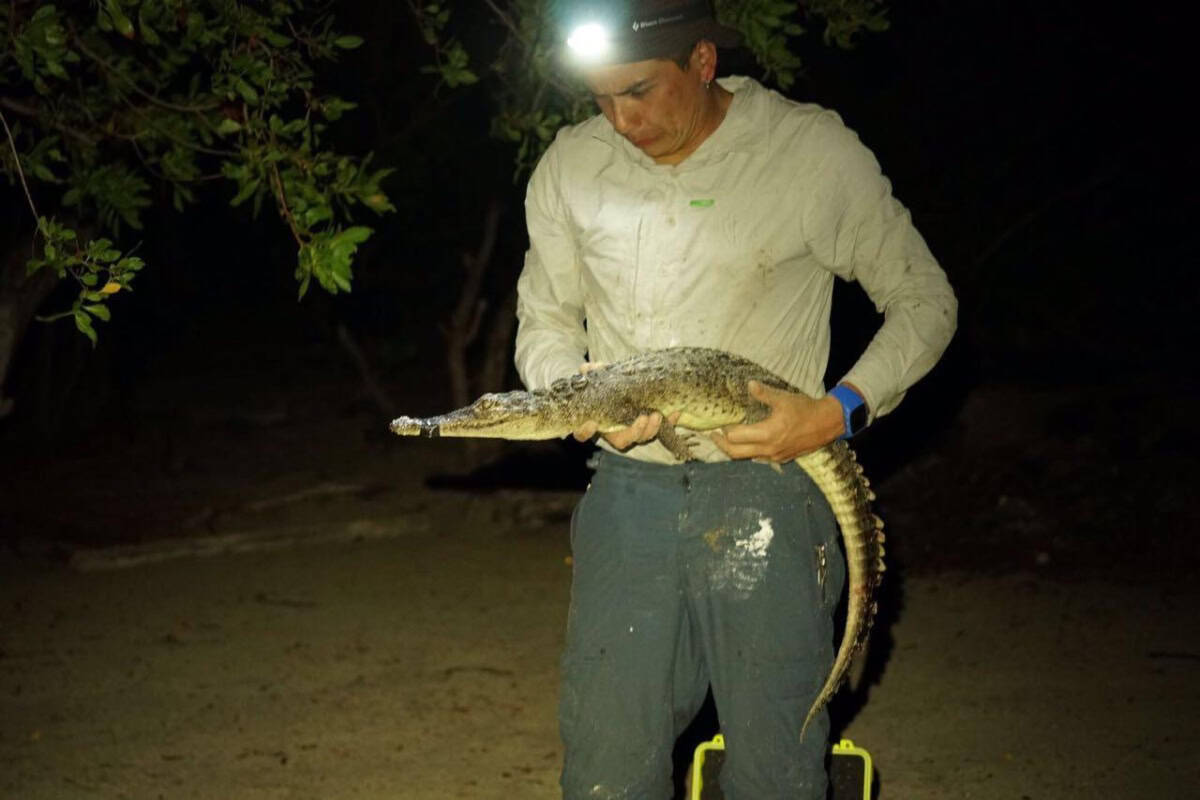
Genetic analysis has revealed two new species of crocodiles on small islands off the Yucatan coast of Mexico. What was once thought to be just populations of the American crocodile (Crocodylus acutus) have turned out to be two completely separate species living on the island of Cozumel and the atoll reef of Banco Chinchorro near Mexico’s border with Belize, as reported in the study published recently in Molecular Phylogenetics and Evolution. “These results were totally unexpected,” said lead author José Avila-Cervantes, a graduate student at McGill University. Both populations have fewer than 1,000 individuals, meaning there are conservation implications for the recent discovery. The authors of the study said wildlife managers need to take steps to limit development in their native habitats. The discovery also has implications for other populations previously assumed to be American crocodiles, which ranged from Baja California all the way down to Venezuela. There may be more cryptic species that are currently unrecognized in some areas.
The key to sharper beaks and a push northward for Anna’s hummingbirds may be hanging in backyards across the West: the classic hummingbird feeder.
“If you ever see these feeders, sometimes you have 30 hummingbirds jostling for position, so it’s a hyper-competitive environment,” said Faye Romero, a PhD student at the University of Rochester.
In a study published in Global Change Biology, scientists from the University of California, Berkeley, revealed that supplemental feeding, alongside urban development and the introduction of plants, has fueled the dramatic range expansion of Anna’s hummingbirds (Calypte anna) and altered their bill shape.
Once limited to sun-drenched Baja California, Anna’s hummingbirds have surged northward as far as southeast Alaska over the past 150 years. For years, scientists believed Anna’s hummingbirds expanded their range thanks to the introduction of eucalyptus plantations in the 1930s, which provided winter blooms in an otherwise food-scarce season and urbanization.
However, new research reveals more to the story by weaving together a rich tapestry of interdisciplinary evidence spanning six years, from dusty museum drawers and digitized newspapers to community science sightings and thermal video footage to test the drivers together. By tracing the rise of hummingbird feeders, urban development, and eucalyptus plantations, the researchers uncovered a more complex story behind the bird’s dramatic expansion and its changing physical form.
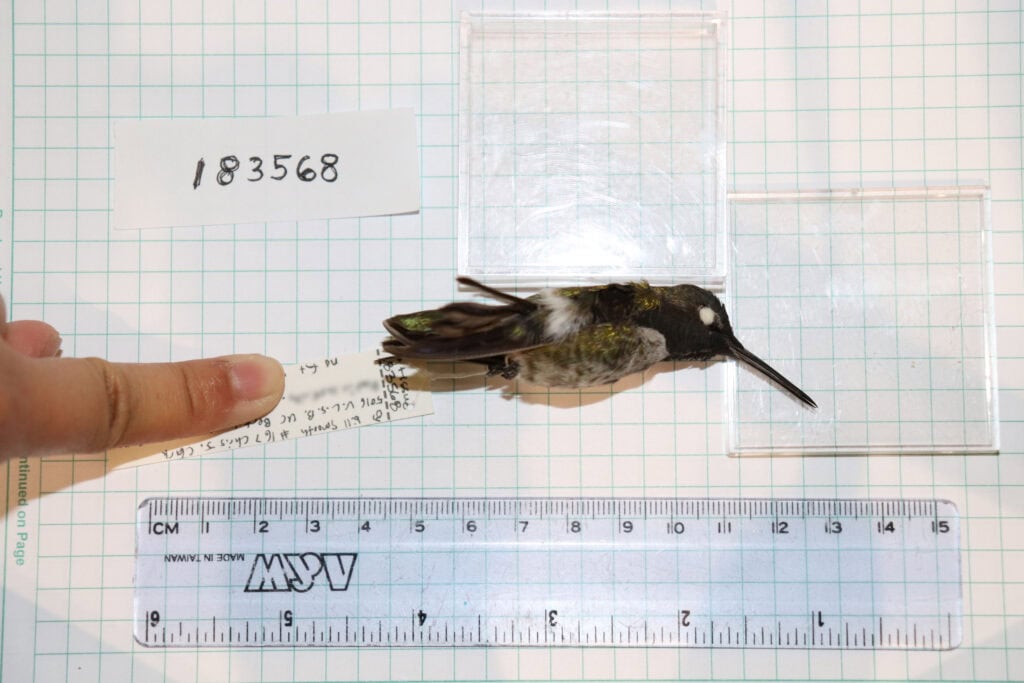
A male Anna’s hummingbird museum specimen from University of California, Berkeley’s Museum of Vertebrate Zoology. Credit: Faye Romero/University of Rochester
“We recapitulated that eucalyptus was probably an early driver of the expansion out of Southern California, but the effect of the feeders far outweighed the effects of the eucalyptus,” Romero, who worked on the project as an undergraduate researcher at UC Berkeley, said.
The battle of the beaks
Most hummingbird beaks have adapted over eons to specifically match the stems of the flowers whose nectar they feed on. But some Anna’s hummingbirds have become freed from the evolutionary constraints of flower shape. The birds appear to be rapidly changing to fit a new kind of battleground—one shaped not by petals but by fierce competition at sugar-filled feeders where their main goal is to slurp up as much sugar as fast as possible.
In response to these new survival challenges, male Anna’s hummingbirds are showing sleeker, sharper beaks, likely giving them an edge against the bird-feeder competition.
However, the shifts in beaks are not uniform across the range. Beaks in the northern part of the range tend to be shorter and smaller than those in the southern part of the range. This study was the first to demonstrate that Anna’s hummingbirds release heat through their bills while perched. Researchers hypothesize they do this to conserve warmth because smaller beaks limit heat loss, helping them survive in much colder environments than their original range.
By combining interdisciplinary research with out-of-the-box thinking, the researchers explored how the sugar-rich chaos of backyard feeders actively shapes both the life and bills of Anna’s hummingbirds. The findings document rapid, measurable changes in bill shape over the last century, providing a striking example of evolution in action and revealing how human choices can impact wildlife.
The Wildlife Society Bulletin, one of The Wildlife Society’s three peer-reviewed journals, is now implementing a double-blind review process. This three-year “experiment” will help the editors of the journal ensure that it is being fair in the reviewing process.
“I see this as a service to our authorship community to ensure that the reviewing process is as bias-free as possible,” said Bret Collier, the editor-in-chief of the journal. “And that goal serves the entire TWS community more broadly.”
The Journal of Wildlife Management (JWM)will continue to use single-blind reviews, a process where referees can see the authors’ names and affiliations but the authors don’t know the identity of their reviewers. Collier and the rest of the editorial team will compare publishing statistics from WSB, which tends to garner submissions from a wide variety of topic areas, with how JWM performs during the same time period.
This change comes after the Wildlife Society Bulletin (WSB) migrated their submissions to Research Exchange, a new platform that no longer gives authors the opportunity to identify potential reviewers. “If there is an inherent bias within our reviewing process, I see that as something that we can work on addressing,” Collier said. “But we don’t know if the bias exists, which is why we’re doing the evaluation.”
Jacqueline Frair, the editor-in-chief of JWM, introduced the idea at TWS’ 2024 Annual Conference in Baltimore. Recent research has shown that while JWMhas been performing better on gender equity in recent years, there’s still progress to be made.
Frair recently published an editorial in JWM about reducing bias in the peer-review process. Specifically, she highlighted the potential effects against female, foreign or first-time authors within the peer review process.
Frair cited research that showed papers published by authors from countries “with a lower human development index or lower English proficiency fared worse under a single-blind review” compared to a double-blind review.
Many other journals are already implementing the double-blind review process, including Behavioral Ecology, Conservation Biology, Diversity and Distributions, Ecology and Society, Functional Ecology, Journal of Applied Ecology and Oikos.
Collier said that the research is fairly mixed on the efficacy of double-blind reviews overall. There are a few limitations with the method. If authors painstakingly anonymize their papers, it’s still likely that reviewers will know their identities or affiliations. “We are a very small field,” he said. “If someone is tagging ducks in Tennessee, it can only be a handful of people,” he said.
Also, when researchers anonymize their work, potential referees don’t have the opportunity to recuse themselves from reviewing previous students or collaborators, which could have “latent ethical effects” on the reviewing process, Collier said.
Despite the drawbacks, Collier is convinced it’s a worthwhile exercise for WSB and is looking forward to identifying potential areas for fine-tuning the reviewing process to make it more equitable.
While WSB has largely been a North American journal, with submissions mostly coming from the United States and Canada, Collier said he’s seen an increase in international submissions in recent years as TWS’ international presence expands.
“I’m in my sixth year as editor-in-chief, and every year we’ve made tweaks to WSB so it better serves our community, from changing the layout to going to open access,” Collier said. “This is the next step in transparency and accountability for the Bulletin in that we want to ensure that the reviews all our papers are getting are constructive for the authors.”
The first articles published with double-blind reviews will come out in August, and the test cycle will run until 2028.
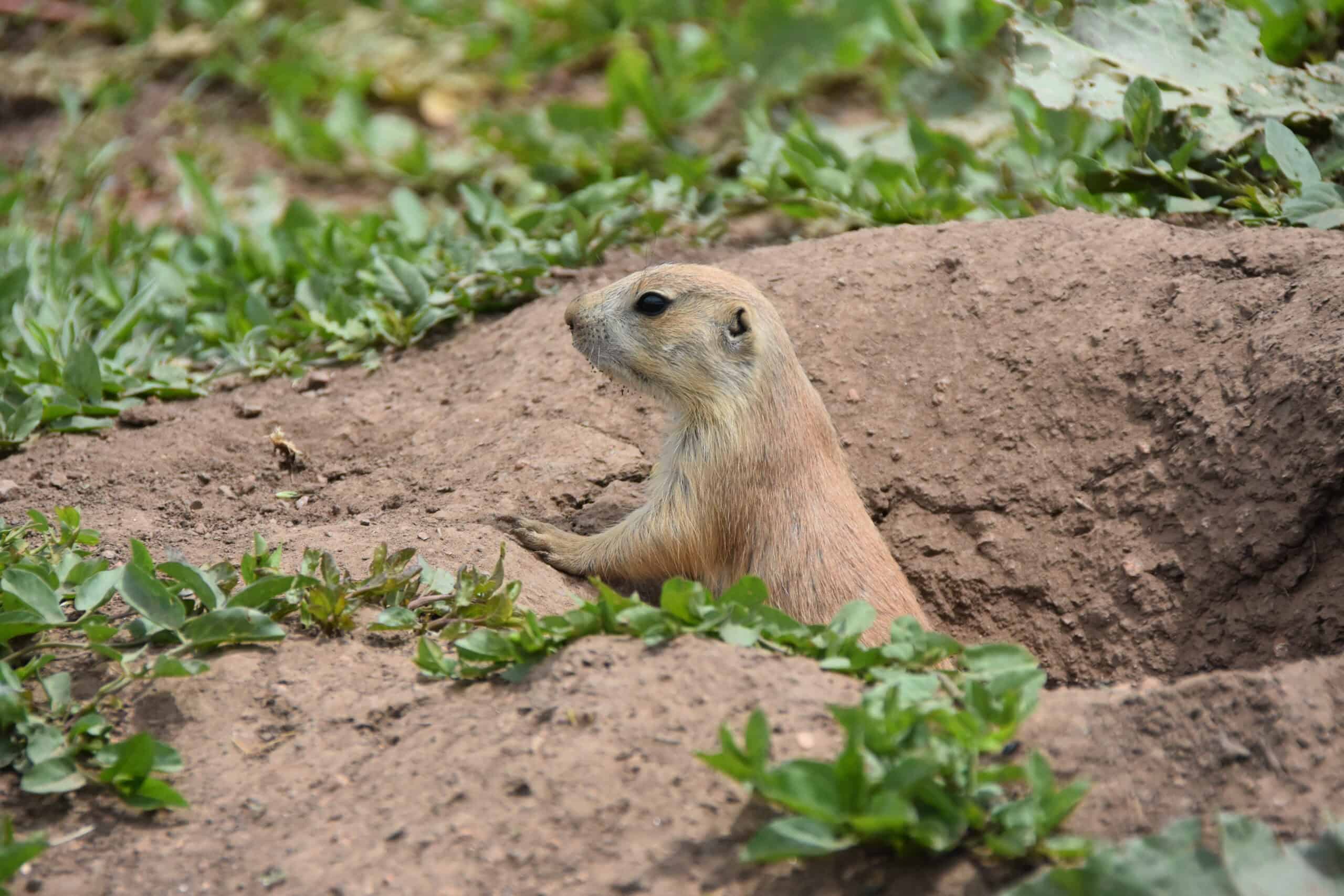
Prairie dogs with certain genes have a better chance of surviving plague than others. Sylvatic plague, caused by the bacteria Yersinia pestis, has wiped out entire prairie dog populations in North America. Researchers had been studying an outbreak of the disease in Boulder County. Colorado, from 2006 to 2009. After trapping and sampling some of the surviving black-tailed prairie dogs (Cynomys ludovicianus), the team of scientists took samples to look at their genome. They compared these genome sequences with prairie dogs that died during the plague. The team identified certain genetic variants associated with survival from sylvatic plague. In addition, the researchers determined that it could take about 25 generations for prairie dogs to develop immunity from plague.
As climate change continues to accelerate, birds are moving north or up mountains. But this may not actually help them avoid the challenges of warming conditions.
“It’s often assumed that highly mobile species such as birds can just relocate and escape the consequences of climate change, and while a number of studies have indeed shown them moving north or to higher elevation, none have considered whether these relocations actually help species avoid warming,” said Jeremy Cohen, an associate research scientist in Yale University’s Department of Ecology and Evolutionary Biology.
Cohen led a study published in Nature Ecology and Evolution looking to answer this question for birds in North America.
For thousands of years, birds have been adapting to gradually shifting temperature, rainfall and humidity conditions. But now climate change is occurring much more rapidly. For example, in North America, in just 50 years, temperatures have increased by several degrees Celsius.
While many species can’t adapt to these quick changes, some scientists believe that birds have an advantage. “If you’re a species that is able to move quickly, you could potentially head north or up mountains to cooler climates that more closely match what you’ve historically adapted to and avoid overheating,” Cohen said.
Birds are also an ideal research subject for scientists, as they are relatively easy to observe by citizen science projects. In fact, observational data is 10 times more abundant for birds than it is for mammals, insects, or amphibians in the U.S., Cohen said.
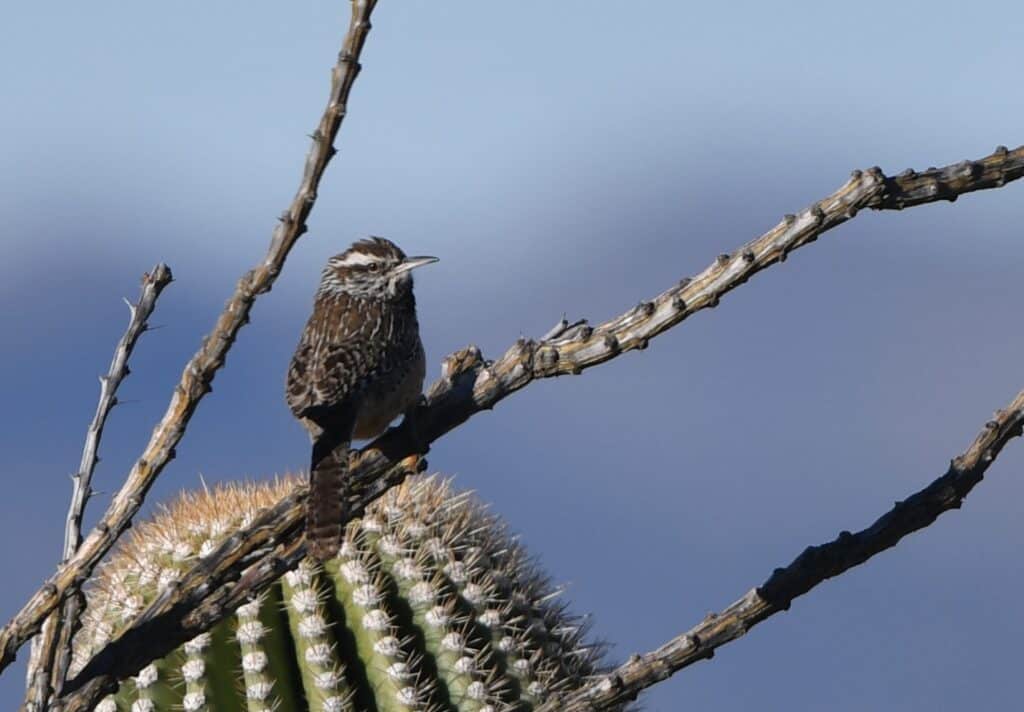
During the winter, cactus wrens didn’t move much and faced warming of 5 degrees Celsius. Credit: Jeremy Cohen
Cohen and his colleagues used some of this citizen science as well as other observational data collected by researchers over 20 years to measure where birds spent their time and how the environmental conditions they experienced changed over time.
The team gathered data from the Global Biodiversity Information Facility (GBIF), a global data repository that includes data from citizen science initiatives, museum collections, structured research surveys and more.
Using statistical models, the researchers determined how over 400 North American bird species shifted their locations between 2000 and 2020 during the summer and the winter. The team also looked at whether birds experienced new environmental conditions like temperature, precipitation and plant productivity during this time.
Cohen and his colleagues found that birds did move northward during both seasons over the study period. “However, for most species, this wasn’t enough to avoid the consequences of climate change,” he said.
On average, the 400 species were able to reduce summer warming by about 52% of what they would have experienced had they stayed put. But in the winter, they could only reduce it by about 11%. “Species avoided increasing temperatures much more successfully in summer than winter,” Cohen said. During the summer, Cohen said increasing heat can be more threatening than during the winter, when most birds can tolerate an increase in temperature from typically cool weather. “This just shows how important it is to consider the responses of wildlife to climate change across different parts of the year,” he said.
Blue-winged warblers were able to move far north during the summer to avoid warming Credit: Jeremy Cohen
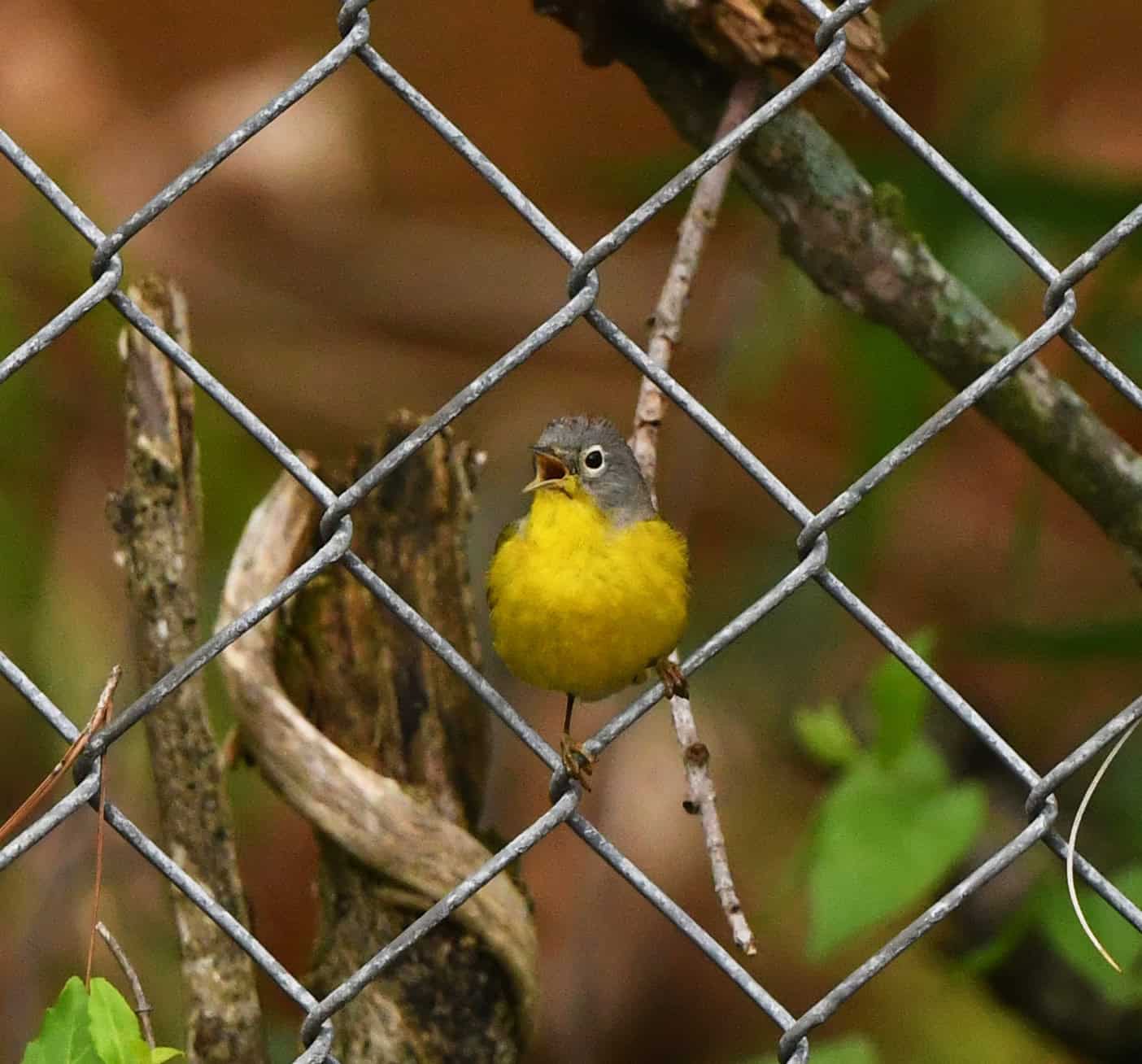
Birds’ success with mitigating their exposure to climate change also depends on the species. Birds like the blue-winged warbler (Vermivora cyanoptera) were able to move far north and avoid warming in the summer, while Nashville warblers (Leiothlypis ruficapilla) moved only a little and avoided almost no warming. In the winter, cactus wrens (Campylorhynchus brunneicapillus) didn’t move much and faced warming of 5 degrees Celsius, as southwestern deserts in the US are experiencing much milder winters than they did historically.
“Overall, species that tend to migrate far and have a wing shape with proportions meant for long-distance flight were the best at relocating over the 20 years and thus reducing their exposure to climate change,” Cohen said.
Cohen said these findings have implications for all wildlife that continue to face a warming climate. “If birds are unable to move fast enough to keep up, it’s going to be impossible for most mammals, reptiles, amphibians, insects, other invertebrates and plants,” he said. “These groups are either going to have to adapt and become more flexible in their tolerance of hot conditions or find a way to buffer themselves from the weather, for example, by spending more time underground or breeding earlier in the spring.”
Koalas spend only 1% of their lives on the ground—but that time is associated with 66% of the animals’ deaths. The animals spend up to 20 hours a day sleeping, with most of the rest of the time munching on eucalyptus leaves. But for about 10 minutes out of their day, koalas (Phascolarctos cinereus) crawl along the ground, traveling between trees searching for food or mates. In new research presented at the 2025 Society for Experimental Biology Annual Conference in Belgium, Gabriella Sparkes, a PhD student at the University of Queensland, and her team fitted 10 koalas with custom-built collars with GPS and accelerometers. Living in a landscape that had been cleared for farming, the researchers tracked where the koalas moved and how quickly. Sparkes found that koalas’ movements varied depending on the landscapes they were in. “Koalas in the wooded areas went to the ground more frequently in a night but spent less time there,” she told the Australia Broadcasting Company. Deforested areas and roadsides are more dangerous for koalas, as they have to spend longer amounts of time on the ground traveling from tree to tree. Researchers hope this research will help guide conservation efforts to help limit the time koalas spend on the ground, like increasing canopy and habitat connectivity.
An analysis of where the buffalo roam along a dangerous stretch of highway west of Yellowstone National Park reveals collision hot spots near waterways.
Wildlife managers could use this information to improve safety for both drivers and plains bison, especially when the large ungulates leave the park for calving grounds in the spring.
“It’s the first national park in the U.S., and we have no [crossing] mitigation structures anywhere around it,” said Jackson Doyel, a wildlife biologist with the Buffalo Field Campaign, a nonprofit organization whose mission is “to stop the harassment and slaughter of America’s last wild buffalo.”
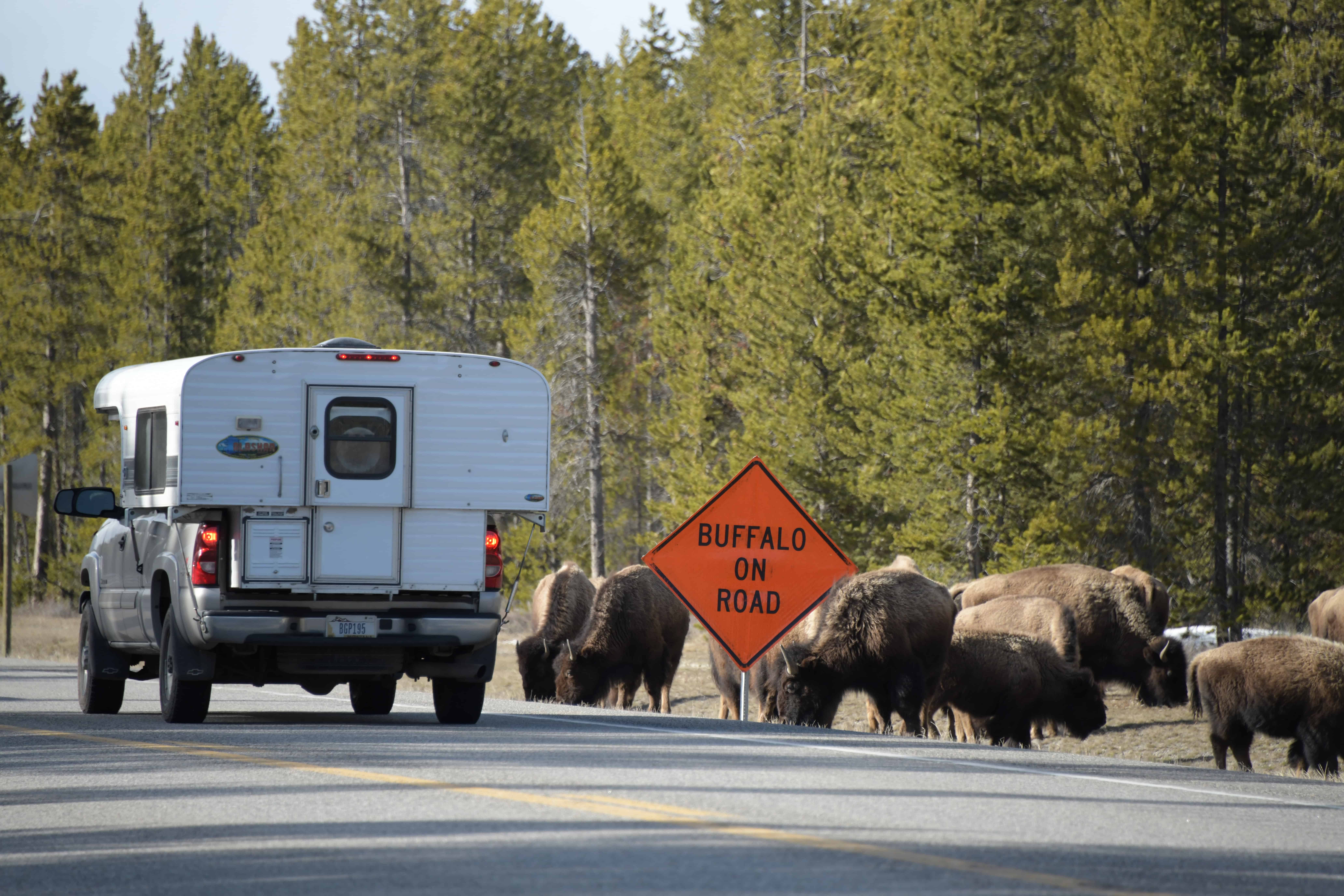
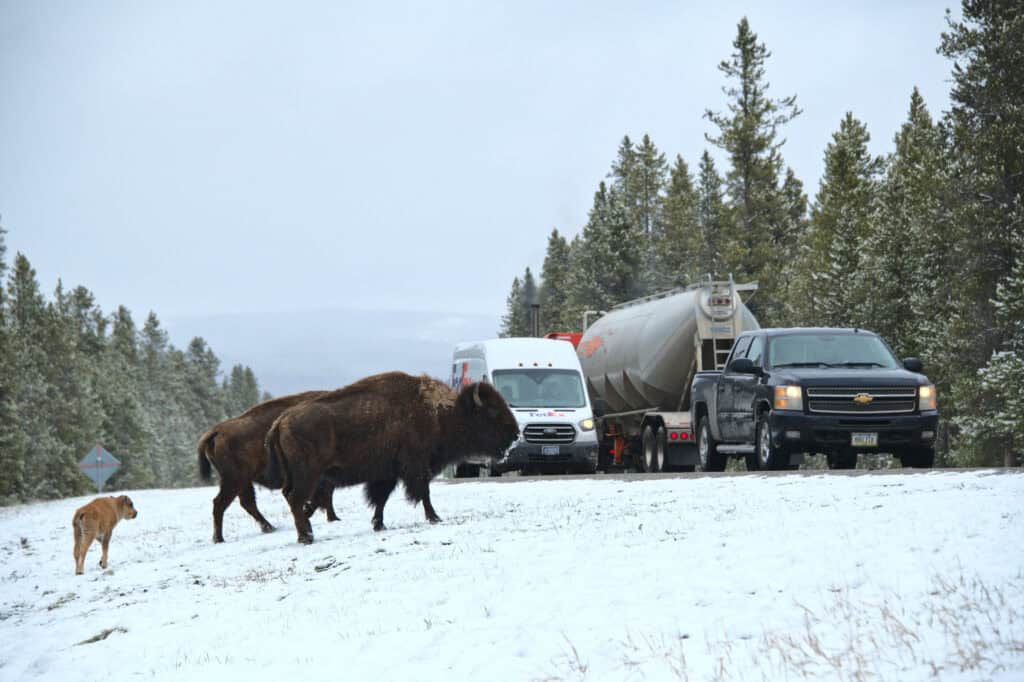
Scientists estimate that several thousand plains bison (Bison bison bison) live in Yellowstone National Park. But the massive park, which stretches across parts of Wyoming and Montana, doesn’t have any fences to keep these ungulates inside. Many bison leave the park to go to calving grounds in Montana every spring. However, U.S. Highway 191 cuts right across their typical route, and cars often strike the giant herbivores, killing them and injuring drivers as well. In one particular instance, a semi-trailer “plowed through” 13 bison, said Jenny Isaacs, an assistant professor of human ecology at Rutgers University in New Jersey.
“[Bison] are not protected, and neither are the people,” she said.
Bison must cross U.S. Highway 191 to reach calving grounds west of Yellowstone National Park. Credit: Jackson Doyel
To reduce these collisions, staff and interns with the Buffalo Field Campaign patrol the highway every spring, placing temporary caution signs when they spot bison nearing the road. Hunters often legally kill bison in Montana in an effort to stop the animals from establishing themselves near ranches, where some fear they might potentially transmit the disease brucellosis to cattle. But the great majority of brucellosis transmission to cattle comes from elk (Cervus canadensis), Doyel said.
BFC interns and staff, whose mission is to stop these legal harvests, have been following bison in their migrations into Montana for most of the past 25 years, recording these deaths and taking photos.
Bison cross the highway at several hot spots. Credit: Jackson Doyel
Over the years, these interns and staff also recorded sighting data. In a study published recently in the Journal for Nature Conservation, Doyel, Isaacs and their colleagues analyzed the data collected from 2007 to 2023 to see if there were any movement trends that may better inform highway authorities about the best placement of future crossing structures.
Bison collision hot spots
The data revealed several crossing hot spots, especially around waterways that crossed the highway. The spot where the Madison River intersects with the highway saw the most bison activity over the years, while Cougar and Duck creeks also saw a high amount of wildlife movement.
Bison most often used Madison River as their crossing point west of Yellowstone National Park. Credit: Jackson Doyel
These crossing hot spots also correlated with the data on car and truck collisions. Most of the bison getting struck by vehicles were crossing the roads in these areas.
In some ways, these findings are timely because one of the bridges at a collision hot spot is due for renovation. “The Cougar Creek Bridge was already being scheduled for rebuilding with an underpass for wildlife,” Doyel said.
A better idea of where bison cross can inform future road crossing structures or fences. Credit: Jackson Doyel
He said that in addition to these changes, building fencing along the road and widening the bridge crossing the Madison River would help to reduce collisions with bison, which usually cross perpendicular to the road, as well as other large wildlife that use the area, like grizzly bears (Ursus arctos horribilis) and moose (Alces alces). As a result, The West Yellowstone Wildlife Crossing Coalition, a partnership Jackson initiated between BFC and the Gallatin Wildlife Association, is applying for a feasibility study for building an underpass along the highway at the Madison River crossing.
Isaacs said that aside from revealing collision hot spots, the recent study also shows how much time bison spend outside the national park on the Montana side, which has implications for bison management.
Juvenile humpback whales in the New York Bight are more likely than adults to have scarring from vessel strikes. The vast majority of all whales, regardless of age class, have scars from fishing gear entanglement.
“We already knew that New York has become a hot spot for vessel strikes, so this is another piece of evidence in that line,” said Lesley Thorne, a marine ecologist at Stony Brook University. “It goes to show just how frequently humpbacks are interacting with human threats.”
In a new study in PLOS One, Thorne and her colleagues used drones to observe whales off the coast of New York and New Jersey. Each whale fluke, or tail fin, as seen below, is as unique as a fingerprint. The drone images helped the researchers identify each individual whale and determine if it had any scarring consistent with vessel strikes or fishing gear entanglement.
Around 87% of all humpbacks had entanglement scars, typically caused by fishing gear like gillnets, lobster cages and crab pots wrapping or rubbing around the flukes.
While 14% of juveniles had vessel strike scars, only 2% of adults did, which showed a different pattern compared to prior studies in the Gulf of Maine. In that region, adults have more vessel scars than juveniles. This difference suggests that juvenile whales in New York may be obtaining the vessel strike scars locally, Thorne said. Just the same, she added that the numbers reported in the study are “an underestimate” of vessel strikes, as they didn’t include fatal strikes or internal blunt force injuries that didn’t cause scarring visible by drone.
Growing presence of whales in the New York Bight
Around 2016, whale deaths—particularly in juveniles—increased from Florida to Maine, and the National Oceanic and Atmospheric Association declared an Unusual Mortality Event for humpbacks in the Atlantic Ocean.
Baleen whales, which include humpbacks (Megaptera novaeangliae), blue whales (Balaenoptera musculus) and right whales (Eubalaena sp.), breed in warmer, lower-latitude waters and then migrate poleward for feeding, though some whales stay in higher-latitude feeding grounds year-round. Time on the feeding grounds is particularly important for humpback whales because they’re capital breeders, meaning they shore up their fat reserves in the summer to last through a season of breeding and fasting.
Whales weren’t a common sight in the New York/New Jersey Bight—bordered by New Jersey and the southern coast of Long Island—before 2011. Traditionally, the Gulf of Maine was considered the southernmost summer foraging area for these animals. But Thorne said that trend is changing. “You have whales using the New York region for foraging more than they used to, which happens to be the busiest port on the East Coast,” Thorne said.
She thinks their presence in New York is due to a couple of factors, including an increase in menhaden fish stocks, which are a key food source for these filter feeders. The humpback whale population in the Gulf of Maine has been growing over time, too. “It’s probably a combination of factors that has led to an increase of habitat use in New York,” she said.
As whales have become more present in the New York Bight, shipping traffic too has increased, creating a perfect storm for more potential conflict between whales and boats. Previous research from Thorne’s lab found that vessel strikes were a driving force behind the increase in humpback whale deaths that started about a decade ago. In New York waters, there have been 38 nearshore and 11 offshore deaths of humpback whales since 2016.
The striking scars of boat collisions
Thorne is like a marine detective, piecing together the evidence of what happened to these animals. She and her team rarely see an animal that is actively entangled, and they have never directly observed a whale being struck by a vessel. “You get pieces of evidence through strandings, or in this case, through scars on live animals,” she said.
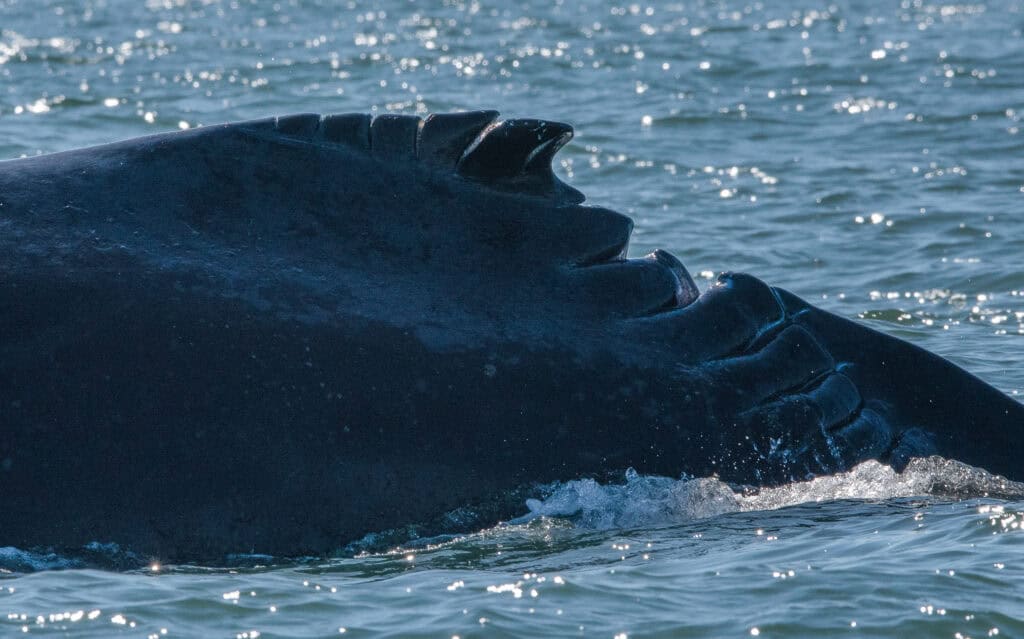
Some of these scars can be intense, cutting out chunks of blubber and flesh that don’t grow back throughout a whale’s lifetime. Thorne said that propeller scars, as seen above, create regular cuts through the whale—studies with manatees (Trichechus sp.) compare the distance between slashes to infer the size of the vessel. Future studies could analyze drone imagery of scars to infer the size of the ships striking whales to understand what boats pose the highest risk, she added.
How whale behavior may hold some answers
Previous research out of Thorne’s lab has suggested that juvenile humpbacks in the New York Bight may be more vulnerable to vessel strikes because they tend to feed at the surface in shallow areas. “We get drone imagery of a lot of the whales that we study here in New York in incredibly shallow waters,” she said, adding that those spotted close to shore are almost all juveniles.
The reasons why juveniles tend to forage in shallower waters closer to the surface are unclear, but Thorne has a few potential hunches. It may be that they’re taking advantage of a niche that older whales are too large to reach. Adult whales are more likely than younger whales to have jaw scarring consistent with bottom-feeding behavior, indicating that this behavior is learned over time.
Additionally, killer whales (Orcinus orca), while infrequently observed in New York waters, primarily target young animals and occur closer to shore. Avoiding killer whale predators could partly drive inshore habitat use in juveniles, where they are at a higher risk of vessel strike.
Regardless of the reason why juvenile and adult humpbacks have different behaviors, there are real consequences. Riskier feeding behavior in juveniles may put them in harm’s way.
Though it can be hard to witness the often gruesome effects that entanglements and vessel strikes have on whales, Thorne likes to get out on the water as often as weather permits to track down New York’s whales. “Humpbacks are so acrobatic and dynamic to watch,” she said. “And there’s still so much we don’t know.”
This photo essay is part of an occasional series from The Wildlife Society featuring photos and video images of wildlife taken with camera traps and other equipment. Check out other entries in the series here. If you’re working on an interesting camera trap research project or one that has a series of good photos you’d like to share, email Olivia Milloway at omilloway@wildlife.org.