
The 2016 TWS Annual Conference: A student’s perspective

As many of you likely know, this year’s Annual Conference for The Wildlife Society was held in Raleigh, NC from October 15-19. The University of Maine sent five undergraduates, and several professors and graduate students met us at the conference. Over those five jam-packed days, we presented research, networked with professionals and fellow students, and competed in the annual Quiz Bowl. Here I present an overview of the conference from the perspective of a student going for her first time.

Throughout the entire conference there were several rooms that constantly hosted short presentations of research on an enormous variety of topics, from “Feral Horses and the Western Landscapes” to “Managing Coastal Habitats for Migratory Waterbirds in a Changing Climate,” and just about anything in between. For me, that was one of the best parts of the conference. There were so many talks that it was hard to decide which one to attend! As someone just starting out in this field, it was great to be able to see such a wide array of topics and hear about the latest research that’s going on in each area. My interests are in environmental education and climate change, and I was thrilled to see those subjects very well represented. I learned a lot about the work that’s going on in those areas, and when I went to other talks I tried to think about how techniques from the education-related research could be used to communicate this other research to the general public.

One of the coolest parts of the conference by far was the Student-Professional Networking event at the North Carolina Museum of Natural Sciences. That place is fantastic! The museum covers four stories on two sides of the street, and students, professors, and professionals were allowed in after-hours for a networking event. Not only did we get to make some great (and likely useful) connections, but we also were able to explore the entire collection all night. The seniors in our group found this and other networking events especially useful, as they are thinking about graduate school and jobs post-graduation. Networking events like this one also helped us connect with other students in our state and section. We got to know the crew from Unity, and we participated in two impromptu meetings of the Northeast Section to plan this year’s Conclave. This year we’ve decided to take a new approach, with one school hosting but all attending schools pitching in in some way, whether it be finding people to lead workshops or making Quiz Bowl questions. I’m excited to see how it goes.

I was amazed how much we managed to pack into five days. We all learned a ton, and on the trip home we compared notes from the different talks we’d each attended. We also made some great connections, especially in our state and section. I’m excited to go back next year to present my own research and introduce the next round of my peers to the wider wildlife world.

This article was originally published in the Winter 2016 newsletter of the Maine Chapter of TWS, which is available here.

For more information about the University of Maine TWS Student Chapter visit their Facebook page.
Clemson student takes new approach to white-nose syndrome

Most wildlife biologists know of the devastating impacts that white-nose syndrome has had on susceptible bat species such as little brown bats and Indiana bats. But how has the disease affected WNS-resistant species? Not much research has been done to answer that question. Until now.

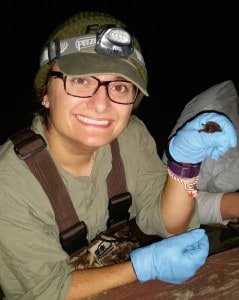
Katie Teets, a master’s student studying wildlife and fisheries biology at Clemson University, won first place in her category of the Student Research in Progress poster session at the TWS Annual Conference in Raleigh, North Carolina. Her research attempts to determine the effects of WNS on niche partitioning among sympatric bat species in South Carolina.

According to her poster abstract, Teets and co-authors from Clemson University, the U.S. Forest Service and the U.S. Geological Survey hypothesized that with the decline of the dominant bat species in a WNS positive site — particularly Myotis species and tri-colored bats — less dominant and less abundant species would exploit the niche space.

Though they are still in the process of analyzing the data, Teets says she has noticed some interesting activity changes from very basic, preliminary data comparisons.

Katie Teets holds a tri-colored bat. ©Katie Teets

Katie Teets holds a tri-colored bat. ©Katie Teets

“It’s mostly the detections that have changed for the [Myotis bat species] and the tri-colored bats,” she said, “but there’s also been an interesting uptick in activity at the beginning of the night for red bats and white-nose resistant species at Andrew Pickens [District of the Sumter National Forest].”

The Andrew Pickens District of the Sumter National Forest in northwestern South Carolina was one of two study sites and WNS positive. The other site, the Savannah River site in the south central part of the state, was WNS negative. Both areas had been monitored before and had bat data from the pre-WNS era. During the summer of 2016, the researchers collected new data using Anabat Express bat detectors to record calls and identified those calls using a program called Kaleidoscope. After they identified the calls with the automated software, they vetted each call manually.

As expected, resistant species appeared to be more prevalent at the WNS positive site, and most were found in mixed and pine habitat. Resistant species were also prevalent at the WNS negative site, but more tri-colored bats were found there than at the WNS positive site. Most species at the WNS negative site were found in bottomland and upland pine habitats.

“I’m looking more at…how are they behaving and are they changing their behavior for when they’re active at night; or do they prioritize primo niche areas for foraging,” Teets said. “So I think it’ll be interesting information to add to what the USFWS is already looking at.”

Teets also mentioned that the study could help with prioritizing certain habitat types or clutter areas. The researchers suspect bats are choosing uncluttered areas because it makes echolocation easier for them. The next step, she says, is to finish analyzing the data, collect more next summer, and eventually publish a paper on the research. Similar research by a student at the University of Michigan will be combined with Teets’ and together the data will be used in a broader extent to examine changes in bat community structure and WNS impacts in the eastern U.S.

“This is actually my first poster presentation,” Teets said “Presenting at [the TWS Annual Conference] was a good opportunity to talk to people familiar with bats and WNS as well as people who are experts in other areas of the wildlife field.”

Student Poster winner: Wildlife threats over the years

Have threats to plants and wildlife changed over time? Some curious wildlife students wanted to know.

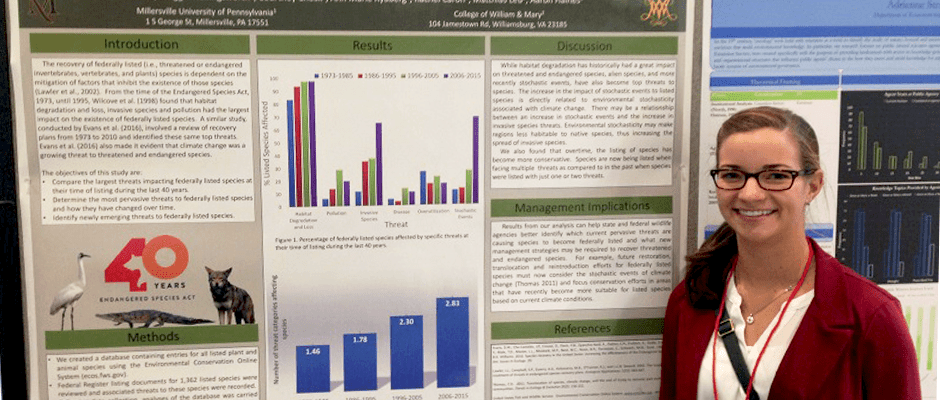
Seven undergraduate students — three at Millersville University in Pennsylvania, advised by assistant professor of conservation biology, mammalogy and ornithology Aaron Haines and four from the College of William and Mary, advised by  associate professor Matthias Leu — looked through federal register documents on endangered and threatened species in the United States and recorded the reasons each species was listed. They presented their findings in the student poster session at the 2016 TWS Annual Conference in October and took home first place for their work

“It was a group effort, and basically we just started a database and listed all the species and broke it up from there,” said Kayli Thomas, an environmental biology major and a senior at Millersville. “We continued with the database until all of the plants and animal species were covered.”

In order to quantify the reasons for the species’ listings over time, the students looked at documents starting from 1973 when the Endangered Species Act went into effect through 2015. This included searching the U.S. Fish and Wildlife Service’s websites where they found PDFs of the more recent documents. However, some of the earlier documents took a little more searching and were more difficult to find on the Federal Register website, which contains government agency rules, proposed rules, and public notices, including the earliest ESA listings

“We wanted to see how [the listings] changed from the beginning of the ESA until now and where future trends may go for these species,” said Alex Sandercock, a sophomore at Millersville majoring in marine and environmental biology.

After reviewing the documents and analyzing around 1,400 species of plants and animals, the students documented and recorded the threats that led the species to be listed and then created their own categories, including habitat modification, pollution, environmental stochasticity, alien and invasive species and diseases, according to Delaney Costante, a junior studying marine and environmental biology at Millersville.

They found that the top three threats currently affecting species include habitat degradation and loss, invasive species and environmental stochasticity, or unpredictable fluctuations in environmental conditions. Overall, the team found that habitat degradation has been an issue since the beginning of the ESA and the number of listings resulting from it has not grown by much over time. However, invasive species and random environmental events have increased greatly since the beginning of the ESA.

“I think with the changing climate and the human population continuing to grow, this will help researchers and officials [in wildlife] better predict where the threats are going in the future,” Sandercock said. “It will also help identify hotspots where species are affected by certain threats to improve recovery plans to address these issues.”

The students plan to continue working on this project, including breaking the threats down into more specific categories. They also hope to use GIS technology to map the hotspots where these threats are most prevalent and provide open access to their documents so that wildlife managers can use them.

“We felt that what we were doing was important, and it surprised us to have a poster that won,” Sandercock said. “It was awesome to have that experience and see that product of all of our hard work happen.”

President-elect nominates Rep. Zinke for Interior Secretary

On Dec. 16, President-elect Donald Trump announced his intent to nominate Montana Congressman Ryan Zinke for Secretary of the Interior.

A hunter and fisherman, Zinke has often supported sportsmen issues and accessible public lands since taking office in 2014. He voted across party lines when he opposed the State National Forest Management Act of 2015 (H.R. 3650), which would allow states to acquire up to 2 million acres of national forest land to be used primarily for timber production and closed to public access. In July, Zinke also resigned from the Republican nominating convention after the party’s platform endorsed transferring federal public lands to the state.

“As someone who grew up in a logging and rail town and hiking in Glacier National Park, I am honored and humbled to be asked to serve Montana and America as Secretary of Interior,” said Zinke in response to the nomination. “I shall faithfully uphold Teddy Roosevelt’s belief that our treasured public lands are ‘for the benefit and enjoyment of the people.’”

The Congressman also supported the Sportsmen’s Heritage and Recreational Enhancement Act (H.R. 2406), or SHARE Act, that would expand opportunities for and access to hunting, fishing, and recreational shooting.

“He’s a lifelong outdoorsman, who we’ve found to be receptive to sportsmen’s interests in Montana and D.C. We won’t agree with him on everything, but we think he’s someone who will listen and has the right instincts,” said Whit Fosburg, CEO of the Theodore Roosevelt Conservation Partnership, in a statement.

Zinke has also supported the Land and Water Conservation Fund (LWCF), a fund that uses offshore oil and gas revenues to acquire and conserve natural resource areas across the nation. Zinke was the only Republican member of the House Natural Resources Committee to vote in favor of LWCF’s permanent reauthorization and cosponsored the bill (H.R. 1814) that would provide for the reauthorization.

While generally supportive of sportsmen and public lands, Zinke has only a 3 percent score from the League of Conservation Voters, and some groups have voiced concerns over the nomination.

Zinke has “repeatedly voted to block efforts to designate new national parks that would diversify the National Park System,” said Theresa Pierno, President and CEO of the National Parks Conservation Association, in a statement. The Center for Biological Diversity is concerned about Zinke’s stance on threatened and endangered species, stating that “his brief political career has been substantially devoted to attacking endangered species and the Endangered Species Act.”

Per the cabinet appointment process, President-elect Trump will submit a written nomination to the Senate after taking office in Jan. 2017. The appropriate committees will deliberate on the nomination and report back to the entire chamber, recommending the nominee favorably, unfavorably, or taking no action. The Senate will then vote to confirm or reject the nomination.

The Congressman hails from Whitefish, Montana and earned his undergraduate degree in geology from the University of Oregon. He served the country as a Navy S.E.A.L. for 23 years and was elected to the House of Representatives in 2014 as Montana’s at-large representative. He sits on the House Armed Services Committee and the Natural Resources Committee.

Are little brown bats developing resistance to white-nose syndrome?

In New York — the first state where the deadly white-nose syndrome was detected in 2006 — biologists recently made a surprising observation: some small populations of the little brown bat (Myotis lucifugus) are persisting.

This observation, first made in 2012, has prompted biologists to take a close look at the species that has been devastated by the fungal disease caused by Pseudogymnoascus destructans.

“This paper and others have shown that little brown bats, which were previously highly abundant in the Northeast, have begun to persist despite white-nose syndrome” said Kate Langwig, lead author of the study published in the journal Philosophical Transactions of the Royal Society B and now a postdoctoral fellow at Harvard T.H. Chan School of Public Health. Langwig studied the New York bats as part of her graduate work at the University of California Santa Cruz.

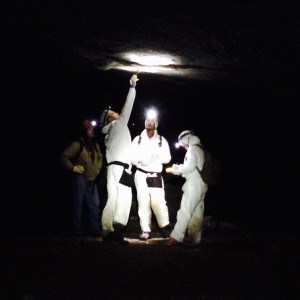
Researchers sample a bat to test for the fungus causing white-nose syndrome in a mine in the Midwest. ©J. Redell

Researchers sample a bat to test for the fungus causing white-nose syndrome in a mine in the Midwest. ©J. Redell

But so far, biologists don’t have a good answer why the bats are surviving. “While they were persisting, it wasn’t clear how they were coping with the disease,” she said, adding that these reasons can provide clues to the long-term trajectories of these bat populations.

To uncover why the bats were persisting, Langwig and her colleagues compared the patterns of infection in little brown bats in New York to areas in Illinois and Virginia where the disease had more recently been detected and populations were declining.

As part of the study, Langwig and her team swabbed the bats’ skin and then conducted tests to detect the amount of the fungus they carry during winter hibernation. They used mathematical models to examine three major hypotheses for how bats were persisting with white-nose syndrome, including reduced transmission, tolerance, and resistance. The team found that bats in the New York populations seemed to reduce their fungal pathogen loads toward the end of their hibernation. However, during early hibernation the presence of the fungus appeared to be at similar levels to the populations that were suffering higher mortality, suggesting that bats had developed resistance to the disease.

Langwig and her team don’t fully understand the reason for this phenomenon, but they say there are a few possibilities that biologists might want to explore in the future. For example, there are some theories that the bats’ immune response is occurring very slowly and the benefits of their immune response aren’t shown until later in hibernation. Further, it’s possible that there’s some microbe on their skin that’s reducing the pathogen to lower levels.

“We don’t totally know, but these are some hypotheses we could be testing in the future,” she said. “Hopefully people will follow up on it.”

While the team only studied little brown bat populations in New York, Langwig says nothing is known about other species that may be developing resistance. For example, the northern long-eared bat (Myotis septentrionalis), which is listed as threatened under the Endangered Species Act, shows no indication of persisting during hibernation when the white-nose fungus is present, she says.

Langwig also says while little brown bats have been able to persist in New York, this might not be the case farther south. She suggests that climate and other conditions might play an important role for these persistence mechanisms to happen.

Annual bear hunt manages population while facing controversy

The New Jersey Department of Environmental Protection’s Division of Fish & Wildlife (DFW) faces public controversy while managing one of the densest populations of black bears (Ursus americanus) in the United States

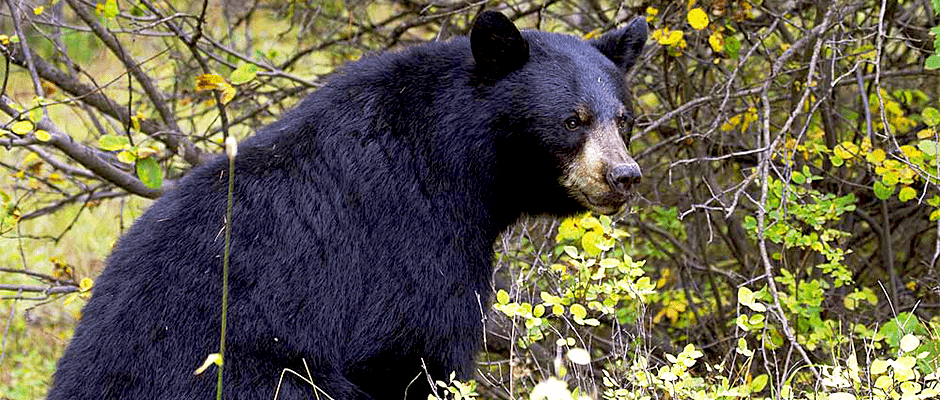
With approximately 3,500 black bears in the state of New Jersey, DFW has been tasked with reducing and stabilizing the population to address safety and other concerns from the public. An annual hunting season, along with other lethal and non-lethal strategies, plays a role in this management; biologists report that the population has remained stable since the hunting season was reopened in 2010.

During this year’s hunt, a total of 636 bears – less than 20% of the estimated total population – were taken during hunting periods in October and December.

The New Jersey bear hunt has proven controversial. This year, protests were held at check stations where hunters brought bears following a successful harvest. Many opponents argue that non-lethal methods should be prioritized in managing the population. Protesters included university professors, former legislators, and other concerned members of the public.

This year’s hunt has drawn even more public attention following the rumored harvest of a popular bipedal bear during the first part of the season. Videos of a bear walking upright on its hind legs – presumably due to injuries sustained after being hit by a car – surfaced in 2014 and went viral online. One of the bears killed during the October hunt was believed to be the bipedal bear, sparking outrage among the public and fueling increased opposition of the hunt.

Despite extensive controversy surrounding the issue, DFW biologists maintain that a regulated hunt is a necessary component of managing black bears in the state. Bears in the state tend to have high reproductive and cub survival rates that contribute to strong population growth. Alteration of agricultural lands into mature forests has also increased habitat availability for the bears, facilitating larger populations. These factors helped the New Jersey Fish and Game Council determine in 2010 that the black bear population could once again support a recreational hunt following a five-year closure on the hunting season.

Public safety is a concern with such a dense bear population inhabiting a state famous for another densely populated species – humans. In 2014, a 22-year-old man was fatally killed by a black bear in New Jersey’s Apshawa Preserve. While this is the only fatal bear attack in state history, a higher bear population increases the likelihood of human-wildlife conflict, raising concern for wildlife managers and the public. The most common interaction between bears and humans in the state happens when bears rummage through trash bins. Garbage bins attract bears to residential areas, increasing likelihood of contact with people.

The DFW website contains information for homeowners, agriculturalists, outdoor recreationalists, and others about how to safely coexist with black bears. The division also has educational programs about the bears for children and adults.

Read TWS’ Standing Position on hunting and its role in wildlife management.

Endangered vireo population rebounds

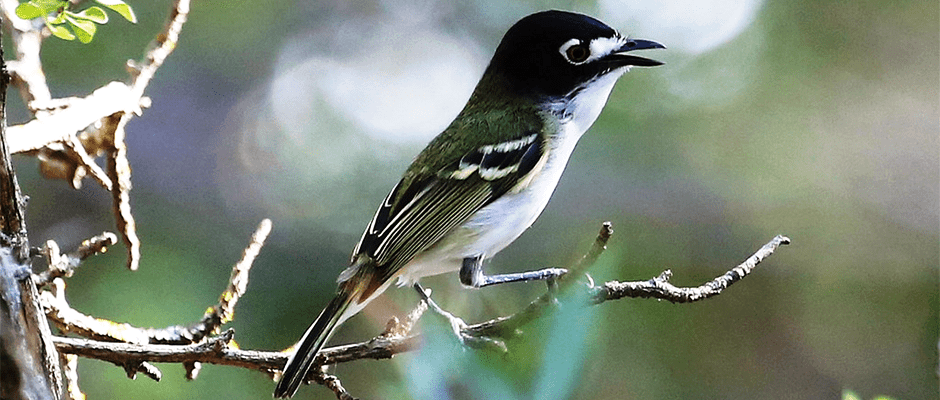
On Dec. 15, the U.S. Fish and Wildlife Service proposed removing the black-capped vireo (Vireo atricapilla) from the Federal List of Threatened and Endangered Species because “[it] has recovered so that it no longer meets the definition of threatened or endangered,” said the Federal Register notice.

The vireo was listed as endangered in 1987, when about 350 individuals remained in the wild. The birds were threatened by habitat loss and nest parasitism by brown-headed cowbirds (Molothrus ater), which tricked vireos into raising cowbird chicks while compromising the survival of their own young. Prescribed fires, conservation easements, and brown-headed cowbird management by USFWS and conservation partners greatly reduced these threats and helped recover the vireo population. More than 14,000 individuals are now present across their breeding range that spans Oklahoma, Texas, and Mexico.

USFWS is accepting comments on the notice until Feb. 13, 2017.

Close encounters of a raptor kind

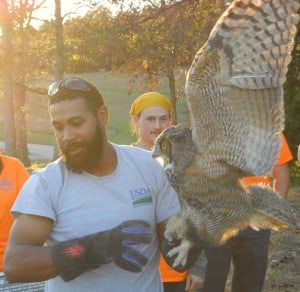
In mid-November, the Wildlife Services-Missouri program gave Jefferson City Boys and Girls Club an up-close and personal experience with common raptors.  With assistance from the Wildlife Club of Lincoln University, Steven Beza, a Wildlife Services (WS) biological science aide, introduced about 50 youngsters to several raptors and a falcon, which had been captured at two airports where WS works to reduce aviation-wildlife strike hazards.

Beza and Wildlife Club members explained why and how the raptors are captured and answered an array of questions.  The youth then watched the release of four Red-tailed hawks, a Cooper’s hawk and a great-horned owl as well as an American kestrel (see video link below.)

©USDA Wildlife Services

©USDA Wildlife Services

Six raptor species are among the top 20 hazardous bird species at airports. Although most strikes between aircraft and birds don’t damage the aircraft, almost all injure or kill the birds.  Wildlife Services traps and relocates 100-200 raptors in Missouri each year, protecting birds, planes and passengers.

Wildlife Services-Missouri has conducted 10 to 12 capture-release of raptors for youth groups throughout the state in the past year.  Last April in Columbia, the lecture and release was coordinated with a reading program for youth in a low-income housing community. A Kiwanis Club, the public schools and Columbia Reads donated Kindle tablets with access to a digital reading program with more than 5,500 books – including wildlife books.

Beza speaks enthusiastically about the numerous wildlife presentations he has given at local schools and clubs.  He says he wants young people to understand that there are job opportunities for any of them who are captivated with wildlife, as he was.  A senior in Agricultural Science emphasizing natural resource management and a wildlife management minor, Beza works periodically during the school year but fulltime during summer and winter breaks as a WS intern.  In the past three years he’s worked in five Midwest states and in Maine.

Lincoln University’s Wildlife Club currently has about 20 members, with the goal of becoming a full TWS student chapter.

Wildlife Services is a Strategic Partner of TWS.

WSB study: Small flocks of domestic sheep and goats might infect bighorns, too

Bighorn sheep (Ovis canadensis) populations in North America have suffered great losses from pneumonia after coming in contact with domestic sheep and goats that graze on public lands. Now, a new study published in the Wildlife Society Bulletin suggests that small flocks on private land can also be a threat.

“In all of the West, the majority of bighorn sheep herds have had pneumonia outbreaks because of domestic sheep and goats. It affects almost every state in the western U.S. and their bighorn sheep, said Laura Heinse, a conservation partnership manager at Palouse Conservation District in Pullman, Wash., and one of the study authors. “And then after the herd contracts it, they can lose about 70 percent of the herd in the first year. The following few years, the lamb production is really low and they can lose the whole lamb crop.”

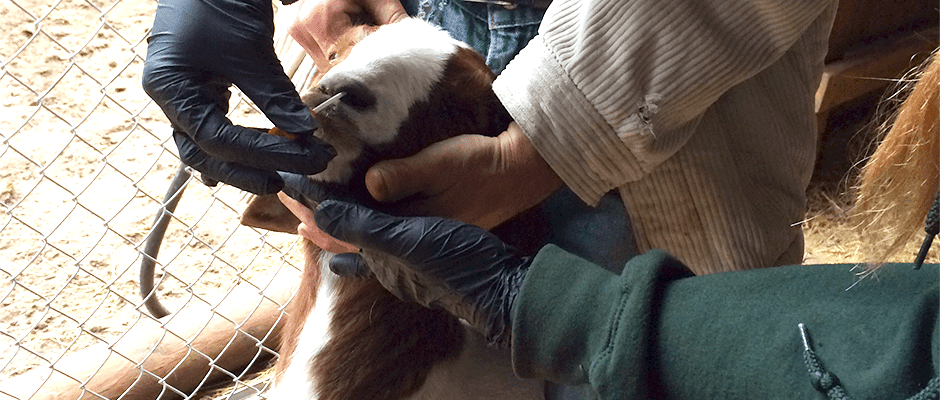
However, most management efforts in the past decade have focused on contact between wild and domesticated animals on public lands, so Heinse and her team wanted to know more about the impacts on bighorns from small flocks of sheep and goats on private lands. In 2014 and 2015, the researchers surveyed private farms near bighorn habitat in Washington state. They took samples of nasal mucus from a total of 137 sheep and goats from 24 flocks. Nearly 38 percent of these flocks tested positive for the bacterium, Mycoplasma ovipneumoniae.

Although the bacterium rarely produces disease in domestic animals, it has been linked to the development of pneumonia in bighorn sheep. Transmission occurs when the animals come in contact. After picking up the bacterium, the infected bighorns become susceptible to more pathogens that can cause fatal polymicrobial pneumonia. In the study, the researchers also found that domestic animals in 78 percent of the infected flocks had escaped their enclosures, which could put them in physical contact with bighorns in the area.

The researchers were also interested in how much the farm owners knew about the risk of pathogen spillover to bighorn sheep. Of 34 survey owners who responded to the survey, 32 percent had not heard of the risk, 15 percent were well informed and 53 percent knew only a little. All surveyed owners were willing to help prevent the spread of the disease in some of the ways the researchers suggested, especially if they were offered incentives.

“Certainly the best thing to do to prevent bighorn interaction is to not have any sheep or goats,” Heinse said, adding that owners are not required by law to keep their flocks away from bighorns.

However, most owners would not go that far. Most responded that they would not get rid of their flocks because they are useful for reducing the risk of wild fires and curbing growth of invasive vegetation. Further, many small farmers regard their goats and sheep as pets or prize animals.

More practical ways for keeping these animals away from bighorns include installing fences, signaling state biologists about sightings of bighorns near farms, and buying disease-free animals.

Outreach programs to educate farmers about the risk of disease transmission would be beneficial, Heinse says. However, she says that more effective ways of keeping the wild and domestic animals from coming in contact are also needed.


Margarita Yatsevich is a freelance writer.


Possible second jaguar spotted in Arizona

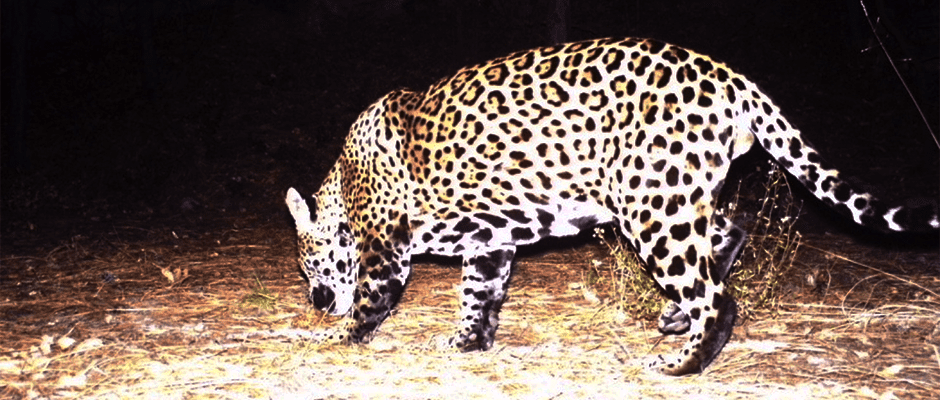
Many people are aware of the jaguar nicknamed “El Jefe” that was caught on video by a camera trap just last February, but recently it seems like there’s another boss in town. Last week, a possible second jaguar was caught by a trail camera roaming through Fort Huachaca, a U.S. Army installation in the Huachaca Mountains, according to the Arizona Game and Fish Department. Scientists are looking into more detail about this big cat and have yet to confirm that it is not the same jaguar as the one that was previously spotted in the state. The AZGFD says preliminary indications suggest the jaguar is a male. Read more about this spotting in The Washington Post.