



Share this article
Wildlife Featured in this article
- Northern elephant seal
Skinny seals eat more, sleep less
Skinny seals are less efficient at finding food and forgo sleep to make up for it
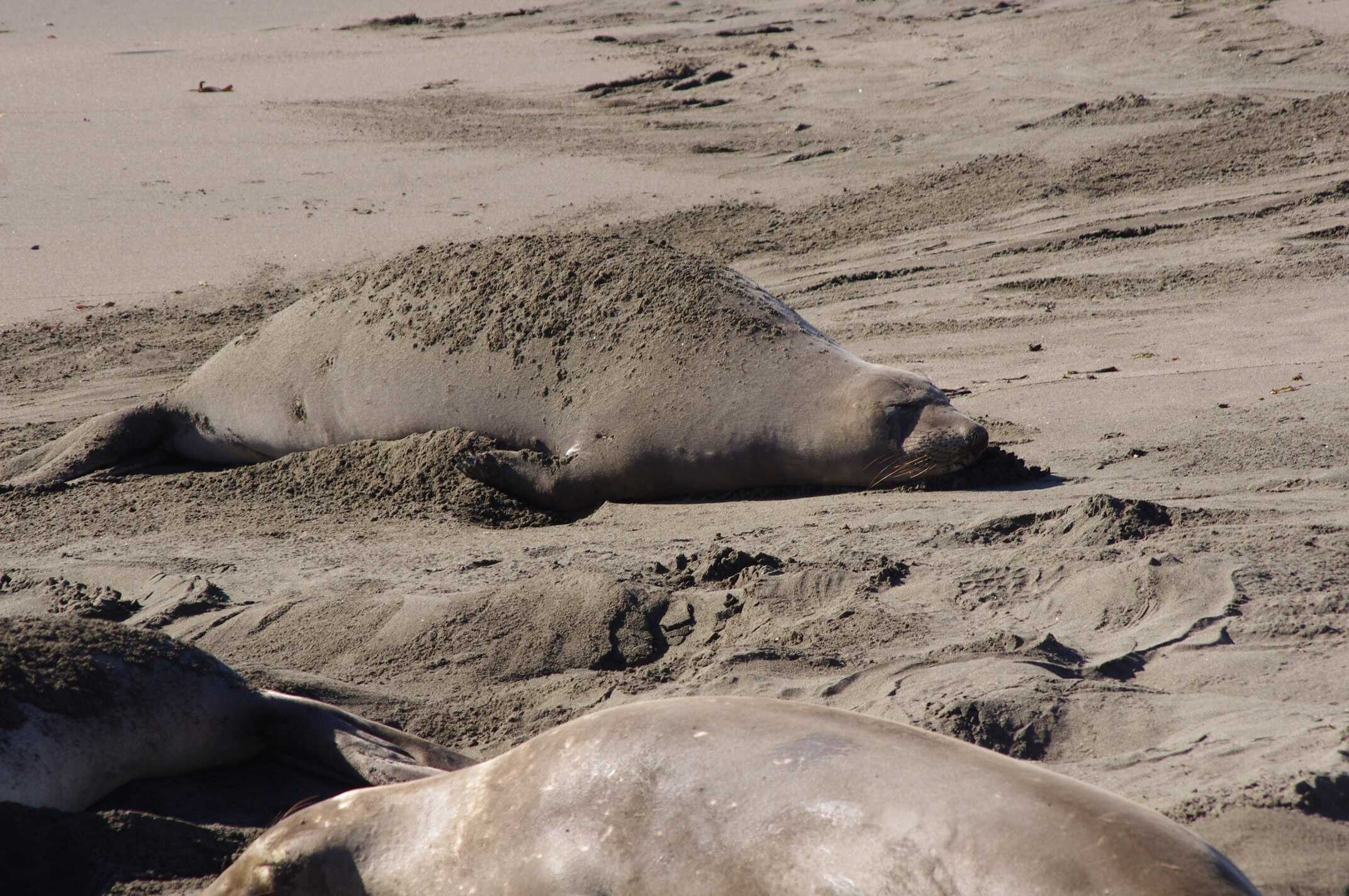
Sleep is essential for animals, but it comes at an energetic cost if they still haven’t consumed enough food. New research on northern elephant seals (Mirounga angustirostris) reveals how animals manage this trade-off. Using sensors attached to the seals’ jaws and their backs, researchers tracked movement, foraging and sleep, finding that seals adjust their behavior—sleeping less and foraging more—when energy is limited. By examining the activity data, researchers found that thinner seals in poorer body condition often spend more time looking for food and burning additional energy, which can worsen their condition. These seals are also less efficient and take longer at finding food. The consequence of spending more time looking for food? Less time available for sleep. If seals do not increase their foraging time, their condition may worsen, so they reduce the amount of time sleeping to compensate. The finding demonstrates how animals can alter their behavior to deal with energetic demands and ecological dynamics, an important insight into potential population changes under changing ocean and food conditions.

Header Image: For seals, foraging is an energetically costly process requiring trade-offs between getting energy and spending energy. Credit: David Merrett
Related Posts

How can spiders survive the cold?
No, it’s not wearing four sets of tiny mittens
Follow the food to find the right whale
Incorporating prey improves prediction of right whale movements in feeding and human wildlife conflict areas
TWS2025: Polar bears’ leftovers feed the Arctic
Leftover carrion from polar bear kills is a hearty meal for the region’s scavengers