Huge, long-lasting wildfires can cause changes in soil chemistry that affect water contamination, air quality and plant growth, but researchers found these changes are poorly monitored and rarely factor into post-fire recovery efforts or risk assessments.
In a review study published in Nature Reviews Earth & Environment, researchers found that better techniques are needed to monitor changes in soil and surrounding ecosystems. This enhanced monitoring could inform decisions on how to treat drinking water sourced from burned areas, support reforestation and protect workers against toxins during cleanup, rebuilding or revegetation.
“A better understanding of the molecular mechanisms in soil can help explain, for instance, why drinking water from a forest fire-impacted watershed is suddenly more toxic, or why a forest is not coming back,” said Colorado State University soil chemist Thomas Borch, a senior author of the study.
The Bureau of Land Management is addressing the urgent need to conserve greater sage-grouse habitat across public lands in the western United States.
In doing so, the agency has released its draft Resource Management Plan Amendment (RMPA) and Environmental Impact Statement for greater sage-grouse (Centrocercus urophasianus) planning.
The RMPA will address updates to Resource Management Plans (RMPs) across California, Colorado, Idaho, Montana, Nevada, North Dakota, Oregon, South Dakota, Utah and Wyoming.
This comprehensive planning effort comes in response to mounting concerns over the decline of the sagebrush ecosystem and the corresponding threats to greater sage-grouse populations in the 10 western states that are getting updated RMPs.
The sagebrush ecosystem is not only vital for the iconic greater sage-grouse, but also serves as a critical refuge for a diverse array of wildlife and plant species. This expansive landscape plays a fundamental role in maintaining biodiversity, supporting pollinator populations, and preserving unique plant communities. Greater sage-grouse have been adversely impacted by habitat loss and fragmentation, invasive species, wildfires and increasing energy development across their range.
“It’s been called the icon of the West. It is a flagship for the West and what the West stands for: open public lands, wide open spaces, and room for everyone to recreate and live,” said Alison Holloran, the executive director of Audubon Rockies and a vice president of the National Audubon Society. “I look at sage-grouse as the proverbial canary in the coal mine for our western ecosystems. As the sage-grouse goes, a lot of our western landscapes, particularly the sagebrush, will go that way as well.”
The current proposed amendments outlined in the draft RMPA aim to address several key objectives. These objectives include clarifying overall sage-grouse and habitat management goals, enhancing greater sage-grouse habitat quality, implementing mitigation measures to counteract habitat impacts, and establishing disturbance caps. Additionally, the plan includes provisions to manage energy development with the goal of minimizing its impact on habitat. Given the rise in renewable solar energy projects on public lands in the western region of the U.S., mitigating habitat loss resulting from such projects remains a pressing concern.
The draft RMPA presents six options to consider for greater sage-grouse management and conservation, as required by the National Environmental Policy Act (NEPA). These alternatives range from re-adopting previous management measures to implementing more stringent measures, including designating Priority Habitat Management Areas (PHMA) and Areas of Critical Environmental Concern (ACEC). The EIS/NEPA process ensures that environmental considerations are thoroughly evaluated and public input is solicited before final decisions are made.
“Everyone’s got to pay attention. Everyone has a role to play. I don’t think one conservation organization, not one federal agency—you name it—can take the load for the sage-grouse to be conserved,” Holloran said. “For this bird to be conserved, it is going to take a holistic and partnership approach, and I’m really hoping that people will continue to come together and do that.”
The proposed RMPA represents the next step in a series of ongoing conservation efforts for greater sage-grouse and their habitat. It builds upon the foundation the BLM laid in its 2015 Sage Grouse Conservation Plan, which established a landscape-scale approach to protecting and restoring sagebrush habitat across approximately 67 million acres and 10 western states.
The last updates to the Sage Grouse Conservation Plan were court-ordered in 2019, a significant development in the management of the species following extensive consultation and input from stakeholders representing federal and state agencies, industry, conservation organizations, Tribes and local communities. These updates aimed to enhance the effectiveness of conservation measures outlined in the original plan, incorporating new scientific findings, adaptive management strategies, and collaborative partnerships to address emerging threats to sage-grouse habitats.
The Wildlife Society and its network of affiliated chapters and sections have a longstanding record of engagement with policies impacting sage-grouse management and wildlife professionals working in the sagebrush ecosystem.
TWS submitted comments over a decade ago to the U.S. Forest Service and the BLM to inform the incorporation of sage-grouse management needs in range-wide management planning. TWS has consistently advocated for science-based conservation strategies for the species and sagebrush habitat. The Society has also engaged in advisory board meetings and supplied testimony to provide expert insights and recommendations for effective management practices for sage-grouse. Notably, TWS has actively opposed legislative riders that could compromise sage-grouse conservation efforts, as exemplified by letters of opposition to sage-grouse-related provisions included in bills such as the National Defense Authorization Act.
Chapters of The Wildlife Society have been instrumental in expressing concerns and providing input on sage-grouse management plans, ensuring that the expertise of wildlife professionals working to conserve greater sage-grouse and sagebrush habitat on the ground is considered in conservation decision-making processes. TWS staff plan to facilitate participation from affected units and relevant working groups to provide comprehensive and informed comments to the BLM regarding the draft EIS.
Supplemental feeding—when done just the right way—may boost the survival of reintroduced Hawaiian crows.
This finding from new research may help the survival of a species whose existence is precarious right now.
“Any reintroduction is a learning process for any species that you do it with,” said Alison Greggor, a conservation biologist with the San Diego Zoo Wildlife Alliance.
Hawaiian crows, also locally known as the ‘alalā (Corvus hawaiiensis), are highly intelligent, showing a remarkable ability to use tools—a study in 2016 found the widespread use of sticks and leaves to prey on arthropods, without any cues or social learning from other birds. They are also loquacious—Hawaiian crows have more than 60 different types of calls.
“The ‘alalā hold a very important place in Hawaiian culture,” Greggor said, adding that in local mythology, the crows help lead ancestors to the afterlife. They are also important seed dispersers for native Hawaiian fruits like hō’awa (Pittosporum hosmeri).
The species found on Hawaii’s Big Island began decreasing in the early 1900s, with significant declines in the 1950s. A captive breeding program began in the 1970s. While these efforts were successful in producing new chicks, the bird’s numbers outside of captivity continued to drop. The species had become extinct in the wild by 2002.
Conservationists tried unsuccessfully to supplement wild populations by releasing birds bred in captivity in the 1990s. From 2016 to 2020, wildlife managers conducted a reintroduction effort on the Puʻu Makaʻala Natural Area Reserve on Big Island. They fed the birds after release as a way to increase survival, but the crows tend to crowd around feeders, which is unnatural behavior for them. In normal conditions, ‘alalā typically become territorial after maturing and don’t spend much time with other individuals.
Another problem with this effort was that the researcher couldn’t control where the individuals went after release, and the birds could fly off to less suitable habitat.
In a study published recently in Conservation Science and Practice, Greggor and her colleagues tested if the birds would disperse in a way that might improve their survival. To do so, they used a more complex supplemental feeding system.
Hawaiian crows survived better when they received supplemental feeding after reintroduction. Credit: San Diego Zoo Wildlife Alliance
Initial release
The team released 11 juvenile birds in 2017. These birds showed high fidelity to the release site, likely because four supplemental feeding stations were nearby.
The researcher began their experiment by moving two of the four supplemental feeding stations 50 meters away, but in opposite directions. The team moved one of them to an area under a high forest canopy and placed the other in a more open area. After a week, they moved the feeders 100 meters away from the original site. In the third week, they were 150 meters away. By the fourth week, they had returned the feeding stations back to where they were in the beginning.
The team observed that the birds began to use more space as the researchers moved feeder stations farther away.
The researchers also determined which types of areas the birds preferred.
“We found that they were faster to find and use the closed canopy versus the open canopy ones,” Greggor said.
The feeders in the open canopy were more visible from a distance, but the crows were more hesitant to use them than the feeders located in the closed canopy. The birds also easily found the feeders that the researchers placed 150 meters away from the original ones.
“At 150 meters, birds will find the new resources, and it will likely influence their space use as well,” Greggor said.
Hawaiian crows are highly intelligent, using tools sometimes to obtain their insect prey. Credit: San Diego Zoo Wildlife Alliance
Informing future efforts
Unfortunately for these birds—and an additional two cohorts released in 2018 and 2019—many didn’t make it. Some died in storms, some from natural causes and others were preyed upon—or disappeared after an initial period of good survival. The team brought the remainder back into captivity.
But Greggor said that this study can inform future reintroductions, especially when conservationists want to redirect birds away from potential hazards like areas with more humans or other dangerous factors.
“It can be difficult in the wild to get birds to go where you want them to,” Greggor said.
Scientists are planning a reintroduction in Maui, which lacks the natural predator, the Hawaiian hawk, or ‘io (Buteo solitarius). These raptors caused some of the deaths in the recent set of releases.
“We know it will be a long road to get them back out, but we are hopeful for their future,” Greggor said.
Wildlife workers are puzzled at the appearance of hundreds of sick and starving pelicans showing up at rescue centers along the California coast. The birds are starving despite abundant marine life in the waters.
“It’s a crisis right now for the pelicans,” Debbie McGuire, executive director of the Wetlands and Wildlife Care Center in Huntington Beach, told the Associated Press.
Her organization has taken in more than 100 California brown pelicans (Pelecanus occidentalis) that were starving and dehydrated. Bird Rescue reported taking in 110 sick pelicans in recent weeks.
Wildlife organizations hope to rehabilitate the pelicans and return them to the wild.
Researchers have uncovered a better way to determine North Atlantic right whale presence, which has already helped managers mitigate threats to the endangered species.
“I grew up on the U.S. East Coast,” said Duke University research associate Jason Roberts, who studies the whales. “This is the endangered whale in my backyard.”
Roberts worked at Microsoft as a computer engineer before dedicating himself to finding new ways to use computers in conservation work. Highly endangered North Atlantic right whales (Eubalaena glacialis), which face threats of becoming entangled in fishing gear, being struck by boats and having to navigate new areas for prey due to climate change, were the perfect subject for Roberts to focus on.
For the right whales, just knowing where the species occurs is a challenge. Unlike many species, it’s not feasible to monitor this population with radio transmitters. “It’s not entirely harmless to attach these tags to the animals,” Roberts said. “For the current generation of tags, you have to implant them fairly deep in their blubber. And they’re very social animals, so they rub against each other, and sometimes other things, so they have a tendency to knock the transmitters off.” The species is also incredibly rare, so finding individuals to track is difficult.
In the past, researchers have relied purely on aerial sightings as well as sightings from vessels to determine where to find the whales. That information is held by the North Atlantic Right Whale Consortium, a data sharing group made up of researchers, conservation organizations, industry and technical experts with sightings dating back 100 years.
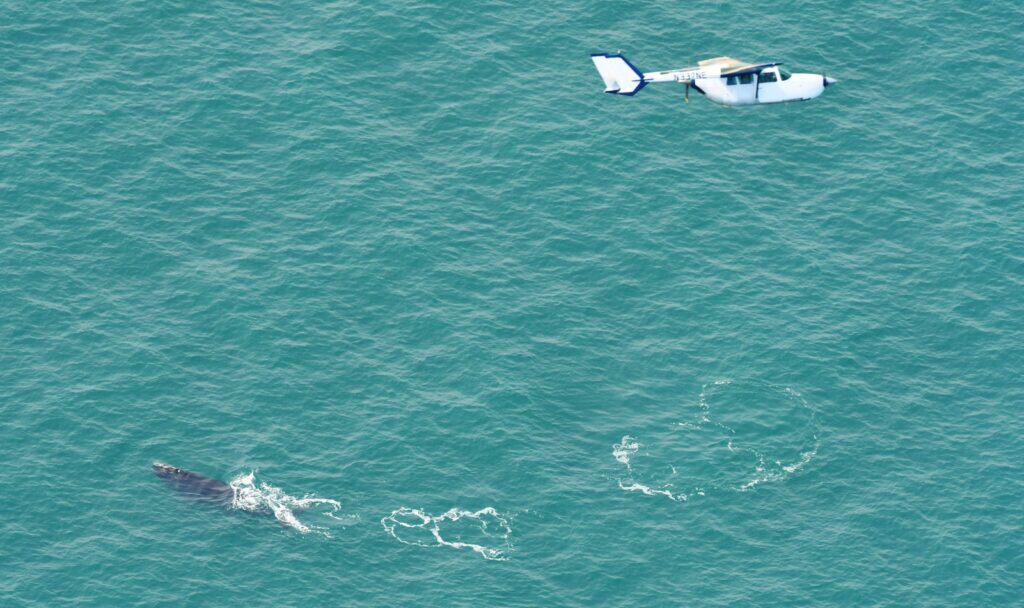
An aerial survey plane circles above a right whale. (NMFS permit #14233) Credit: Ester Quintana/NEAQ
Scientists had used this data to create maps showing where most sightings occur. The problem was that these maps were patchy and did not account for how well each area had been monitored. Where the whales appeared was skewed by where people spent the most time looking for them.
That’s where Roberts came in. He and his colleagues set out to create a model that could more accurately predict the distribution of whales across the East Coast based on the amount surveying that was done in each area and the conditions that occurred.
In a study published in Marine Ecology Progress Series, his team trained a model to take into account factors like surface temperature, chlorophyll concentration and sea floor depth to determine where North Atlantic right whales were most likely to be found. The team then used data from hydrophones—underwater sound recording devices—to see if their predictions were right.
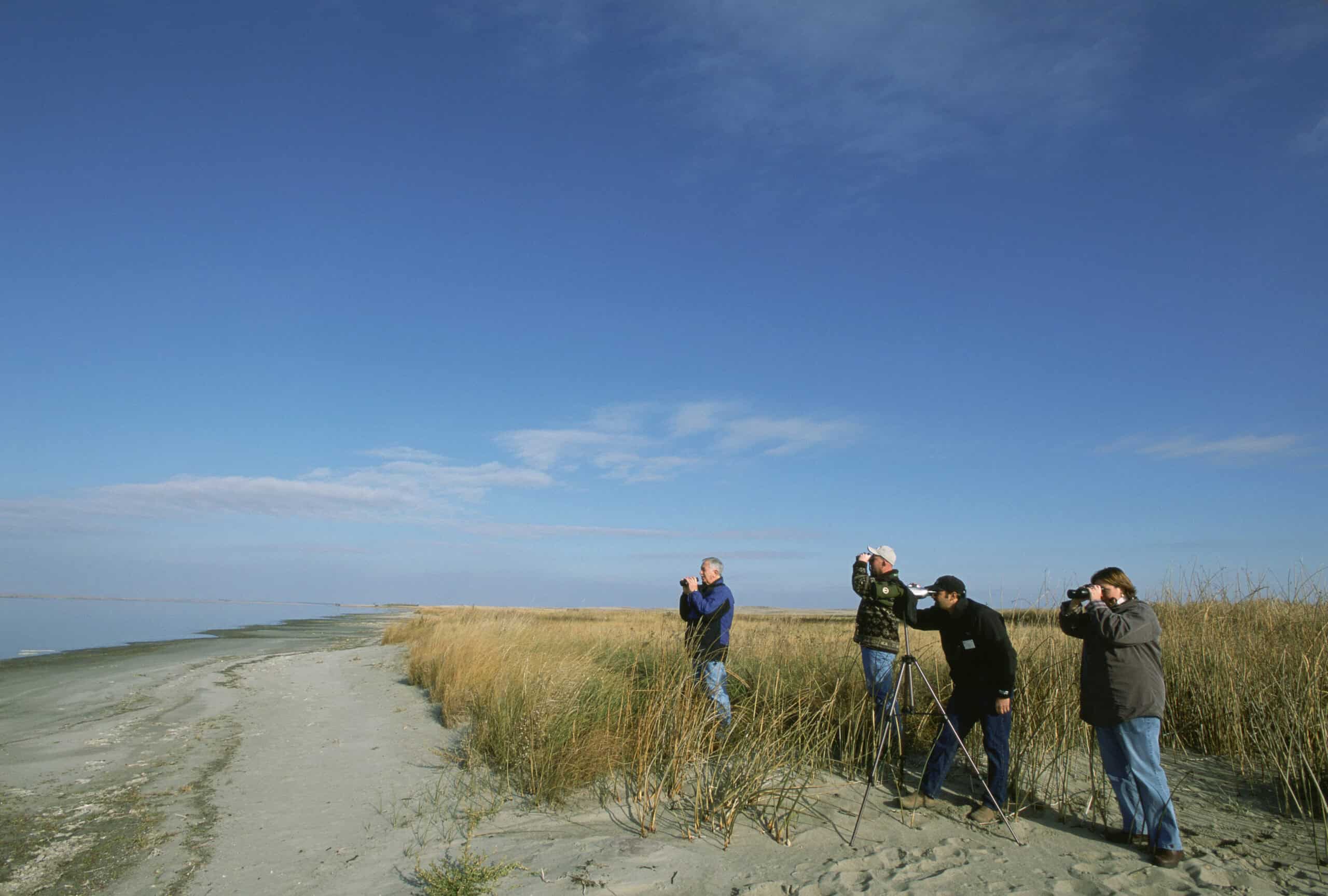
“The great thing about hydrophones is you can put one in the water and it runs 24/7,” Roberts said. “It sits there continuously monitoring, and that’s something that you can’t generally do with a human. You can’t put a human in the ocean with binoculars and have them just sit there all the time.”
Right whales don’t use sonar, though, so they don’t vocalize as much as some whales, and it can be hard to gauge how far the whales are from the hydrophones, especially in shipping lanes where there’s more noise. But by determining where the hydrophones picked up the most detections, they were able to double-check the models built from the sightings.
NOAA Fisheries has used the results of the analysis to inform mitigation efforts for the whale, Roberts said. His team is now updating it to expand the range north to the Gulf of St. Lawrence.
For people seeking to improve their mental health, a potential answer may be right outside their window: birdwatching.
A study published in Environmental Psychology found that people who have nature-based experiences report better well-being and lower psychological distress than those who do not. Birdwatching in particular yielded promising results, with higher gains in subjective wellbeing and more reduction in distress than more generic nature exposure, such as walks.
“There has been a lot of research about well-being coming out through the pandemic that suggests adolescents and college-aged kids are struggling the most,” said Nils Peterson, an author of the study and a professor of forestry and environmental resources at North Carolina State University.
May 10, 2024by
Jason Reinhardt, U.S. Forest Service Rocky Mountain Research Station
Reducing encroachment of pinyon-juniper woodlands is a proven management tool to restore sagebrush habitat for the greater sage grouse and other sagebrush-obligate species.
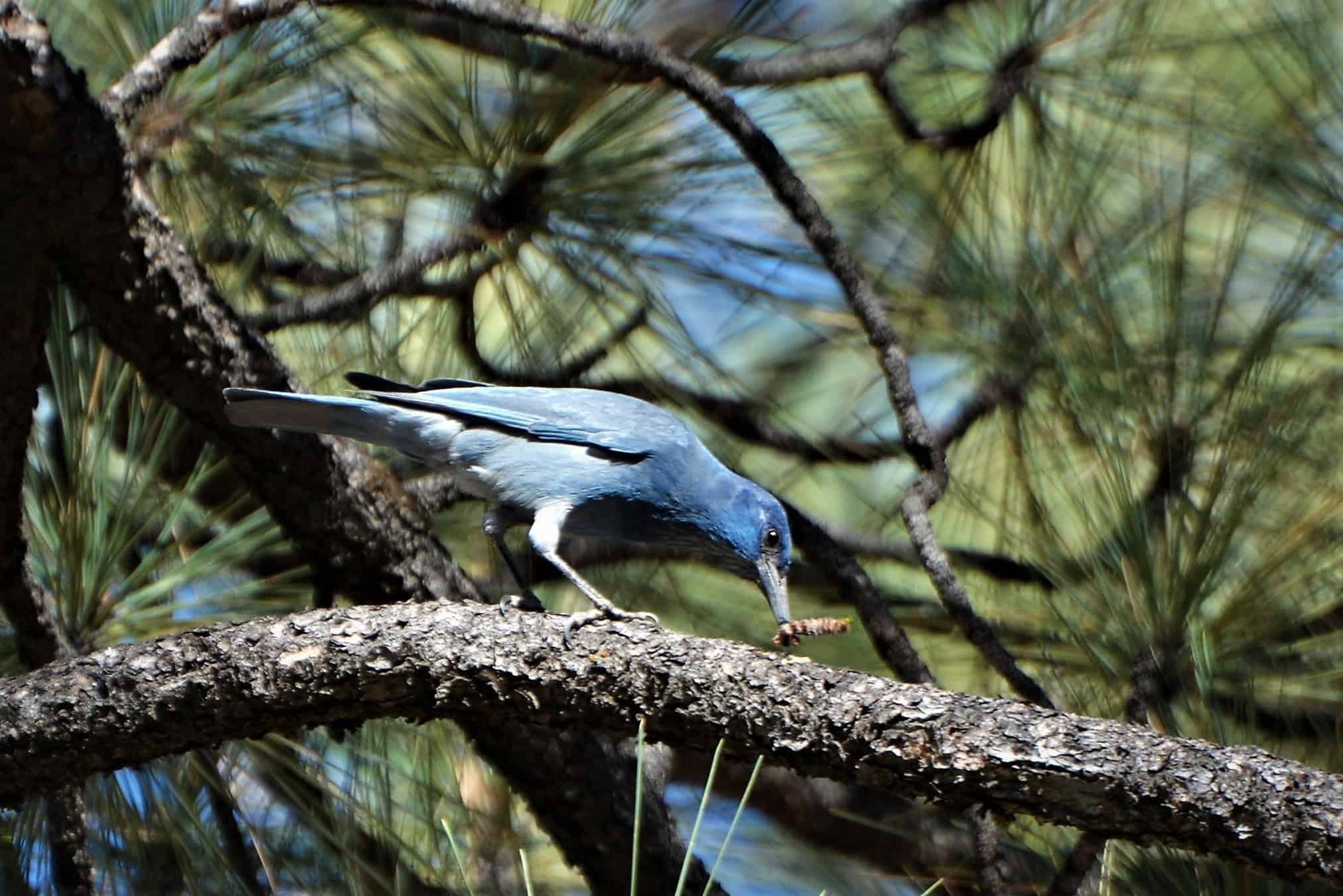
However, these woodlands have their own obligate species, such as the pinyon jay (Gymnorhinus cyanocephalus), whose population has seen significant declines over the decades.
This places managers in a conundrum: where to prioritize conifer removal for sagebrush species without negatively impacting woodland species?
“We’re losing sagebrush ecosystems at a rate of 1.3 million acres per year and conifer encroachment is the second-leading cause,” explains Jeremy Maestas, the sagebrush ecosystem specialist for USDA’s Natural Resources Conservation Service. “However, we need to ensure we’re not creating problems for woodland-obligate species as well.”
Jason Reinhardt, a research forester with the Rocky Mountain Research Station, and a team of researchers that included Maestas, were enlisted to improve the spatial targeting approach used by land managers to identify areas for conifer removal while minimizing impacts to pinyon jays.
“We wanted to take the existing models and use them in different configurations to build a landscape-level optimization that could tell us where we would get the most bang for our buck,” Reinhardt says. “Essentially, to go in and prioritize management efforts in the context of these species with different habitat needs.”
A bird’s eye view of the landscape
First, the team created an optimization model for sagebrush species that showed the conifer removal priority areas throughout the nearly 458,000 square kilometers that encompass Oregon, Idaho, Montana, California, Nevada, Utah and Colorado. When population estimations of pinyon jay were included, the resulting map revealed a noticeable change in the conifer removal priority locations.
“We saw a movement away from pinyon jay strongholds in Nevada, the southeastern part of California, and a little bit in Utah,” Reinhardt says. “Instead, priority areas were in Oregon, northwestern Utah, and southwestern Idaho.”
A limitation to the team’s modeling approach is its coarse-landscape level approach, but Reinhardt says local knowledge can identify specific removal areas.
“When you get to the fine spatial scale, that’s when you need to rely on the people who know where the birds are,” he explains.
Validation of conifer removal
The model results also revealed that current removal efforts targeted primarily for sage grouse haven’t appreciably reduced optimal pinyon jay habitat.
“There’s a lot of concern over how much our removal work may be impacting pinyon jay,” says Maestas. “This research is one of the first studies to show that our work over the last 10 years has largely avoided their habitat because of our targeted approach.”
The team has received positive feedback from land managers regarding this research, which Maestas describes as another tool to continually refine priority removal areas. Work is underway with the Western Association of Fish & Wildlife Agencies to apply this model across the entire sagebrush biome.
“Land managers, public and private, are charged with balancing this really diverse spectrum of ecosystems and competing demands,” says Maestas. “When we’re doing our work, we should be thinking about a holistic restoration plan that includes both the sagebrush shrublands and the adjoining forest that also need managed.”
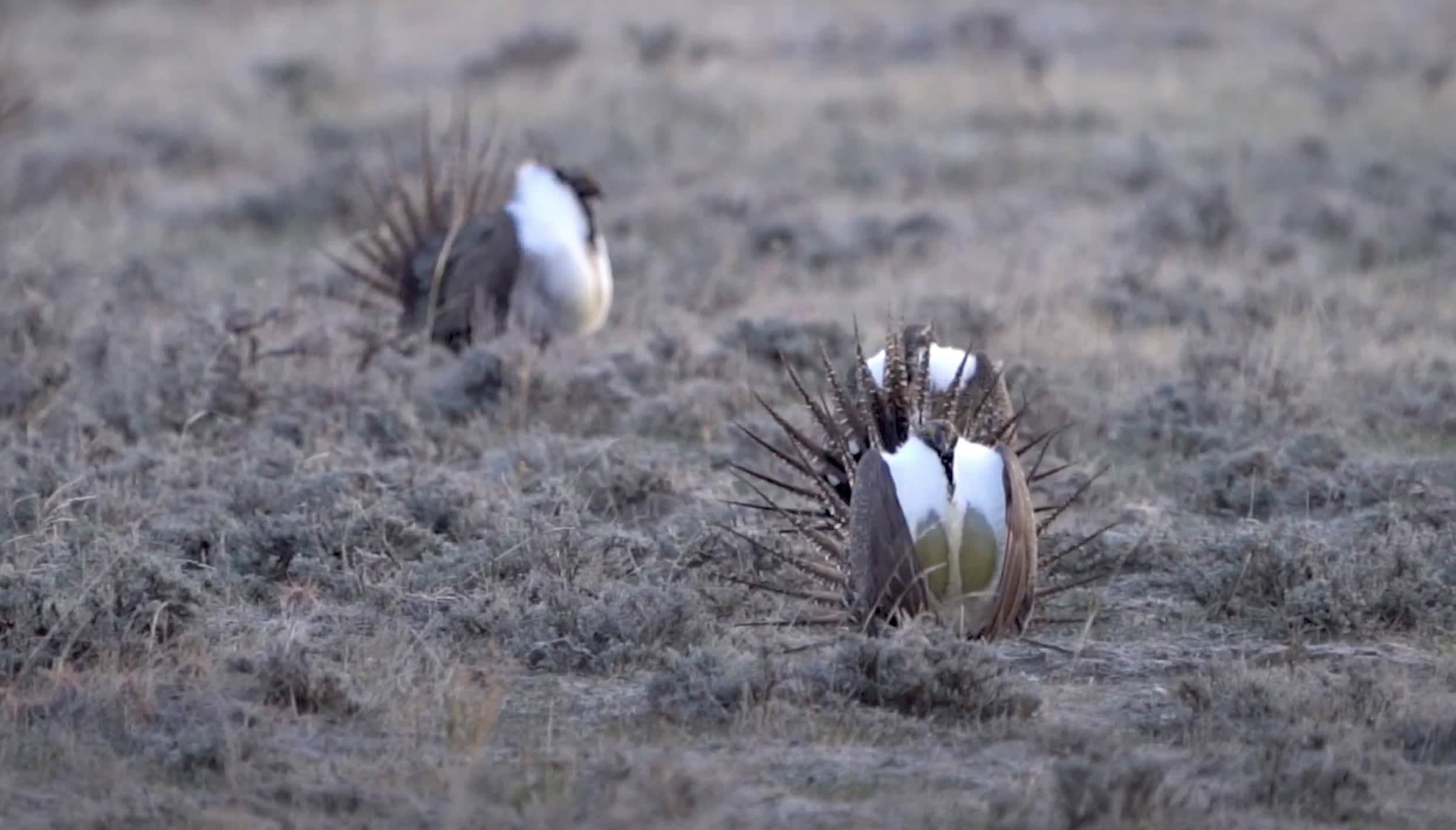
Each spring, North Dakota biologists count sage-grouse (Centrocercus urophasianus) on their breeding grounds to get population estimates.
Over the past 20 years, their populations have been on the decline, due largely to habitat loss and West Nile disease. While male sage-grouse numbers once topped 100 in the state, their numbers now never reach 50.
Biologists say the state now has just two breeding grounds—or leks. Last year, researchers counted 24 males. Preliminary counts this year suggests today’s numbers may be lower.
Watch the video from the North Dakota Game and Fish Department below.
Some wood frogs are evolving to live longer in high salt conditions due to road salt applications in eastern New York.
Road salt, made up of the same chemical we use in our table salt, has been used to melt ice and snow on roads in the United States to mitigate traffic accidents for about 80 years. Recent research has shown that it can wash into wetlands, stunt the growth of animals and even cause frogs to change their sex.
Rick Relyea, a senior endowed chair of biological sciences at Rensselaer Polytechnic Institute, had been studying the effects of road salts on aquatic plants and animals for 10 years in New York. He specifically wondered whether wetlands were getting saltier from winter road salt applications, since they are much shallower and have less outflow than lakes. “The salt doesn’t go anywhere, and we know it doesn’t break down,” he said. “It doesn’t get used very much by organisms. So it just accumulates.”
Relyea and his colleagues found that some wetlands had very low salt concentrations. But other wetlands had salt concentrations that were 200 times higher. “The next thing we wanted to know was, can anyone live there?” he said. “And the answer was, surprisingly, ‘yes.’ Frogs still lay their eggs in these wetlands.”
Relyea led a study published in Ecology and Evolution looking at how tolerant wood frogs were to salt when they were taken from areas of high and low salt concentrations. Relyea and his team also knew that frogs stay faithful to the sites where they’re born, so they wondered if frogs in salty areas were developing evolutionary traits that allowed them to persist there.
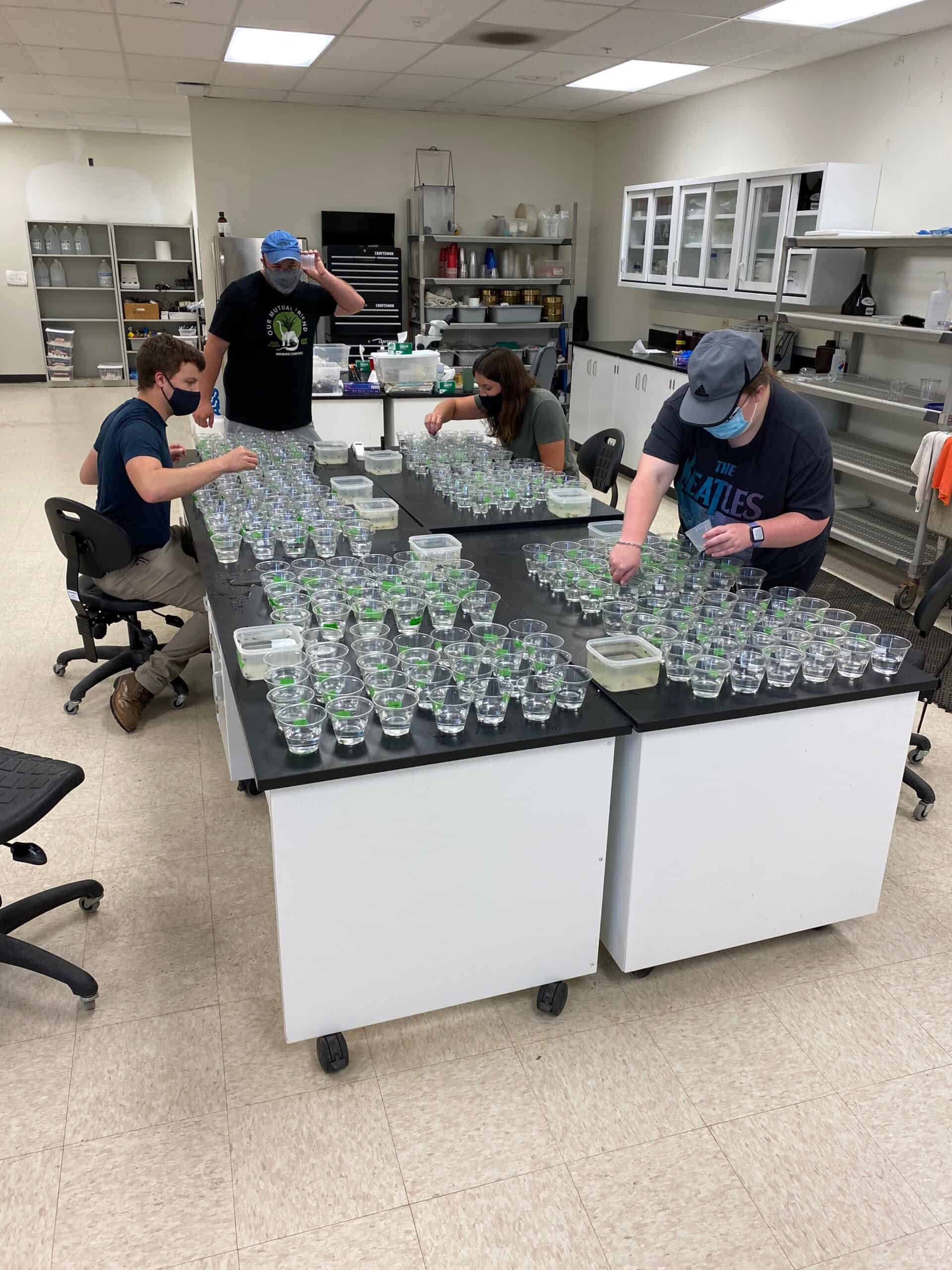
To conduct the study, Relyea and his team collected eggs from nine different populations during the spring from areas of different salt concentrations in eastern New York. “Wood frogs are really handy for this kind of experiment because they lay their eggs in the spring, and all the wood frogs in this region lay their eggs the same week,” Relyea said. “So you have an opportunity to get everyone who’s the same age, the same size, etc.”
After the eggs hatched into tadpoles, the researchers put them into containers that either had no salt or concentrations of salt that could probably kill them. The tadpoles all survived in the water without salt. When tadpoles originating from areas with less salt were put in the salty water, they didn’t make it. But when tadpoles that had already lived in salty conditions were placed in the salty water, they survived.
“If you look at the population that came from the low-salt wetlands, they’re almost dead in 40 hours,” he said. However, only 10% of the tadpoles from high-salt wetlands died after 40 hours in salty conditions. “That population is fundamentally way more tolerant than the other eight populations.”
Relyea said this suggests the frogs are evolving to handle saltier water. But if water gets above a certain concentration, they won’t be able to continue to survive, he said.
“Eventually, you’re going to get to a salt level that’s too much for them to adapt to,” he said. “This sort of evolution can buy us some time until we start reducing the amount of salt that we’ve put out in the environment.”
The good news is that many communities are already reducing salt output without compromising road safety by getting smarter about where they apply road salt and how much they use. They are also pretreating roads before snowstorms, so they don’t need to use as much after, and they are using newer generations of snowplows that are better at removing snow.
“It saves taxpayers money. It saves these towns money. And it saves the environment,” Relyea said. “So we have a win-win for everybody.”
Scavengers may not be the most iconic species in wetlands, but researchers found they play an important role in these vital ecosystems around the world.
In a study published in Biological Reviews, researchers analyzed more than 200 scientific articles conducted worldwide over the past 60 years. They found that, although scavengers are often overlooked in wetlands, they perform important ecosystem services, including nutrient recycling, water quality regulation, and pathogen control.
“It will be important to increase our knowledge on scavengers in aquatic ecosystems to understand their current roles, and the roles they may play in the future under global change,” the authors found.