



Share this article
Wildlife Featured in this article
- Black howler monkey
- Central American spider monkey
- Gaumer’s spiky pocket mouse
- Jaguar
- Margay
- Ocelot
- Puma
Jungle cats take to trees to avoid food fights
Wild felines specialize on different prey in different layers of the rainforest
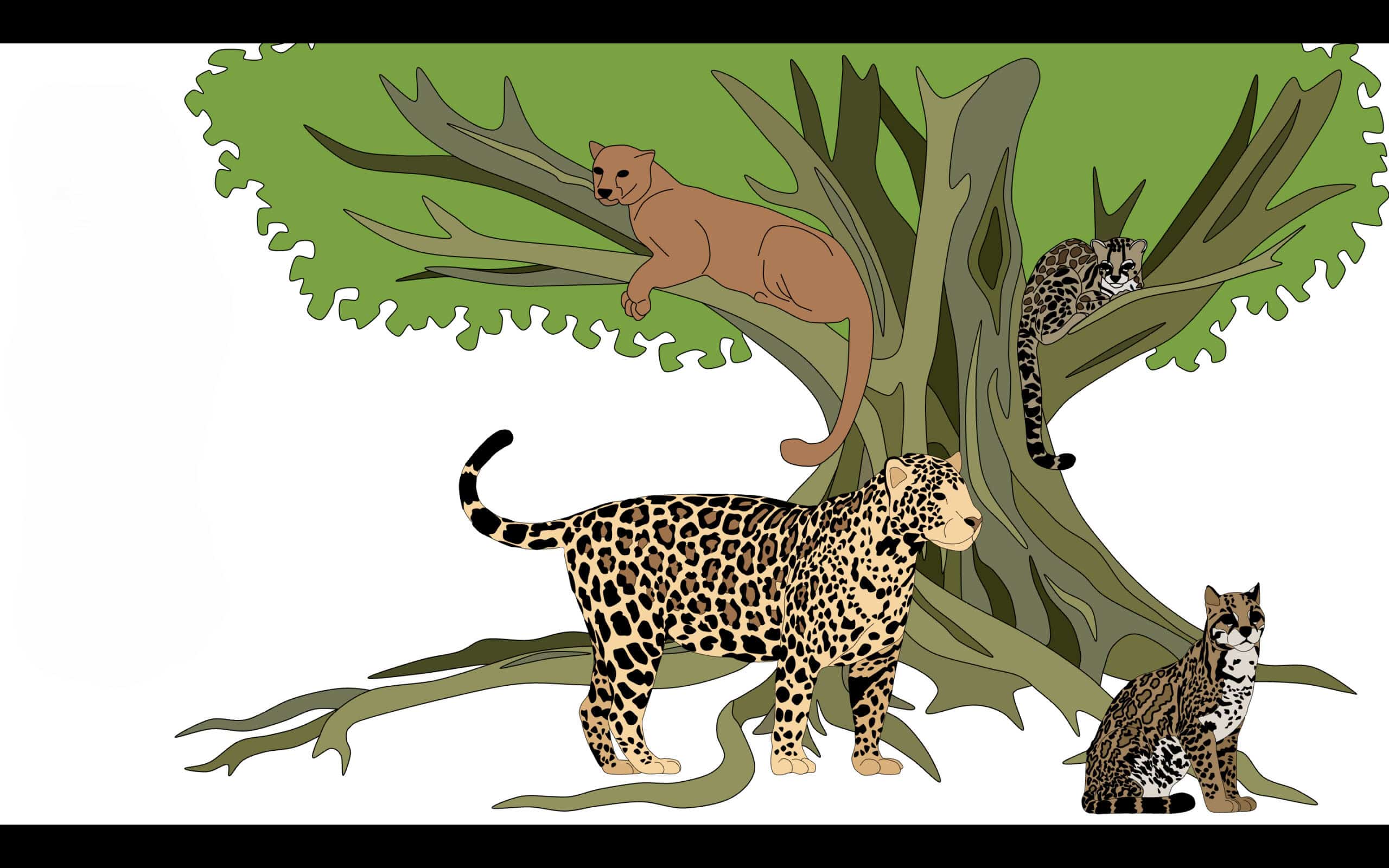
Felids in the Central American jungle have a pecking order when it comes to food, but the top cats mostly predate animals on the forest floor while their smaller cousins are stuck up in trees. Researchers used trail cameras in the Maya Biosphere Reserve in Mexico and Belize and Guatemala to spy on predator eating habits. They also used conservation detection dogs to sniff out cat feces, which contained DNA clues about what the felines had recently eaten. The researchers found that the cats divide up hunting in the jungle based on different vertical zones. Big jaguars (Panthera onca) ate mostly peccaries and nine-banded armadillos (Dasypus novemcinctus) on the forest floor. Medium-sized ocelots (Leopardus pardalis) ate opossums and Gaumer’s spiny pocket mice (Heteromys gaumeri), whereas margays (Leopardus wiedii), which are smaller and more acrobatic, fed on small arboreal mammals like mice, rats and opossums. Surprisingly, pumas (Puma concolor) in the area also stuck up in the trees, primarily eating black howler monkeys (Alouatta caraya) and Central American spider monkeys (Ateles geoffroyi). Researchers think that pumas are lighter than jaguars, allowing them to move through the lower canopy and ambush prey from above ground level. Ellen Dymit, a doctoral researcher at Oregon State University, said that understanding predator-prey dynamics will be especially important as humans push predators into smaller areas, increasing competition. “As habitat loss and climate change reshape ecosystems, understanding how predators partition resources will be critical for conservation,” Dymit said.
Read more at Discover Wildlife.

Header Image: An illustration reveals where jaguars, pumas, margays and ocelots hunt within the forest. Credit: Ellen Dymit/Oregon State University
Related Posts
Amazonian municipalities grant the right to bee
Stingless bees granted legal rights including representation in cases of threat and harm

Our favorite wildlife stories of 2025
Coyotes and badgers buddy up, saving salamanders from hurricanes and the viral origins of the jackalope
Wildebeest migration is collapsing in Kenya
Fences and other barriers are affecting connectivity for ungulates in the northern Serengeti