



Share this article
Wildlife Featured in this article
- Cabbage white butterfly
- Monarch butterfly
Microplastics from tires may not harm butterflies
Cabbage white and monarch caterpillars can survive with tire particles in their diets
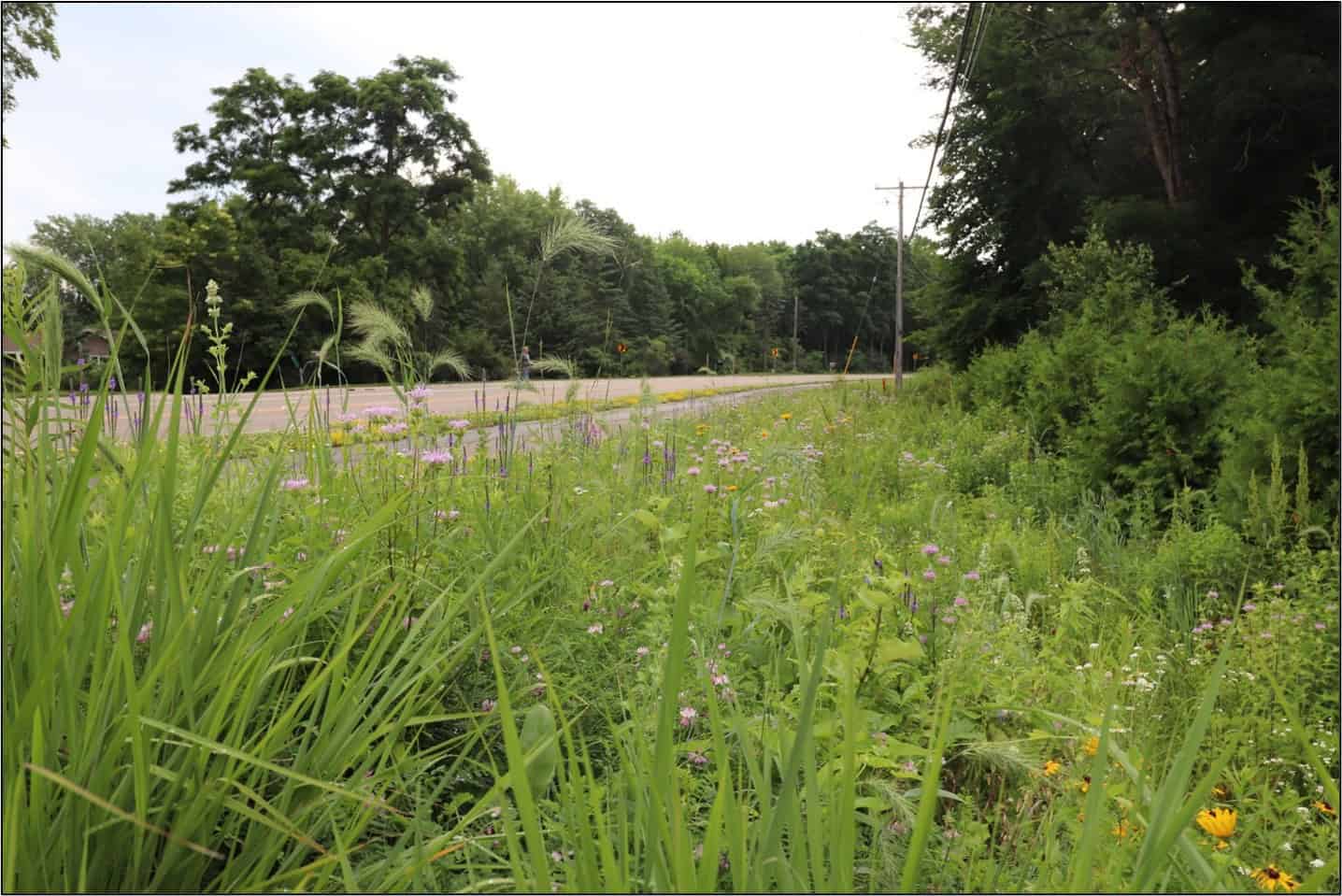
Roadsides making up millions of miles across the U.S. provide an opportunity to boost declining populations of pollinators and other insects. But scientists worried that plants there may carry a poisonous trap for hungry caterpillars due to the chemicals and microplastics that car tires deposit into the atmosphere.
“Are you drawing animals into an area where they just die because there are lots of toxins?” said Emilie Snell-Rood, a professor of ecology, evolution, and behavior at the University of Minnesota, during a research presentation at the Ecological Society of America’s 2025 Annual Meeting.
Many chemicals can seep into the soil and plants alongside roads. Old roads can still contain legacy lead from leaded gasoline, and northern roads often contain an excess of salt used to melt snow and ice. But as tires tear past roadside flowers, they can also release particles into the atmosphere. Tires spit off tiny bits of synthetic rubber, which contain a mixture of microplastics, metals and other materials that get into the soil and onto plants.
Caterpillars—including the larvae of imperiled butterflies like monarchs—can then ingest these microplastics and other chemicals.
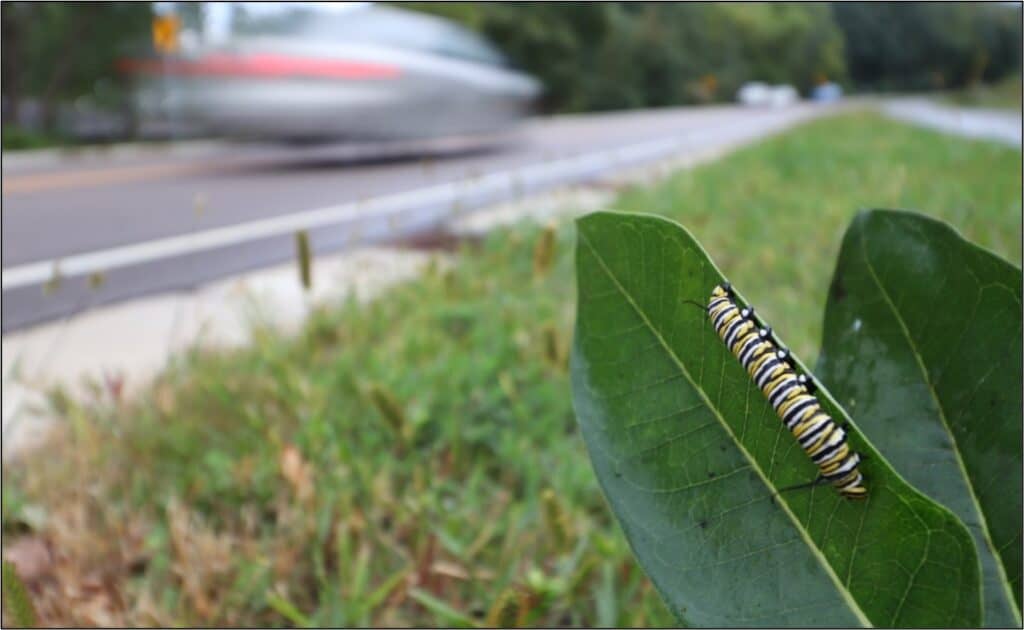
Since microplastics can affect the physiology and health of some species, Snell-Rood and her colleagues wanted to learn whether these materials might negatively affect butterfly species that commonly use roadside areas.
“Roadsides play a really important role when talking about the plastics cycle,” Snell-Rood said. “As plastic degrades in the environment, it just gets smaller and smaller—it doesn’t really disappear.”
Following the tire marks
The team collected three plant species that pollinators commonly use along roadsides in St. Paul, Minnesota, and examined the particles they contained. Bits of tire left behind were pretty evident under a microscope and confirmed with an analytical technique. “They look like little pieces of cat poo when you zoom in on them,” Snell-Rood said.
Overall, the researchers found that the highest amount of tire particles in the plants translates to about 3.6% of the dry mass of the leaves. In a lab experiment, they then fed this proportion of tire microplastics mixed with an artificial diet to cabbage white caterpillars (Pieris rapae) and didn’t see any effect, even when they increased the amount to about 8% of tire particles. Starting at levels of 16% of tire particles in the diet, the butterflies showed significantly longer times to grow from egg to adult, but only by a day. “There is no significant effect on survival,” Snell-Rood said.
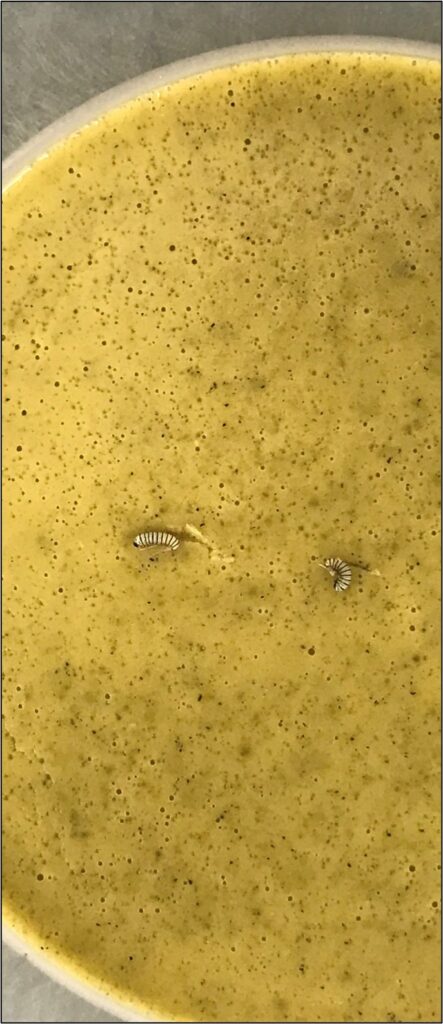
Since cabbage whites generally tolerate human disturbance well, the team then tried similar tests on monarch butterflies (Danaus plexippus) and found they were also tolerant of consumption of tire wear particles. “Roadsides polluted by these levels of tire wear particles seem below thresholds of concern for caterpillars,” Snell-Rood said.
The findings are positive news, she said, since roadside plants offer a large potential for pollinator use. Similar tests she has done on road salt and some metals also don’t seem to cause any significant population effects for the butterflies. “It doesn’t look like we’re creating an ecological trap with a lot of these pollutants,” Snell-Rood said. These findings are being prepared for submission to a peer-reviewed journal.

Header Image: Roadside plants can provide a great resource for butterflies. Credit: Emilie Snell-Rood
Related Posts
Climate change bites for snakes
Venomous serpent strikes in India may jump with climate change
New antivenom works against 17 snakes
Researchers develop a new preliminary antidote for African serpents in rodents in lab mice
The September/October issue of The Wildlife Professional
Industry affects wildlife populations in the Alberta oil sands