



In the midst of reports reiterating the dire state of climate change, the Trump administration appears to be taking the United States in the opposing direction—a stance that presents risks for wildlife and wildlife professionals alike.
On October 29th, the Potsdam Institute for Climate Impact Research and Oregon State University released their 2025 State of the Climate Report, and the findings were bleak. The report claims, “We are hurtling toward climate chaos. The planet’s vital signs are flashing red. The consequences of human-driven alterations of the climate are no longer future threats but are here now.”
Less than a week later, the United Nations Environment Programme released its 16th edition of the Emissions Gap Report, which concluded: “On the10th anniversary of the Paris Agreement, the message is clear: only decisive, accelerated [greenhouse gas] emission reductions can align the world with the goals of the Paris Agreement and limit the escalation of climate risks and damages that, already today, are severe, and hit the poorest and most vulnerable the hardest.” The Paris Agreement is an international treaty adopted in 2015 to limit global warming to well below 2 degrees Celsius, but preferably less than 1.5 degrees Celsius, above pre-industrial levels.
Both reports spotlight that greater losses are expected for ecosystems and wildlife in the future. The Potsdam Institute report states that “more than 3,500 assessed wild animal species are threatened by climate change and numerous examples of climate-related species population collapse have been documented.”
While melting ice caps, biodiversity loss, rising seas, or greenhouse gas emissions are troubling trends, political influence in scientific discourse around climate change may be far more troubling.
“The political objective…is often some trivial tinkering with the laws, some useless appropriation, or some pasting of pretty labels on ugly realities.”—Aldo Leopold, Conservation Ethic, Journal of Forestry, Volume 31, Issue 6, October 1933
The growing politicization of climate change
This year, the Trump Administration has announced seven actions that include the term “climate change.” Each action frames climate change as a social or political issue rather than a topic of scientific importance. This affects the availability of funding for climate science, opportunities for international collaboration and access to information and other resources that support the work of wildlife professionals.
Of the seven actions announced this year:
- Four rescinded or called for the recission of past Executive Orders or regulatory actions that mention climate change.
- One called for the immediate withdrawal of the United States from the Paris Agreement and for the “United States’ withdrawal from any agreement, pact, accord, or similar commitment made under the United Nations Framework Convention on Climate Change.” Accordingly, the U.S. did not send a delegation to the UN Climate Change Conference (COP30) this November.
- One seeks to identify and legally remove any “State laws purporting to address ‘climate change’ or involving ‘environmental, social, and governance’ initiatives.”
- The final action defines “Gold Standard Science” which places the “generation, use, interpretation, and communication of scientific information” for each agency under the direction of a political appointee. The order also calls for “unbiased peer review,” which is not further defined and appears to de-emphasize reliance on studies that occur outside of a controlled environment (like most climate science) by emphasizing reproducibility, uncertainty and consideration of alternative scientific opinions.
In response to the last order, the U.S. Department of Energy released a non-peer-reviewed report in July that casts doubt on the current state of climate science while regularly highlighting “the important positive effect” of increasing carbon dioxide in the atmosphere. A quick search also finds several news headlines reporting politics-driven word choice manipulation from leaked government memos, though federal agencies deny such memos exist.
These actions clearly signal that climate change is no longer a priority of the federal government. This political framing of a topic with scientific importance will undoubtedly have long-term effects on the work of wildlife biologists, and not just due to rising temperatures.
U.S. climate science on the cusp
A recent court filing in a case challenging reductions in force (RIFs) directives issued during the government shutdown revealed that the U.S. Department of the Interior (DOI) had “intended on imminently abolishing” well over 50% of U.S. Geological Survey (USGS) employees at national and regional Climate Adaptation Science Centers (CASC). While a temporary restraining order has blocked implementation of the RIFs for now, the reductions would severely disrupt hundreds of climate projects nationwide. These projects provide essential scientific information and tools to wildlife biologists and land managers from other government agencies universities, and nonprofits to adapt to the effects of climate change on fish, wildlife, water, land and people.
The Wildlife Society has a long history of supporting CASCs and the centers are a core resource in the development of important wildlife management documents like State Wildlife Action Plans (SWAPs). Even if the centers are spared from the RIFs, the administration’s proposed Fiscal Year 2026 budget seeks to cut climate funding across the entire federal government, framing it as funding for “climate ideologies antithetical to the American way of life.” This includes a proposed USGS budget that “eliminates programs that… focus on social agendas (e.g., climate change) to instead focus on achieving dominance in energy and critical minerals.”
Politics as an influencing force on wildlife science and management
A 2022 paper published in Conservation Science and Practice reports that “the local, state, or national political climate influenced the way that climate change information was used in SWAPs.” The paper, which included information from interviews with authors of the influential state plans, noted that some authors had difficulty getting approval to use terms like “climate change” and others relied on alternative language to “avoid arousing negative feedback from the public or elected officials.” SWAPs are science-based blueprints developed by each U.S. state and territory to proactively conserve wildlife and their habitats before they become endangered.
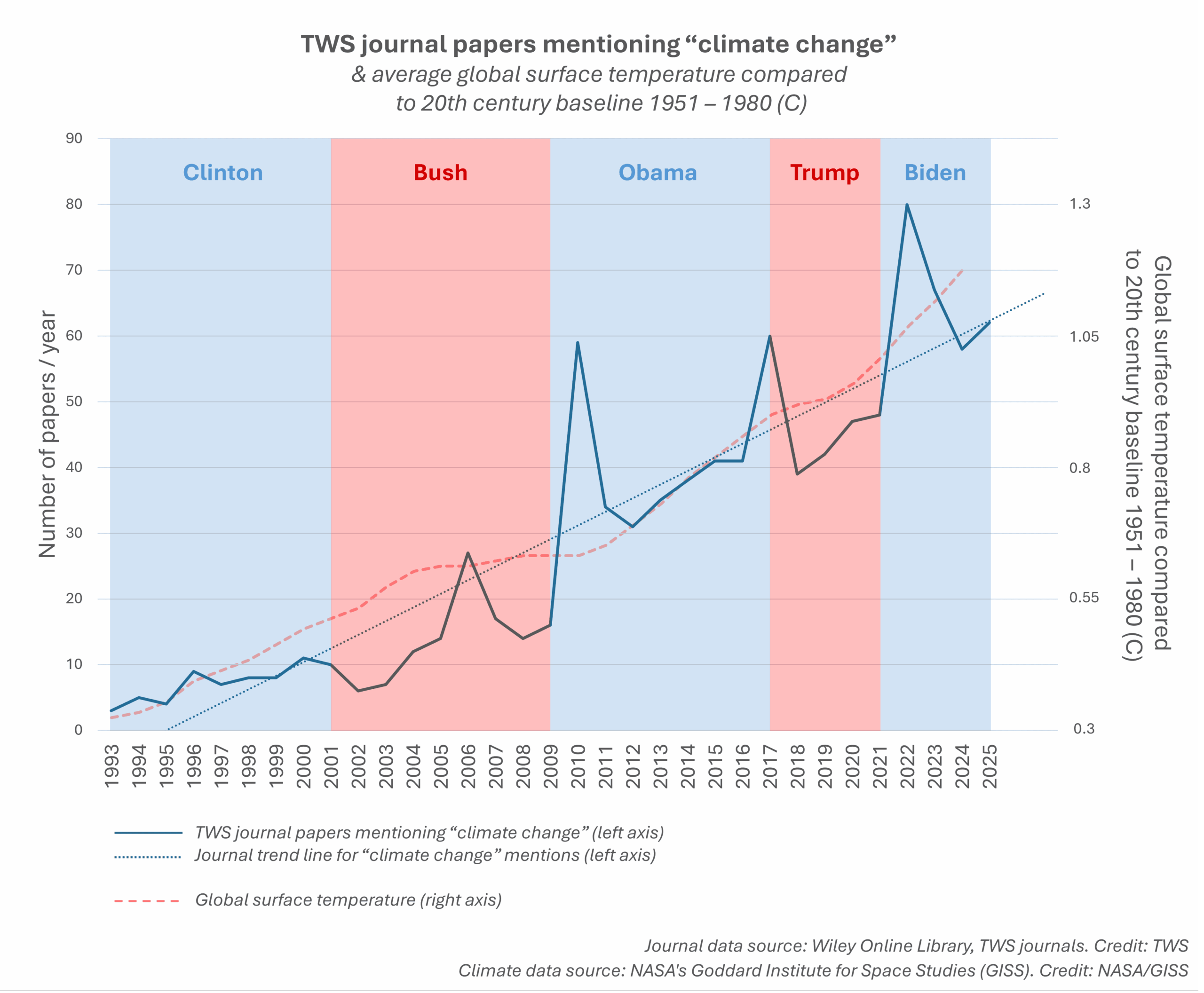
The potential effect of political influence on science is noticeable when looking at papers published in TWS journals over the past five administrations. During Republican administrations, fewer papers mention the term “climate change” when compared to the 30-year trend line of climate change mentions. There is also a spike in papers referencing “climate change” in the year following a Republican administration. This spike may indicate that some papers were held back from the scientific literature during those years or that the authors did not feel comfortable connecting climate change to the management implications of their research. It could also indicate opposing political pressure from Democratic administrations to produce counter messaging, after which we see mentions stabilizing around the general trend line. Regardless of the administration, references to climate change in TWS journals continue to climb at a steady rate, reflecting the growing impact of rising global temperatures on wildlife management.
The evolving lexicon of climate science and the role of TWS
While many wildlife professionals are struggling with how to navigate political pressures, nearly all that I have spoken with about their work and climate change have emphasized that their underlying science is unaffected by politics. In some cases, they even claim the science is improved through forcing authors to use more descriptive or precise language.
“It has happened before that great ideas were heralded by growing pains in the body politic, semi-comic to those onlookers not yet infected by them. The insignificance of what we conservationists, in our political capacity, say and do, does not detract from the significance of our persistent desire to do something.”- Aldo Leopold, Conservation Ethic, Journal of Forestry, Volume 31, Issue 6, October 1933
The challenge in turning that desire and science into something productive, however, lies in deciphering the patchwork of euphemisms that result from actual and perceived political pressures:
- Climate change becomes “extreme weather”
- Adaptation becomes “resilience”
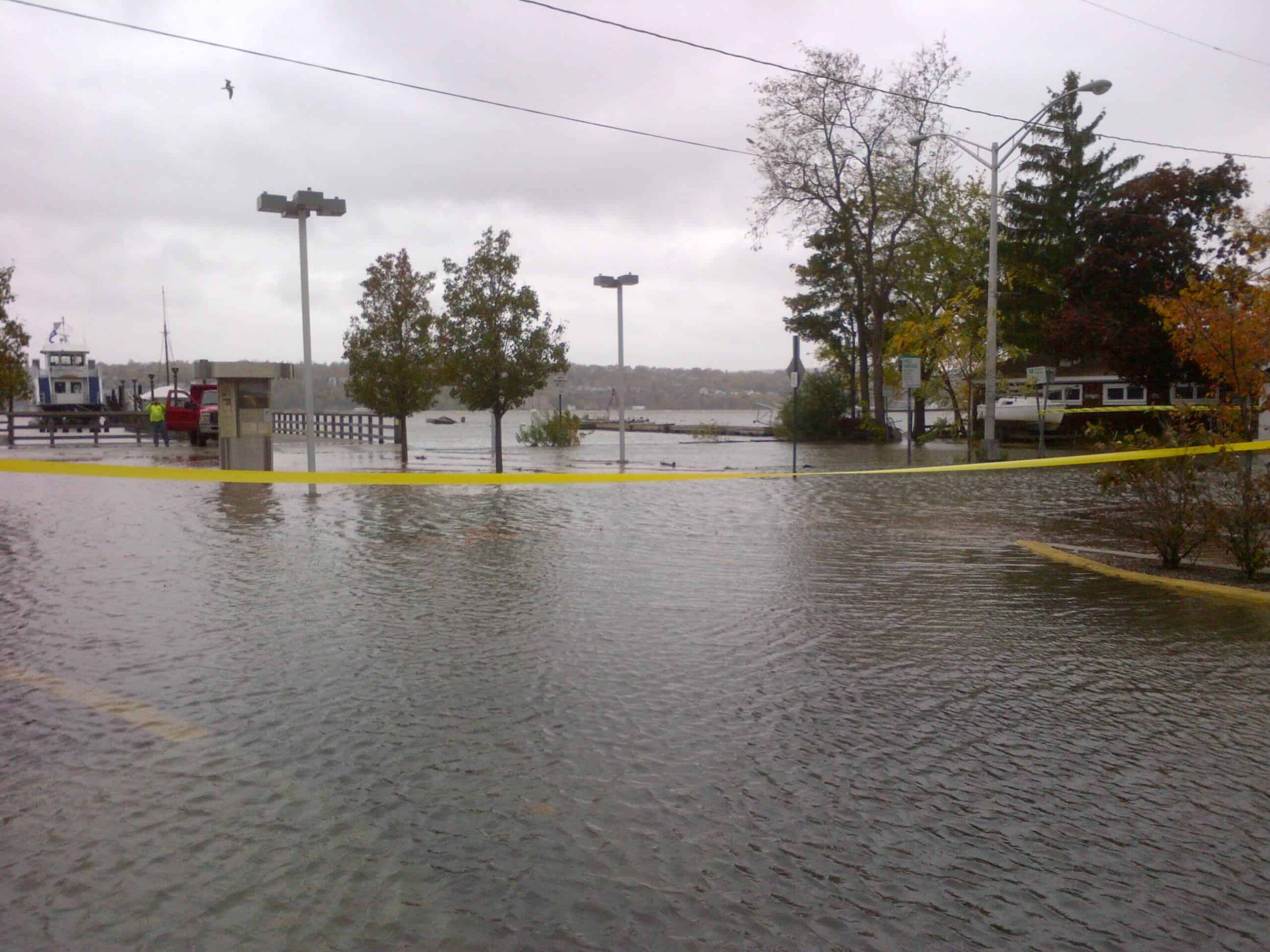
- Sea-level rise becomes “saltwater intrusion” or “nuisance flooding”
- Species and habitat loss become “ecosystem shifts”
If the quality of science remains intact, why should TWS care about what terminology is used? Well, a 2022 study published in Ecological Economics, found that “even subtle word changes can significantly influence opinion and behavior, well beyond what is usually assumed.” Politicians, advocacy groups, lawyers and journalists on both sides of the aisle understand the power of words and can use that to drive desired outcomes.
Using shared terminology also allows professionals to collaborate, compare data, and build consensus. Substitutions may seem benign, but they can dilute urgency, obscure the underlying cause of scientific observations, and affect the ability of policymakers, the public and other scientists to find relevant research. By omitting familiar terms in favor of scientific precision or in response to political pressures, wildlife professionals may numb the public with scientific jargon. This may also reduce the impact of their findings with policy makers and other scientists who must sift through documents several hundred pages long all while maintaining the cognitive ability to quickly detect and decipher euphemistic language relevant to climate change.
Supporting climate change as a scientific inquiry
As we contemplate the role of TWS in the evolving lexicon around climate change, the Society remains vigilant in monitoring and promoting the highest science standards in setting wildlife policies and decisions. This includes continuing to support necessary scientific dialogue on climate change as it relates to wildlife through committees, Working Groups, policy positions and our publications. One example is the explicit inclusion of a “Climate Implications” section in the Journal of Wildlife Management, which helps institutionalize climate change as a subject of scientific inquiry as opposed to a political issue.
Such changes empower wildlife professionals to discuss climate change topics that they may otherwise view as being politically risky. Other organizations like the Association of Fish and Wildlife Agencies (AFWA), a nonprofit trade association, also recognize the politically charged nature of climate change and follow a similar model for providing tools and support to agency employees in crafting SWAPs. In 2022, AFWA released the Second Edition of its Voluntary Guidance for States to Incorporate Climate Change into State Wildlife Action Plans and other Management Plans. Thanks in part to these efforts, all 50 states and territories now include climate change information within their plans—a significant increase from just four states in 2005.
Building dialogue for the future
To quote a Buffalo Springfield song from 1966, a time also characterized by divisive politics, “Nobody’s right if everybody’s wrong.” The politicization of science has legitimate consequences. Both political parties have used climate change to further partisan divides and wildlife professionals must now navigate the repercussions of science as a political issue. Your feedback can help shape how TWS moves forward. The goal is to reflect the unified voice of the profession in navigating an issue with consequences that extend far beyond our members and U.S. politics.
I encourage everyone in TWS to continue this dialogue. Talk to your representatives in Congress and in your state legislature, but don’t stop there. Reach out and let TWS know how we can best support you. Contact your representative on Council and discuss your big ideas for the future of the wildlife profession. Share your frustrations, success stories, challenges and disagreements. At the end of the day, the true issue we’re talking about is not which political party you belong to, but rather how we maintain the integrity of the wildlife profession, our mission and the legacy of TWS—an organization that has seen a lot of politics in its time.
“A professional organization, from which their political masters are excluded, offers the only hope for the young wildlife managers to achieve satisfactorily independent careers, and of really participating in the shaping of policies in the conservation field.”— W.L. McAtee, first editor of the Journal of Wildlife Management in a 1936 letter to Paul Errington regarding the formation of The Wildlife Society,
To read the climate change reports referenced in this article click the links below:
Join fellow TWS members in supporting this year’s Giving Tuesday campaign. The funds from this year’s campaign will support TWS policy engagement, including bipartisan dialogue with policymakers on the importance of wildlife science and wildlife professionals in resource management decisions.
Article by Cameron J. Kovach