

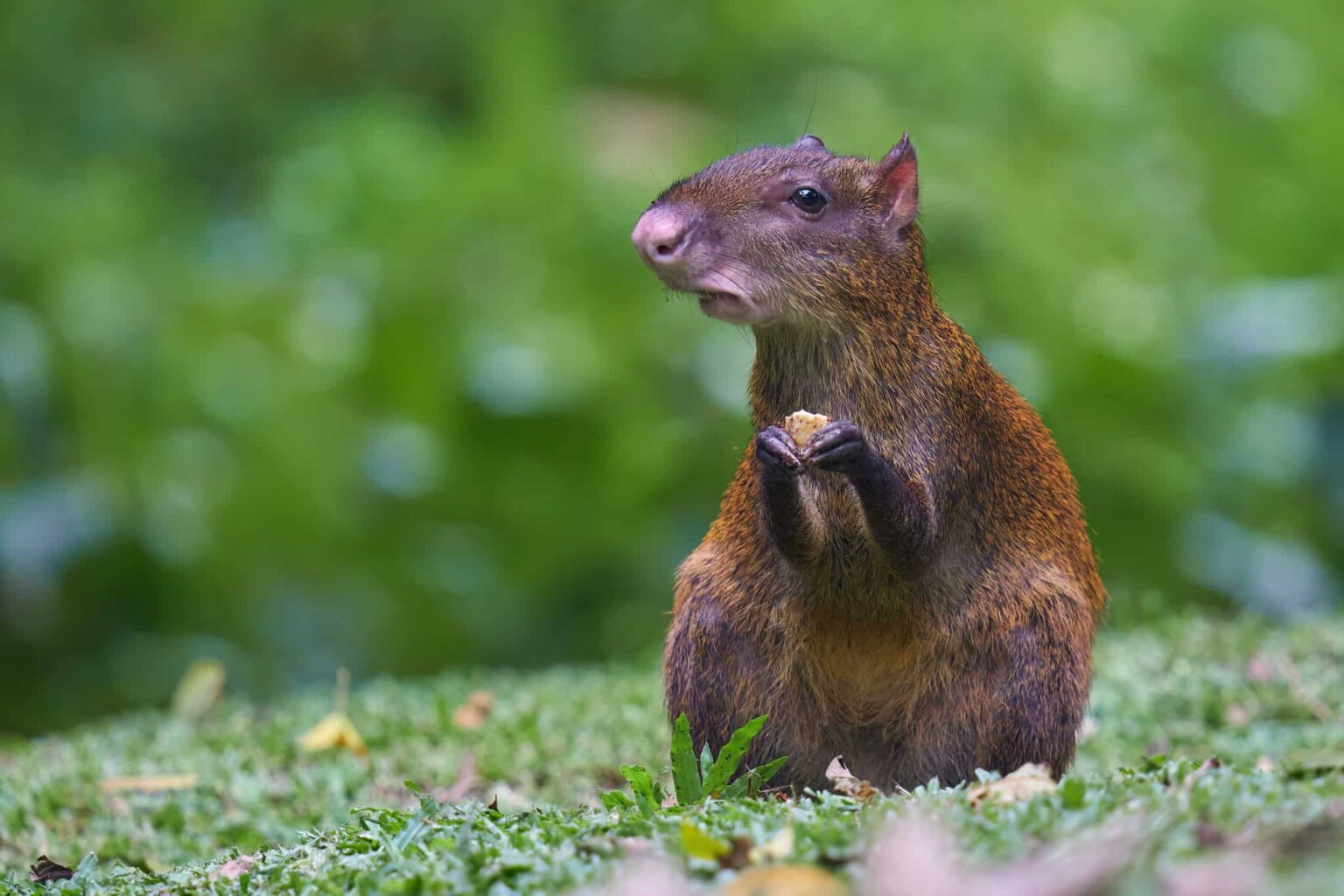
Seed-dispersing animals are a critical part of a tropical forest’s ability to capture carbon
Tropical forests—and their ability to capture and store carbon—are at the forefront of fighting climate change. New research shows that trees need help from their animal neighbors to fully unlock their carbon-capture superpowers, especially those critters responsible for seed dispersal. In a new review published in Proceedings of the National Academy of Sciences, which included data from thousands of studies, researchers found that after an area had been logged, tropical forests with healthy populations of seed-dispersing animals could absorb up to four times as much carbon compared to similar areas with fewer seed-dispersers. The scientists also found that in areas where reforestation is possible, seed disperser declines lead to an average loss of 57% of carbon capture potential. “The results underscore the importance of animals in maintaining healthy, carbon-rich tropical forests,” said Evan Fricke, a researcher at the Massachusetts Institute of Technology, in a press release. “When seed-dispersing animals decline, we risk weakening the climate-mitigating power of tropical forests.”
Read more at MIT News.