








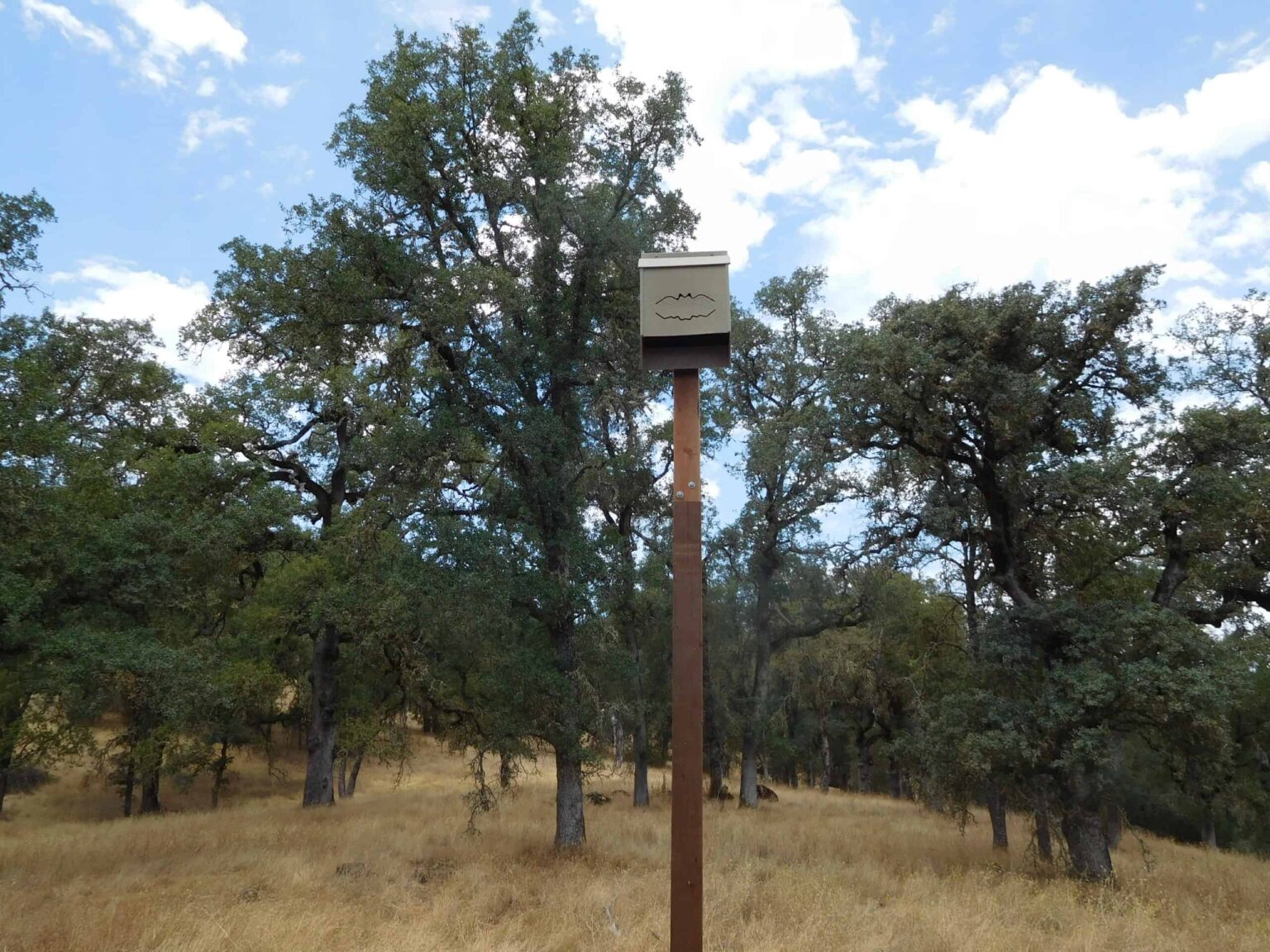
A popular technique for boosting bat conservation may create “death traps” for the flying mammals during heat waves. In a study published recently in the Journal of Experimental Biology, researchers measured carbon dioxide exhalation of 22 big brown bats (Eptesicus fuscus) nesting in southwestern British Columbia. With that information, they calculated the metabolic rates of the creatures and the amount of water they lost at different temperatures. The team then took the temperature of artificial bat roosts created to conserve bats in Lillooet, in the unceded territory of the St’át’imc Nation. Those temperatures weren’t high, so the team then modeled what the temperatures would have been during a recent heat wave. They found that temperatures would reach higher than 50 degrees Celsius on the hottest days. Part of the reason for this was that some bat boxes weren’t well-placed—they were put in direct sunlight or facing sunlight for much of the day. “Inappropriately placed artificial [bat] roosts could function as death traps for bats due to overheating,” said Ruvinda de Mel of the University of New England, Australia, in a press release. Ruvinda suggested that placing a mixture of roosts could improve the choices for bats, with some in warmer areas for spring use and others nearby in shaded areas for the hotter summer months.
Read more at the Australian Broadcasting Corporation.
Article by The Wildlife Society