


Share this article
Wildlife Featured in this article
- Blue jay
- Green jay
Love is blind … and crosses species?
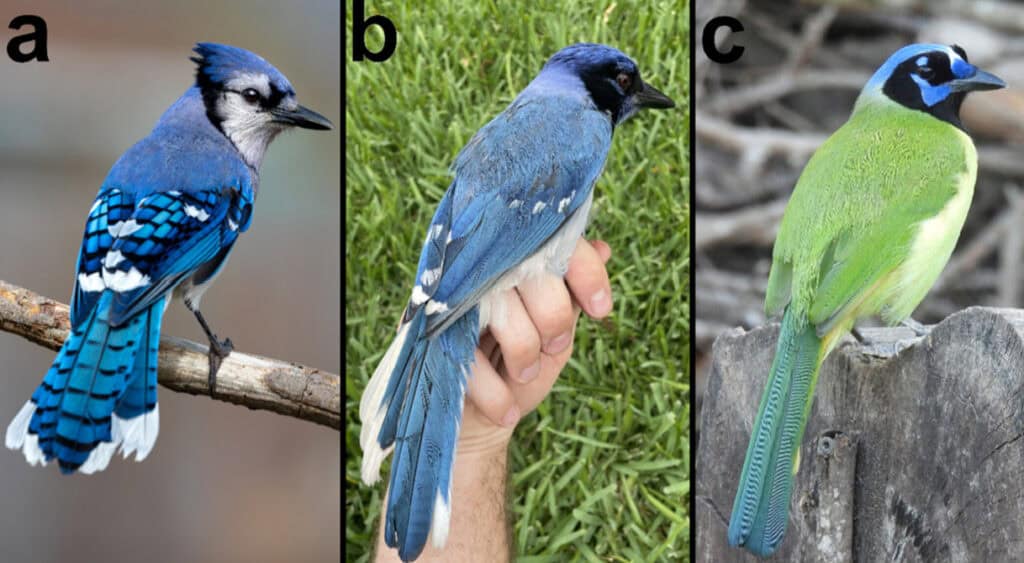
Scientists document wild hybridization between a green jay and a blue jay
Images of a hybrid bird have swept across the internet, with birdwatchers and scientists alike marveling at what some are trendily calling a “grue jay.” But beneath the viral fascination lies a deeper ecological story, one potentially shaped by the impacts of climate change and food subsidies on range dynamics.
Historically, geography and climate separated the blue jay (Cyanocitta cristata) and the green jay (Cyanocorax yncas). Scientists previously thought the hybridization observed in Texas and published in Ecology and Evolution was improbable. However, scientists have witnessed them hybridizing in captivity.
“The possibility of the green jay and the blue jay occurring naturally together during the breeding season is remote, so that hybrids are not to be expected in the wild,” wrote scientists who documented captive interbreeding of the two species in 1965 at Fort Worth Zoo.
The tropical green jay’s range stretches from the northern Andes through Central and South America, reaching its northernmost point in the United States, exclusively in Texas. Texas is the most southern part of the range for the blue jay. However, recent warming has led to the expansion of tropical climate zones northward. This has brought tropical species like the green jay into closer and more sustained contact with temperate ones, such as the blue jay. Now both can be found feeding on artificial food sources, like backyard feeders, which may also be playing a role in the range overlap.
The discovery highlights a growing pattern of novel species hybridizations that are forming in response to anthropogenic pressures. Predicting new species interactions and hybridizations is difficult, highlighting the need for ongoing documentation to understand ecology in its dynamic form as ranges continue to change due to anthropogenic impacts.

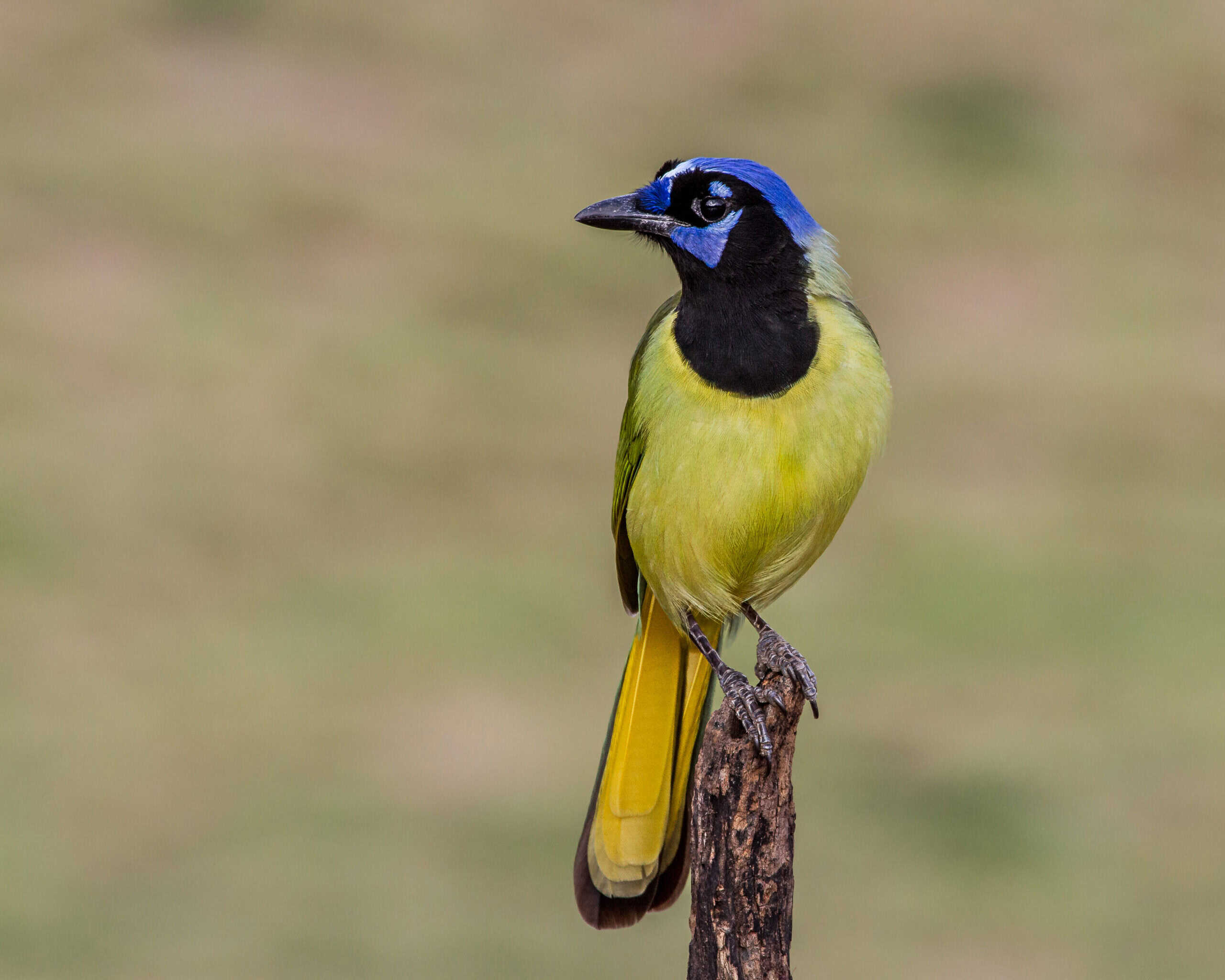
Header Image: The green jay is distantly related to the blue jay, having lineages that separated 7.5 million years ago. Credit: Andy Morffew
Related Posts
Wild Cam: Underwater NewtCam identifies species using AI
New solar-powered device can help detect amphibians and other aquatic life without much disturbance

Wild Cam: Restoration boosts cryptic salamander numbers
Endangered Barton Springs salamanders are found only in a handful of places in downtown Austin

Kentucky streams no longer heaven for hellbenders
Environmental DNA study reveals the large salamanders’ stream occupancy is down by more than half