


Share this article
Wildlife Featured in this article
- Gray seal
- Harbor seal
- Right whale
Conservation, controversy and proposed changes to the MMPA
Conservation science and industry interests intersect as Congress considers changes to the Marine Mammal Protection Act
When lifelong lobsterman Dustin Delano arranges to take his team lobstering in Maine, he’s faced with some tough decisions. Is his team safe? Are they making fair wages? And are they complying with right whale regulations?
The latter is something that’s been coming up in conversation recently as Congress and the Trump administration propose revisions to the Marine Mammal Protection Act (MMPA), legislation enacted in 1972 to prevent the decline of marine mammals like right whales.
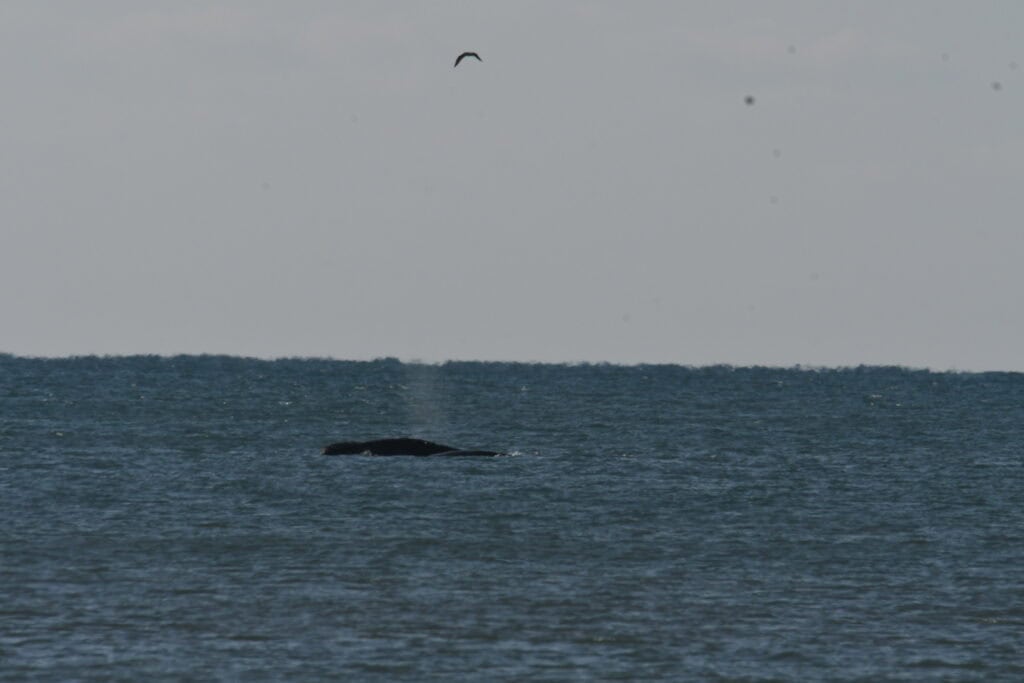
Only 370 North Atlantic right whales (Eubalaena glacialis) remain in the western North Atlantic Ocean. But MMPA protections can cause devastating closures and restrictions that limit Maine lobstermen from entering certain areas. “The existing regulatory framework is becoming increasingly unworkable,” said Delano, Chief Operating Officer of the New England Fishermen’s Stewardship Association (NEFSA), a nonprofit organization that focuses on issues facing the New England commercial fishing community.
Delano and others see the new proposed MMPA changes—part of an ongoing push from both Congress and the Trump administration to streamline environmental permitting—as a step in the right direction, as they would soften some of these regulations. But conservation groups have expressed strong opposition, noting negative effects on species like sea otters (Enhydra lutris) or humpback whales (Megaptera novaeangliae).
“From my perspective, it’s hard to think that there is another side that can justify the devastation of these changes,” said Regina Asmutis-Silvia, executive director of Whale and Dolphin Conservation, a charity for marine mammal conservation. “It eviscerates the Marine Mammal Protection Act and its function.”
The proposed legislation represents the latest test of how the current administration approaches environmental regulation, with stakeholders offering sharply different assessments of its potential impacts. “If this bill were to become law, it would significantly hinder the ability to take any conservation actions for marine mammals,” wildlife biologist Jeff Corwin testified at a recent congressional hearing. Industry groups, however, view the changes as necessary clarifications that could increase regulatory certainty.
A look at the changes
The U.S. House Subcommittee on Water, Wildlife and Fisheries held a legislative hearing in July to review suggested amendments to the MMPA through a proposed discussion draft, a nonfinal version of a bill used to start conversations and gather feedback before formal introduction.
“My goal is simple,” said Rep. Nick Begich (R-AK), who had proposed the changes, during the hearing. “I want a bill that protects marine mammals and also works for the people who live and work alongside them, especially in Alaska.” Begich aims to streamline federal permitting processes, reduce regulatory burden and address what sponsors describe as regulatory overlaps in his discussion draft.
The MMPA was enacted in 1972, when marine mammals across the U.S. were in dire condition, facing widespread hunting, habitat loss and population declines. At the time, it was legal for fishermen like Frank Mundus, the inspiration for the movie Jaws, to use a method he and other fishermen called “monster mash,” chumming pilot whale carcasses to attract sharks. From the 1890s to the 1960s, hunters in Massachusetts and Maine killed an estimated 135,000 gray seals (Halichoerus grypus) and harbor seals (Phoca vitulina) for bounties, causing their disappearance from Cape Cod.
Enforced by the National Oceanic and Atmospheric Administration National Marine Fisheries Service (NMFS), the U.S. Fish and Wildlife Service and the Marine Mammal Commission, the MMPA established a policy to prevent marine mammal species from declining beyond the point where they ceased to be functioning parts of the ecosystems.
Under the MMPA as it currently reads, the U.S. must protect marine mammals from “take” and allows for incidental take only if it will have a “negligible impact” on the population. However, the statute doesn’t clearly define “negligible.” In practice, the NMFS has interpreted the law through the lens of the precautionary principle, applying conservative assumptions to increase protection when scientific data is incomplete. This method is highly contested by those that feel regulations are too restrictive.
For the first time, the discussion draft introduces a formal definition of “negligible impact,” a key term for authorizing the “take,” to harass, hunt, capture, kill or attempt to harass, hunt, capture or kill, marine mammals. It also revises the definition of “harassment” by removing references to the “potential” to harm, narrowing the scope to actions that cause actual injury or disturbance. For example, the draft replaces the phrase “has the potential to injure/disturb” with “injures or disturbs.” It also updates the wording “which will result in the maximum productivity” with “necessary to support the continued survival.”
In addition, the draft includes procedural changes that would mark a substantial shift in regulatory approach. The draft explicitly bars agencies from using precautionary assumptions, requiring them to base decisions “solely upon the objective application of the best scientific and commercial data available.” This would be a departure from the precautionary approach that has guided the implementation of many environmental regulations in the U.S., where agencies act proactively when scientific data is incomplete or ambiguous.
These edits could significantly raise the burden of proof needed to trigger regulatory protections and may make it more difficult to safeguard vulnerable or data-deficient species. A proposed timeline change would delay implementation of certain North Atlantic right whale regulations until 2035, giving industry more time to adapt to new requirements.
While industry stakeholders support these changes for increasing regulatory certainty and efficiency, environmental and scientific groups have raised concerns that the modifications could weaken longstanding protections and reduce the government’s ability to defend marine mammal populations.
Some in Begich’s home state have been vocal. One op-ed titled “What does Rep. Nick Begich have against Alaska marine mammals?” strongly criticizes the move to sponsor this legislation. Meanwhile, conservation groups in Alaska worry about the impacts this proposed legislation will have on gray whales (Eschrichtius robustus) and humpback whales (Megaptera novaeangliae). Organizations like the Whale and Dolphin Conservation and the International Marine Mammal Project are actively working against the proposed draft.
“During COVID, people were desperate to reconnect with nature,” said Asmutis-Silvia. There was a renewed appreciation for wildlife and open spaces. And now, just a few years later, we’re acting like these animals no longer matter?”
Who’s affected?
The proposed MMPA changes would create different winners and losers across ocean-dependent industries, highlighting complex trade-offs.
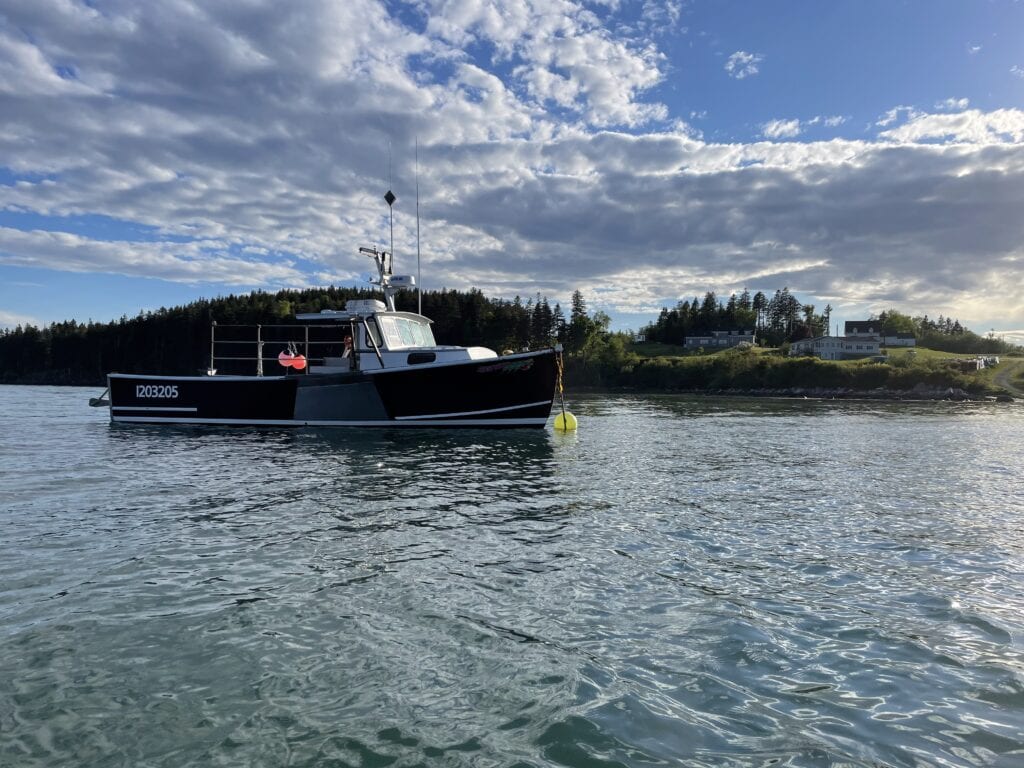
Federal regulations aimed at preventing whale entanglements have drawn strong pushback from Maine lobstermen, who argue the rules threaten their livelihoods—Maine’s lobster fishery contributed over $1 billion annually to the state’s economy.
Industry groups say the timelines set for operational changes by the Atlantic Large Whale Take Reduction Team conflict with the Maine Department of Marine Resources’ efforts to gather better data to track whale movements, develop movement models, improve gear marking and gather localized data. A proposed legislative change within the draft bill would delay implementation of those regulations until 2035, giving supporters of the change more time, something that they emphasize is needed to reconcile the science. Maine lobstermen argue that right whales don’t inhabit the inshore waters where most lobstering occurs, making local regulations seem misplaced, especially as other studies show the whales’ migration is shifting toward Canadian waters like the Gulf of St. Lawrence.
The Maine Lobstermen’s Association and the New England Fishermen’s Stewardship Association are among 10 organizations supporting the proposed changes. They signed onto a letter to Rep. Harriet Hageman [R-WY], stating that using the precautionary principle has led to excessive regulations based on speculative models rather than the best available data, placing unreasonable burdens on U.S. fisheries without meaningful benefits to marine mammals. At the heart of the conflict is ropeless gear. A recent study concluded that even minor entanglements, once thought harmless, can severely reduce female North Atlantic right whales’ likelihood of breeding. The study perpetuates debates over lobster gear regulations. Some conservationists point to the growing body of work as support for significant changes in gear. Fishermen argue that the models rely on uncertain data, overlook their ongoing compliance efforts, and propose gear modifications that are logistically unfeasible and expensive. The letter from the Maine Lobstermen’s Association and the New England Fishermen’s Stewardship Association claims that NMFS practices undermine congressional intent and are unsustainable for domestic fleets already competing with loosely regulated foreign operations.
“Not a single lobsterman wants to harm a whale,” said Patrice McCarron, executive director of the Maine Lobstermen’s Association, who emphasized that her organization wants “sound science.” “Our industry is committed to being part of the solution, but we cannot afford to implement policies that threaten the livelihoods of thousands of Maine families without clear proof they will protect the whales without decimating this critical industry.”
Delano emphasizes that regulators must weigh the human cost of policies, something he has experienced personally through his lobstering experience. He sees the bill as “giving our fishing fleet a little bit of hope.” Delano believes that if passed, the draft bill “could serve as a lightning rod for the future, helping the fishery find a more peaceful way to coexist with species protections while continuing to operate and provide for our communities.”
Not all industry supports a loosening of regulations. Cape Cod is also a gateway to Stellwagen Bank National Marine Sanctuary, one of the world’s top whale-watching destinations that could be impacted by the proposed changes to the MMPA. Many coastal communities depend heavily on wildlife tourism, a sector that contributes to the local economies of places like Cape Cod, Massachusetts; Boothbay, Maine; or La Jolla, California. Whale watching generates jobs and tourism dollars and supports small businesses such as restaurants, shops and tour operators. Researchers concluded that nearly 1,500 jobs are supported annually by whale watching operations that frequently visit Stellwagen Bank National Marine Sanctuary, translating to $76 million in labor income and $182 million in sales annually.
Beyond the headlines
While most media chatter focuses on the visible tension between fishermen and coastal communities, a much larger force looms in the background: the growing pressure to industrialize the ocean, removing what some would argue is the last wild frontier on earth. From offshore wind development to deep-sea mining and expanded shipping lanes, powerful industries are interested in offshore development.
NEFSA, which supports the MMPA changes, is a vocal opponent of industrialization of the ocean, speaking out against the development of offshore wind farms. “Ocean industrialization is incompatible with robust, sustainable fisheries,” NEFSA said in a press release.
But the global trade association for the energy geoscience industry, the EnerGeo Alliance, also supports the proposed changes to the MMPA. “At some point, these two industries [fishing and offshore energy development] are actually at odds,” Asmutis-Silvia, whose organization is against the changes, said, adding that the proposal could lead to conflicts over how the space is used.
The alliance wants the MMPA “modernized” by clarifying language, reducing redundancies, holding agencies accountable to deadlines, and updating it to reflect current science and technology.
The EnerGeo Alliance asserts that the MMPA has been misapplied to seismic surveys for energy resources, with anti-energy groups leveraging the act to block offshore surveying. “To date, there has been no documented scientific evidence of noise from acoustic sources used in seismic activities adversely affecting marine animal populations or coastal communities,” its website states, quoting the Bureau of Ocean Energy Management. However, this claim is debatable. Research published in Functional Ecology found that seismic noise can alter the behavior of narwhals, raising concerns that some marine species may be more vulnerable to acoustic disturbances than previously assumed.
Despite their fundamentally divergent visions for the ocean—one seeking to preserve traditional use and the other pushing for expanded modern industrial development—both advocates find common ground in their desires to reform the Marine Mammal Protection Act. Their unlikely alliance underscores how powerful the MMPA remains as a regulatory force, uniting opposing interests when it stands in the way of their vision for the ocean.
The future battle
The debate over MMPA revisions reflects broader questions about environmental policy implementation in an era where multiple industries compete for ocean access.
“You can’t just keep removing bolts from a plane wing and expect it to stay in place,” Asmutis-Silvia said of softening marine mammal protections. “When we treat marine animals as if they don’t matter, we risk crashing an already fragile ocean ecosystem—one that we all depend on.”
Asmutis-Silvia points to the MMPA’s track record of enabling both environmental and economic interests to coexist as support for the current framework. “For 50 years, [the MMPA] has existed, and for 50 years oil and gas still has happened in the Gulf of Mexico. For 50 years, fishing has happened along all of our coasts. And populations have largely started to recover, with some exceptions,” she said. “So the idea that you can’t have these things coexist, I think we have 50 years of evidence that you can.”
However, this narrative of coexistence doesn’t ring true for people like Delano, whose income depended heavily on a 1,000-square-mile area closure and who found that restrictions during the peak lobster season made fishing operations increasingly unproductive and hazardous because it forced him to fish in the winter under rough seas.
Historical precedent exists for MMPA amendments, with previous changes achieving bipartisan support by addressing specific implementation challenges while maintaining core protective functions. Whether current discussions can achieve similar compromises remains uncertain.
“Ideally, you get both sides of the issue together so you don’t have this polarization,” said Mark Palmer, associate director of the International Marine Mammal Project. “That’s the whole art of legislation—to find these compromises.”

Header Image: Gray seal populations that were once depleted now have notable breeding colonies on islands such as Muskeget, Monomoy and Nantucket in Massachusetts. Credit: David Merrett
Related Posts
LISTEN: Understanding NEPA
What could the future of NEPA look like?

Loss of long-term ecological research is ‘alarming’
Scientists expect ecological, economic and social ramifications

Maine switches the lights off for conservation
State lawmakers pass a bill to limit public light pollution to benefit wildlife