



Share this article
Wildlife Featured in this article
- Bushy-tailed woodrat
- Muskrat
- Norwegian rat
- Roof rat
Why are there no rats in Alberta?
A unique combination of regulatory foresight and wildlife management has helped the province achieve the nearly unthinkable
There are no rats in Alberta. This sentence may seem like a metaphor or ideological symbolism, but there is really no fancy wordplay intended. Despite the simplicity of the sentence, those six simple words may seem astounding—even incomprehensible—to anybody living in nearly any other large city across the world.
But when attendees make their way to the TWS Annual Conference this year in Edmonton, they’ll find this is mostly true—except for the occasional local infestation, the province doesn’t have established rat populations. Since rats first approached the western provincial border of Saskatchewan 75 years ago, the government’s consistent and thorough wildlife management plan has kept the maligned rodents out.
“If you’ve lived in Alberta your whole life, you’ve probably never seen a rat,” said Karen Wickerson, rat and pest specialist with the Alberta rat control program. “You can walk down an alley in Edmonton and bang on some dumpsters, and you’re not going to see some rats come out.”
How did Alberta get rid of rats?
Alberta’s success in rat control never involved large-scale eradication. That’s because the province never got to the point where it had a serious infestation. Generally, roof rats (Rattus rattus) are incapable of crossing the Rocky Mountains eastward from strongholds in interior British Columbia. The northern provincial borders are too cold for rats to survive, while Montana is too sparsely populated—there aren’t enough farms near each other for rats to colonize from that direction.
But to the east, Norwegian rats (Rattus norvegicus) had been moving through the country for decades. They skittered across the Manitoba-Saskatchewan border sometime in the early 1920s and spent the rest of the next three decades moving across Saskatchewan. “When they were discovered at the Alberta-Sask border in 1950, the [Alberta] government leapt into action,” Wickerson said.
The first thing the government did may seem like a technicality, but it had huge ramifications for the future control of the invasive species. Alberta declared rats an agricultural pest, which meant that anyone who had rats on their property would have to control them. Farmers and landowners had to notify their municipalities, which would then work with private pest control companies and the landowners themselves to eradicate the rats. In other words, it became everybody’s problem—not just the provincial government.
The government also created a 28-kilometer buffer zone in Alberta, stretching from the U.S. border to Cold Lake, which sits just inside Alberta about halfway to the Northwest Territories.
How does Alberta stay rat-free?
In the rat control zone, municipalities are largely in charge of rat control, though the provincial government helps to coordinate eradication. Every municipality has a designated pest control officer by law. Wickerson said that locals survey areas that have the potential for infestation twice a year during the spring and fall.
In the spring, most of the winter feed on farms is gone, so inspectors usually focus on storage granaries. In the fall, inspectors will pay more attention to feed piles. They might look for holes in hay bales or rat droppings in the area.
When people find evidence of rats, either through the surveys or through reports, they usually get to work immediately. Pest control companies work with the municipality to use poisoned baits—usually second-generation anticoagulant rodenticides—to eradicate the infestation.
“Farmers can take matters into their own hands in that area as well—they certainly like to use .22s,” Wickerson said.
Do rats ever get into Alberta?
Saying Alberta is rat-free isn’t always technically true. There is a population of native bushy-tailed woodrats (Neotoma cinerea) in some parts of the province, and Norwegian or roof rats do make it across the border sometimes. There is at least one ongoing infestation in Calgary that authorities are working to control.
Many of the rodents come across the border as hitchhikers in vehicles. Wickerson recalled one incident when a rat had nested inside a car during the owner’s trip to the British Columbia interior. The owners had brought the vehicle in for an engine servicing a couple of days after their return, and mechanics found a rat when they went to change filters. They quickly killed the rat, but this kind of scenario makes up most reported incidents, Wickerson said.

In other cases, rats are illegally invited in. “We have some people reported to us—ratted out to us—that have pet rats,” Wickerson said. She recalled one report that happened after a romance went awry—a man reported his ex-girlfriend’s pet rat after a breakup—while another rat owner was reported after posting her pet on Instagram. The rat eradication team tracked the latter down by scrolling through her other posted photos until they saw a photo of her car. “We were able to trace her through her license plate,” Wickerson said.
In these cases, Wickerson said the agency will give people a few days to remove the rat from the province. One sent their pet to new owners in Saskatchewan, while the other found a new home in a Cranbrook SPCA in British Columbia. “We’ll work with people,” Wickerson said, but still the rat control team doesn’t mess around. “I talked to Cranbrook SPCA and confirmed [the rats] were there.”
How do people with no experience with rats control rats?
One rat control challenge in Alberta is that people don’t know what they don’t know. Wickerson said that the rat control team receives about 600 reports of rats every year, about 75% of which have photos.
But nearly none of these are actually rats. Many sightings come from people who have never left Alberta. They have never wandered down a New York City alley rife with dumpsters and never walked across a city park in Washington, D.C., pitted with rat holes. As a result, the great majority of reports are either muskrats (Ondatra zibethicus) or mice.
When they are actually rats, the problem is often already resolved. “Sometimes people just send photos, and they are a flat pancake on the road,” Wickerson said.
In other cases where the infestation persists for some time, the provincial rat control team will keep a close eye on the situation until it’s resolved and observe the area for some time after.
One infestation at a landfill took some time to resolve, while Calgary has had a couple of infestations at recycling plants in recent years—one of which is still ongoing. These infestations are a little harder to control, as the spaces are large, and there are plenty of places to hide. “In these facilities there is a constant food source coming in,” Wickerson said.
In such cases, Wickerson said she works with the plant operators to see how they might change their storage and work practices to help reduce the food available to the rodents.
In most cases, a good ecological knowledge of rats helps control the problem. Authorities will inspect the nearby buildings as well when infestations occur, though Wickerson said this isn’t a huge concern in most cases, such as the problem in the recycling plant. “Unless the population grew massively, they don’t have a reason to leave,” she said.
In most farm infestations that occur near the border, the problems are relatively isolated, as the human population isn’t very dense. Wickerson said that rats can travel overland up to five kilometers away, but farms are often farther apart than that along much of the Saskatchewan border.
Unique to Alberta
Wickerson said that it would be hard to envision another place where rat control might work like it does in Alberta. The combination of having taken logistical and regulatory steps early before rats even arrived along with harsh winter conditions isn’t something that other provinces or states could replicate.
She has heard that Saskatchewan is having success in eradication efforts—conditions there are similar to Alberta, and the rat infestations in that province are mostly in rural areas rather than cities, which would be harder to deal with.
As rat czar of Alberta, Wickerson looks for ways to stay vigilant, going to conferences on pest control in the U.S. and Canada to ensure she is better equipped to deal with a problem she hasn’t had the same experience in dealing with as, say, a pest control company in New York City.
The program is so successful that she sometimes wonders what it’s like outside the rat-free province. On a recent visit to Vancouver, she remembers walking into an alley at one point and banging on dumpsters. She was almost disappointed when she said she didn’t see any.
To register or learn more about The Wildlife Society’s upcoming rat-free conference, click here.

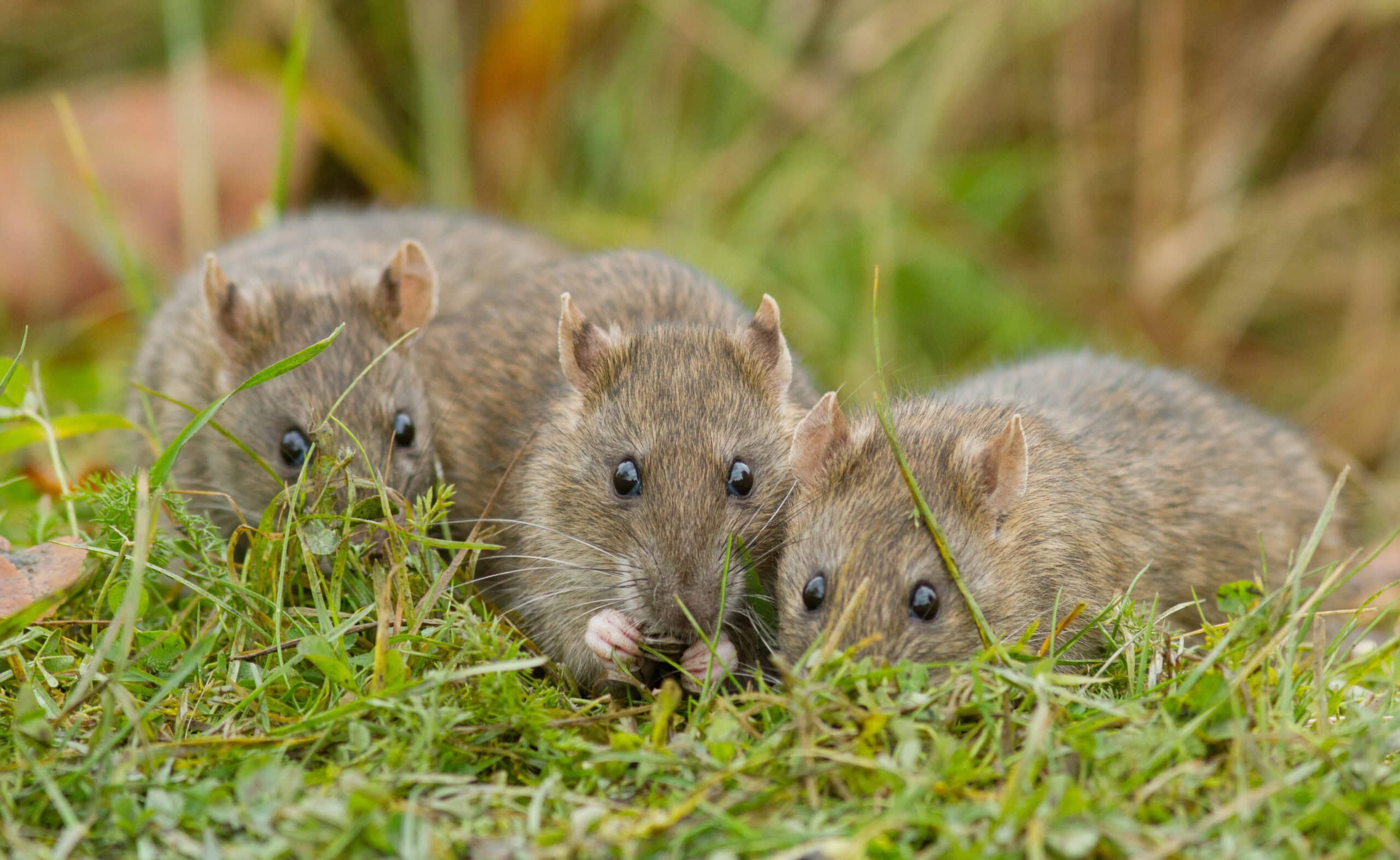
Header Image: The westward expansion of Norwegian rats was stopped at the Saskatchewan border. Credit: Alberta Agriculture and Irrigation
Related Posts
JWM: Night lizard numbers ‘remarkably stable’ despite drought
Invasive ants are a new threat for reptiles endemic to Channel Islands
New Look! The Winter 2026 issue of The Wildlife Professional
The winter issue of the magazine features a new design with TWS’ new brand
Why has Missouri succeeded in wild pig control?
While other areas struggle against an overwhelming invasion, one state’s holistic approach to control has revealed that control is possible