



Share this article
Wildlife Featured in this article
- Green sea turtle
- Leatherback sea turtle
- Loggerhead sea turtle
Seaweed traps sea turtle hatchlings
Sargassum blooms keep the endangered species from reaching the safety of the ocean
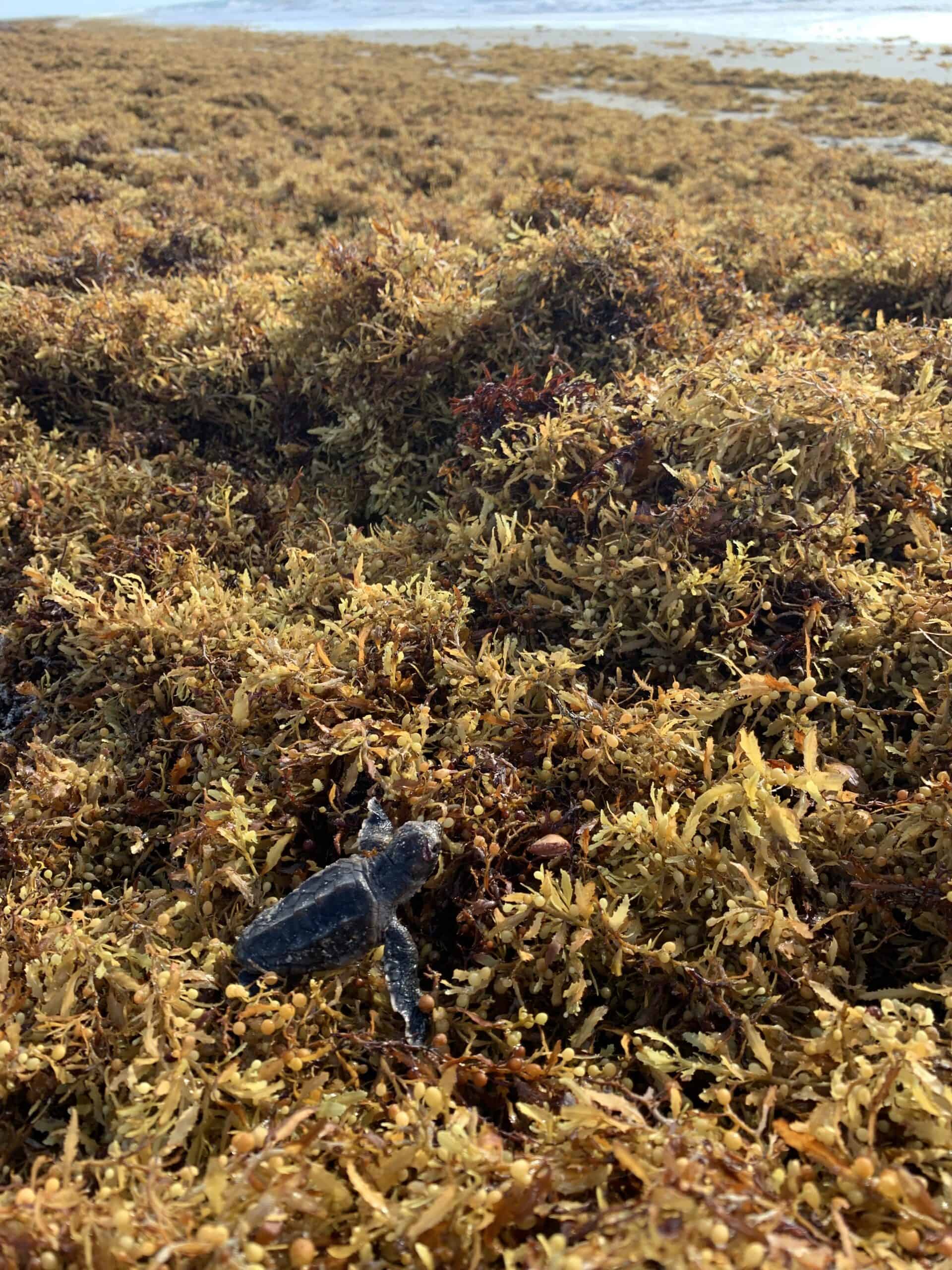
Massive amounts of sargassum washing up on Florida’s beaches are not only a nuisance to beachgoers but also a threat to vulnerable marine life. New research shows that hatchlings of three species of sea turtles took significantly longer to pass through sargassum—a type of brown seaweed—on their way to the ocean compared to an open beach, leaving them exposed to land-based predators for longer.
Researchers from Florida Atlantic University tested three of the state’s most common sea turtles, leatherbacks (Dermochelys coriacea), loggerheads (Caretta caretta) and green turtles (Chelonia mydas) on three beaches: Juno, Jupiter and Boca Raton. Each of these species is listed as federally endangered. The team created crawlways along the beach and added mats of sargassum of differing heights to simulate a hatchling’s natural path to the ocean. They timed how long it took the turtles to reach the water.
Published in the Journal of Coastal Research, their results showed that even the lighter levels of sargassum significantly slowed each species, with loggerheads showing the greatest response. Some hatchlings of all three species were unable to complete the climb within a set time limit.
“The longer a hatchling stays on the beach, the more at risk it becomes—not just from predators like birds and crabs, but also from overheating and dehydration, especially after sunrise,” said Sarah Milton, a professor at Florida Atlantic University and an author of the study, in a press release. “When sargassum piles are higher—some can be over a meter high on South Florida beaches in the summer and extend for hundreds of meters down the beach—we can expect more failed attempts, particularly when hatchlings have to cross multiple bands of seaweed just to reach the ocean.”
Read more at Florida Atlantic University.

Header Image: A loggerhead sea turtle hatchling struggles to climb over a wall of sargassum on Juno Beach, Florida. Credit: Abbey M. Appelt/Florida Atlantic University
Related Posts
Skinny seals eat more, sleep less
Skinny seals are less efficient at finding food and forgo sleep to make up for it
Sharks migrate to Hawaii to feast on fledgling seabirds
Shifts in albatross numbers has cascading effects on marine ecosystem
WATCH: Wildlife interact with underwater turbines
Seals and seabirds appear to be safe from colliding with tidal energy infrastructure