


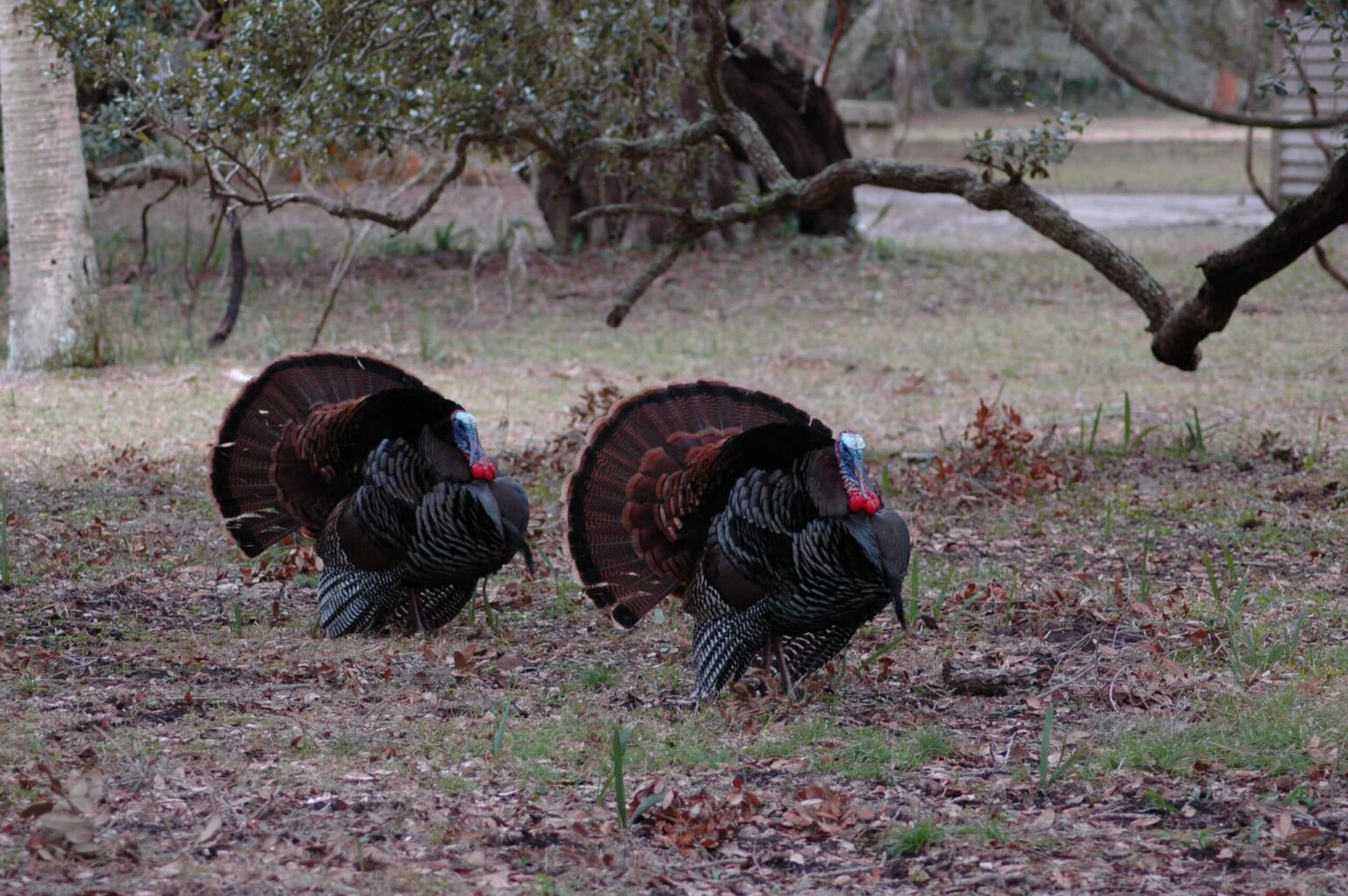
Some male wild turkeys venture boldly into open spaces while others keep to cover, but how predictably they do so may determine whether they survive or how they die.
Using GPS-tracked male turkeys, researchers found that those that consistently take risks are disproportionately harvested or killed by predators, suggesting that hunting pressure may silently steer the species toward more cautious behavior.
“We may end up with populations that avoid the parts of the landscape that hunters typically use,” said Nick Gulotta, a postdoctoral researcher at the University of Georgia who cautions that if these characteristics are genetically inherited, male turkeys may become harder to hunt.
The study, published in the Journal of Animal Ecology, captured 108 adult male wild turkeys (Meleagris gallopavo) over nine years in Georgia and South Carolina and outfitted them with GPS backpack transmitters to send hourly locations throughout the breeding and spring hunting seasons, when most deaths occur.
The team estimated each turkey’s average behavior and how much they varied from that average, from GPS tracking data. Using federal land cover maps and state road data, they mapped where forests, fields and roads met to identify areas where turkeys might be more exposed.
The researchers then calculated how far a turkey was from these risky features at each GPS point. If a bird stayed close to risky places such as open areas, habitat edges associated with trail systems and hunting access points, it was defined as more of a risk taker.
The researchers also kept track of daily activity by calculating average hourly speed. They then modeled and linked this behavior to the bird’s survival to estimate how both risk-taking and predictability influenced a turkey’s chances of making it through the season.
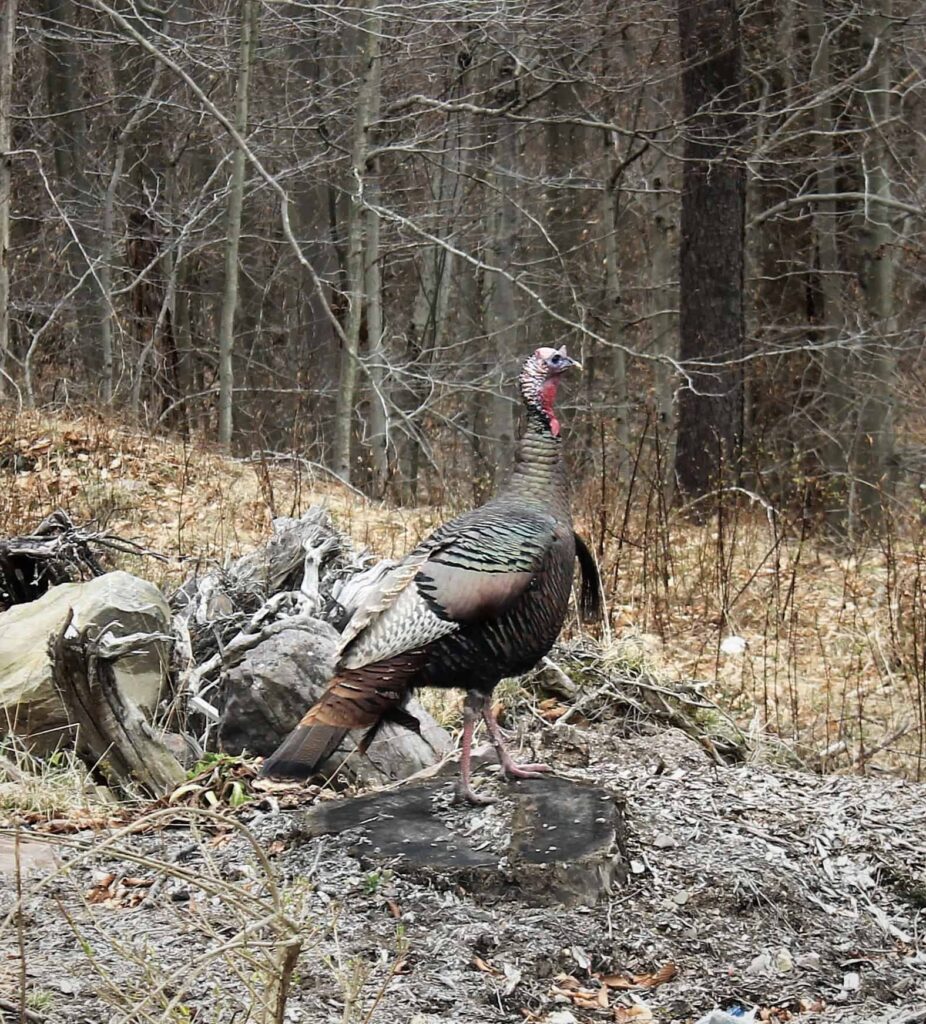
The study found a nuanced picture of mortality risk in wild turkeys. Birds with bold, predictable patterns faced the highest mortality risk from both hunters and predators.
Although managers cannot realistically predict which wild turkeys are most vulnerable to harvest, Gulotta said, “it’s important for managers to recognize that the way we harvest in relation to individual behavior matters, because the choices we make now will shape how harvestable the population is in the future.”
One way to protect risky male turkeys is to limit hunter access to the areas they use most. Hunters in the study usually stayed within 20 to 100 meters of habitat edges associated with trail systems and open spaces where males display and feed. Both hunters and predators were more likely to harvest or predate birds that regularly used these exposed areas. Creating buffer zones around trails and open fields could give turkeys more space during the breeding season, lowering their risk while still allowing hunting opportunities outside of buffer zones.
In the future, hunters may be able to blame their lack of hunting success not on their inability to hunt but on their previous success.
Article by Kaylyn Zipp