


Share this article
Edmonton: A gateway to northern nature
This year’s annual conference takes us to a city of contrasts in Canada
Growing up in Edmonton, I’d fall asleep to the sound of coyotes howling just outside my suburb. My dad would sometimes wake my sister and me up in the middle of the night to watch fluttering ribbons of green light cross the sky, interrupted occasionally by swirling purple vortexes. It all seemed, well, pretty average.
But looking back, the vast sky and the nature that surrounded the northern city provided a sense of natural grandeur I wouldn’t have experienced growing up in other areas. The frontier-like quality is one of the things that makes Edmonton unique from many of the cities I’ve been to around the world.
This fall, wildlifers will also get to experience my hometown. The 32nd annual conference of The Wildlife Society will bring wildlife professionals from around the world to meet, network and learn.
A frontier history
Before European settlers arrived, Indigenous groups, including the Cree, Nakota Sioux, Ojibwe, Blackfoot, Tsuut’ina, Denesuline, and later, the Métis, used the area.
In 1795, the Hudson’s Bay Company—the oldest corporation in North America, which began primarily as a colonial fur-trading operation—established Fort Edmonton as one of various trading posts on the North Saskatchewan River. It was the westernmost point of the Carlton Trail, a trade route that stretched into central Saskatchewan.
Over the next century, Edmonton could never quite make up its mind. What was called Fort Edmonton was moved five times in the area the metropolitan city now encompasses. Some trade posts were abandoned due to lack of trading success, and flooding destroyed one. One version was eventually reconstructed at Fort Edmonton Park—a “living museum” that sits in an area along the North Saskatchewan where none of the original five forts were likely located.
Today, Edmonton is the northernmost city in the Americas with a metropolitan area of more than 1 million people—in practical terms, this means 1 million hockey fans. The “City of Champions” got that now often-mocked moniker in part from a storied series of Stanley Cup runs in the ’80s led by none other than the Great One—Wayne Gretzky—and Mark Messier.

A hub for travel
As its other—perhaps more recently accurate—moniker suggests, the “Gateway to the North” is still a hub for travel into the northern territories and to the Athabasca oil sands centered around Fort McMurray in northeastern Alberta. However, getting to your destination may mean taking a bush plane, an epic road trip or even a snowmobile jaunt out on the range roads surrounding the suburbs. Edmonton is a jump-off point for the Rocky Mountains, whether that means mountain towns like Banff and Jasper or the massive Columbia Icefield that links them. It’s also the route to see the dark sky preserve and the kind of expansive nature that only Canada can provide in Wood Buffalo National Park, the country’s largest national park.
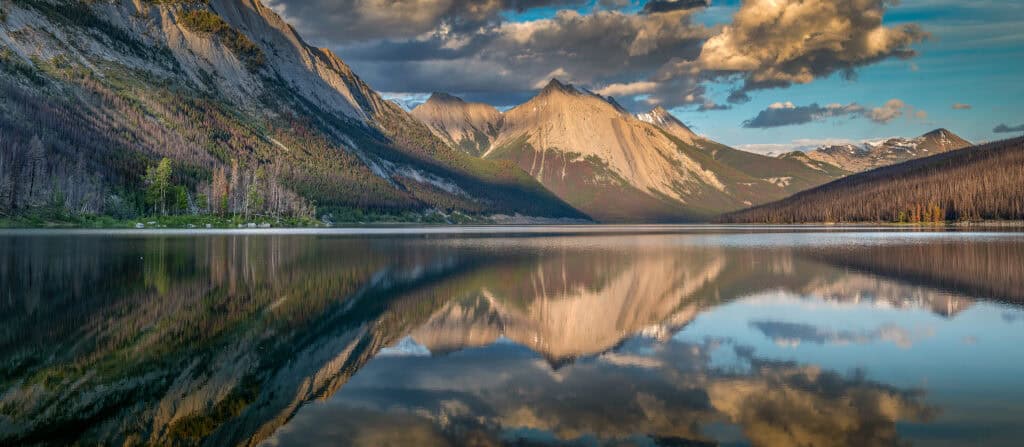
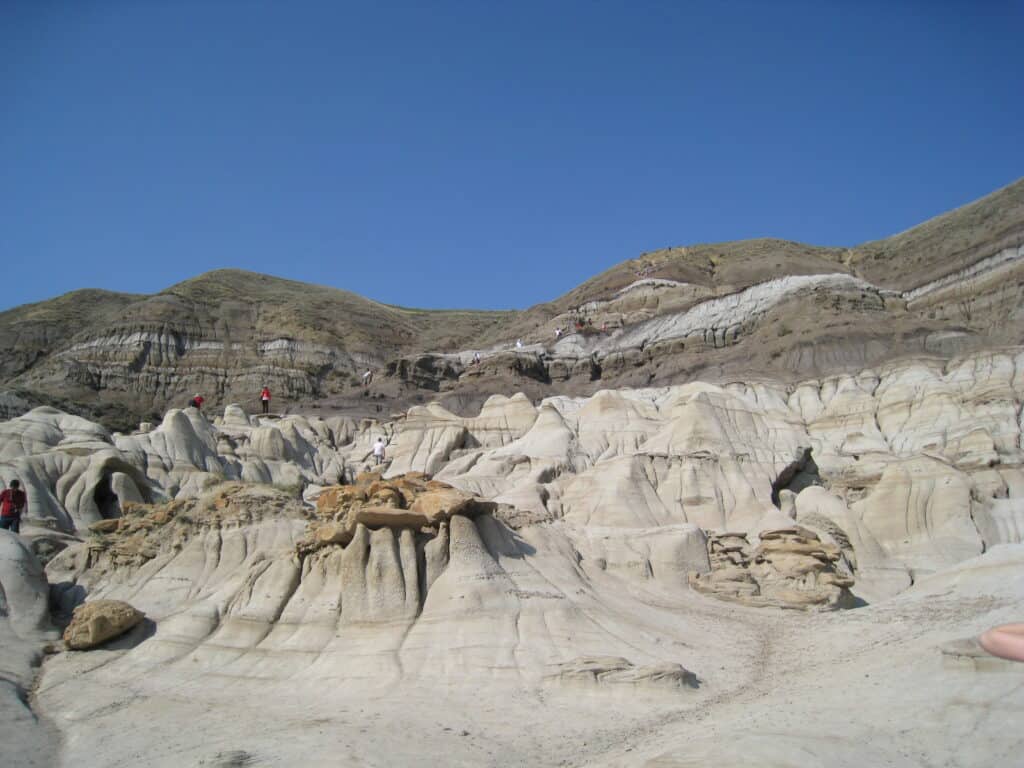
Banff and Jasper are both about a four-hour drive from Edmonton. In western Canadian terms, that’s close enough that my family would occasionally wake up at 4 a.m. to make it to Lake Louise or Sunshine Village in time for the first chairlift in the winter. Dinosaur National Park and the craggy badland landscapes around Drumheller are a little closer, and camping, hunting and fishing opportunities are everywhere in Alberta.
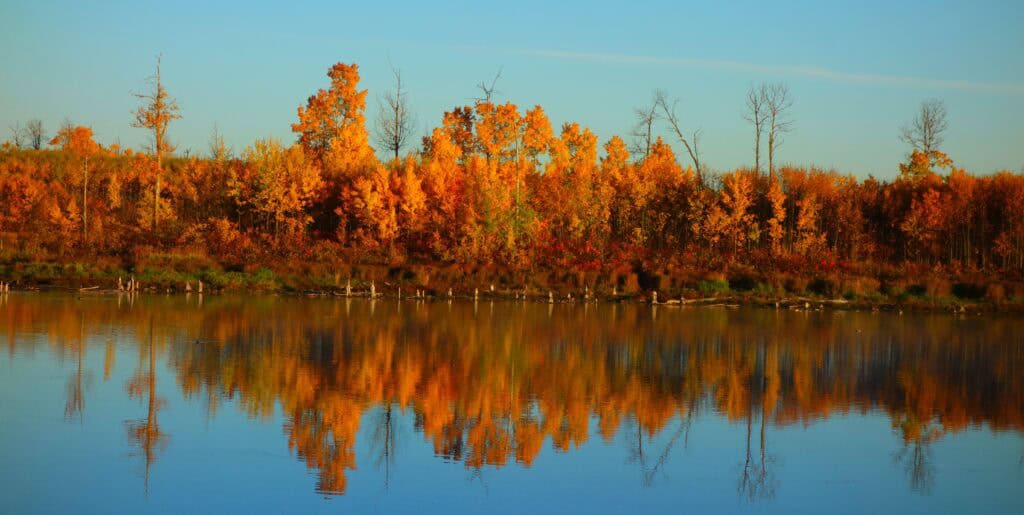
Closer afield, Elk Island National Park is home to both wood bison and plains bison, as well as moose and its namesake ungulate. The plains bison herd is a textbook example of reintroduction and translocation going back more than a century, when the Canadian government bought hundreds of bison from one of the largest remnant populations in the U.S.—the Pablo-Allard herd in Montana—and shipped them up to Elk Island by train. Elk Island has since returned the favor, shipping hundreds of bison back to Montana care of the Blackfeet Indian Nation and American Prairie Reservation, as well as reintroducing bison a little closer by to Banff National Park. In 1965, Elk Island also introduced a small wood bison population taken from animals in Wood Buffalo National Park, which has also grown to number in the hundreds. The park has shipped wood bison from this herd to Alaska and even Russia. TWS has a field trip planned for Elk Island on Sunday, Oct. 5, at the conference.
The city itself offers attractions like what was once North America’s biggest shopping center, complete with an indoor theme park and waterpark at West Edmonton Mall; a tropical biome housed in glass pyramids at the Muttart Conservatory; and the Royal Alberta Museum, which has exhibits on the province’s ornithology, arthropods and other wildlife present and past, including the Albertosaurus, a large tyrannosaurid dinosaur. Both are within walking distance from the convention center. Parks also dot the city, including much of the North Saskatchewan River Valley, Mill Creek Ravine and William Hawrelak Park. In addition, the Edmonton Valley Zoo has recently opened an Arctic wolf exhibit.
Back to my roots
Wildlife was always a big part of my childhood. I’d spend the long summer days with my friends biking to frog ponds with a bucket and net. Sometimes, I’d wake up from camping with my family in Elk Island National Park with a western tiger salamander in my boot. In fact, my eventual career as a writer was almost cut short when, as a baby, I ignored my parents desperately trying to silence me and began to wail as a black bear tore through the food they hadn’t properly locked up for the night in the Rocky Mountains. In more recent trips, I’ve gone ice fishing in Lac la Biche to the north of Edmonton and experienced hidden gems like Johnston Canyon or the Banff Hoodoos—a series of mushroom-like rock formations steeped in Indigenous spiritual significance that overlook parts of the Bow Valley.
Looking back at my home city and the different ways it’s shaped me, it’s hard to stay neutral. Edmonton is a study of contrasts. The flat prairies around Edmonton are suddenly shattered by the angular upthrust of the Rockies. The meager daily ration of sunlight in the winter is balanced by a patio season that doesn’t give way to darkness until most restaurants are well closed. And it’s easy to complain about the long, brutal winters while waiting for a bus in -40-degree weather. But I’ve never experienced a similar springtime joy, when the sound of melting snow and a bit of sunshine spawn a race among the hardiest to be the first to sport shorts in still sub-freezing weather.
But perhaps the most lucid memory I have of Edmonton’s study in contrasts was one year in the 1990s, when we had heavy snowfall late in May. During my walk to school, I was surrounded by a foot of bleached white champagne powder that lay in mounds amongst the neon-green buds of new spring.
I hope to see you in Edmonton this fall and that you enjoy everything Alberta has to offer.
Join us Oct. 5 to 8, 2025, in Edmonton, Alberta. Keep an eye on twsconference.org for event schedule details and the opening of registration. A version of this article was originally published in the July/August issue of The Wildlife Professional.

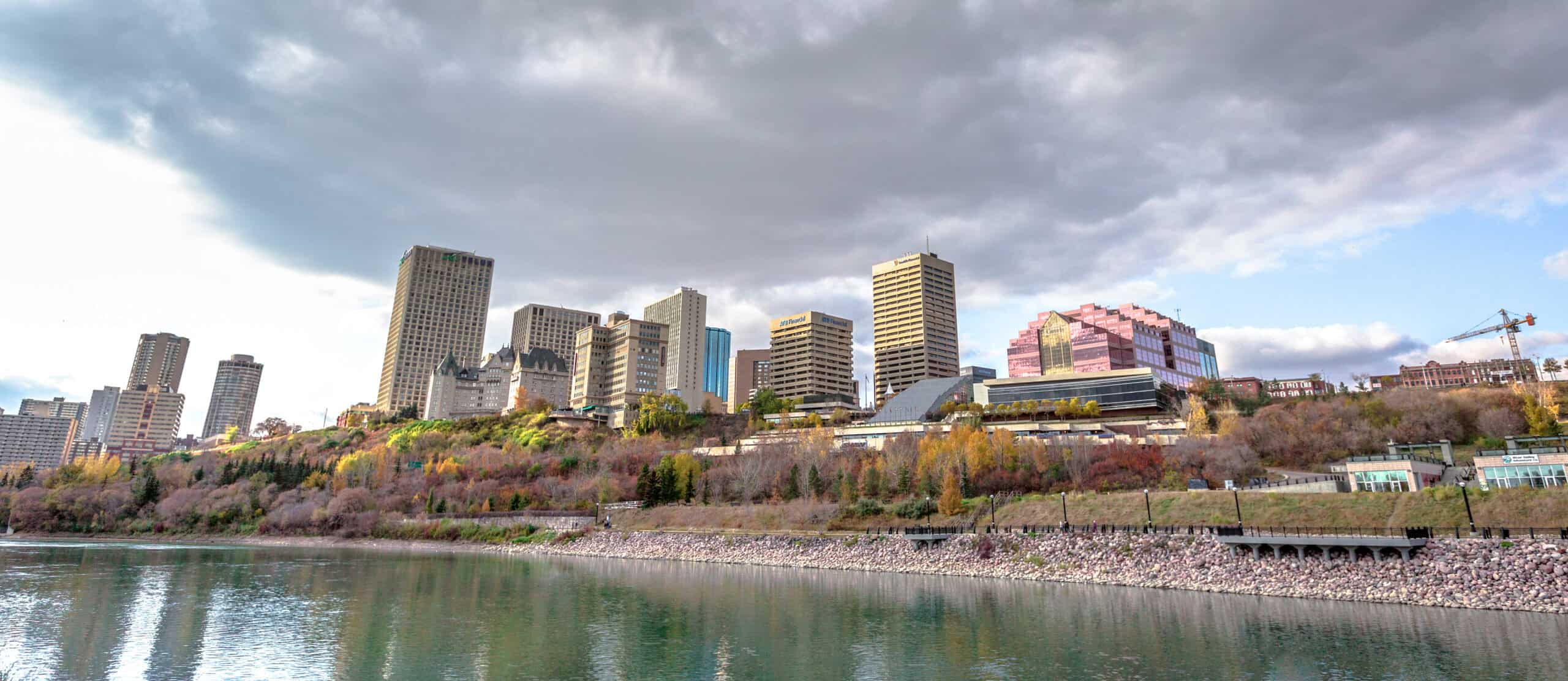
Header Image: The Edmonton Convention Centre appears to slide down the side of the North Saskatchewan River Valley. Credit: Credit: IQRemix
Related Posts

TWS 2025: ‘Wings of Survival’ kicks off Edmonton conference
An epic journey following the Pacific Flyway will highlight conservation work and challenges
TWS 2025: Wilderness as a natural laboratory
Prioritizing basic research in wilderness areas can save species before they become endangered
Meet our sponsors!
Find out more about the products, services and efforts TWS’ conference sponsors have to offer