


Share this article
Wildlife Featured in this article
- Plains bison
Where are Yellowstone bison most at risk from vehicles?
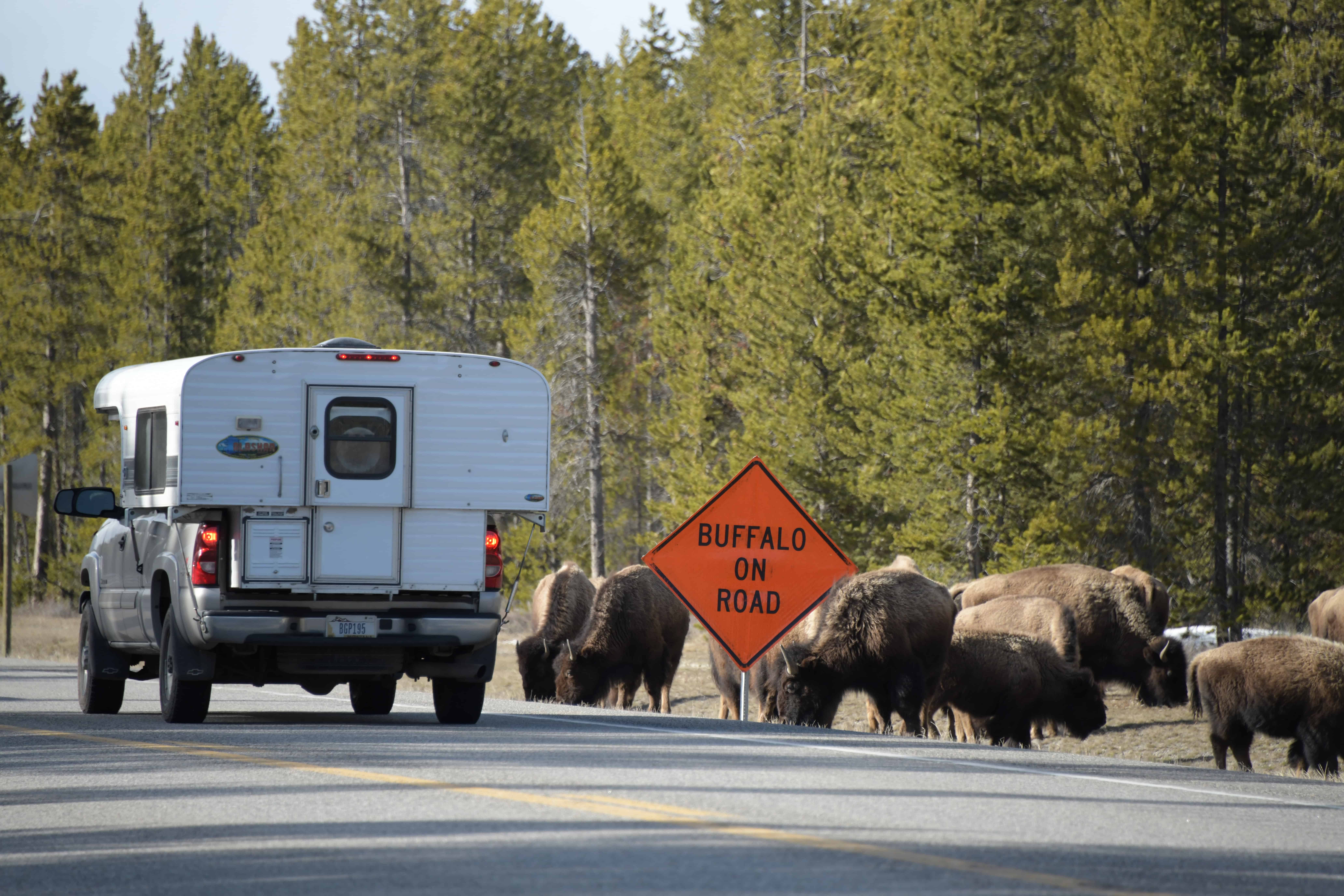
Bison cross a dangerous highway near the western border of the oldest national park in the U.S.
An analysis of where the buffalo roam along a dangerous stretch of highway west of Yellowstone National Park reveals collision hot spots near waterways.
Wildlife managers could use this information to improve safety for both drivers and plains bison, especially when the large ungulates leave the park for calving grounds in the spring.
“It’s the first national park in the U.S., and we have no [crossing] mitigation structures anywhere around it,” said Jackson Doyel, a wildlife biologist with the Buffalo Field Campaign, a nonprofit organization whose mission is “to stop the harassment and slaughter of America’s last wild buffalo.”
Scientists estimate that several thousand plains bison (Bison bison bison) live in Yellowstone National Park. But the massive park, which stretches across parts of Wyoming and Montana, doesn’t have any fences to keep these ungulates inside. Many bison leave the park to go to calving grounds in Montana every spring. However, U.S. Highway 191 cuts right across their typical route, and cars often strike the giant herbivores, killing them and injuring drivers as well. In one particular instance, a semi-trailer “plowed through” 13 bison, said Jenny Isaacs, an assistant professor of human ecology at Rutgers University in New Jersey.
“[Bison] are not protected, and neither are the people,” she said.
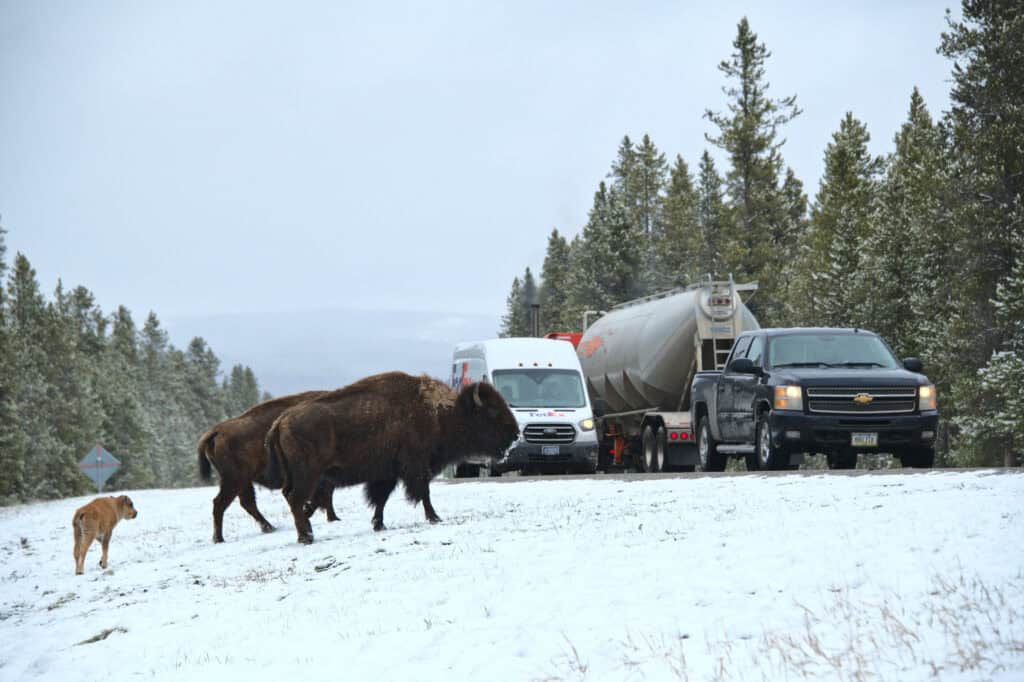
To reduce these collisions, staff and interns with the Buffalo Field Campaign patrol the highway every spring, placing temporary caution signs when they spot bison nearing the road. Hunters often legally kill bison in Montana in an effort to stop the animals from establishing themselves near ranches, where some fear they might potentially transmit the disease brucellosis to cattle. But the great majority of brucellosis transmission to cattle comes from elk (Cervus canadensis), Doyel said.
BFC interns and staff, whose mission is to stop these legal harvests, have been following bison in their migrations into Montana for most of the past 25 years, recording these deaths and taking photos.

Over the years, these interns and staff also recorded sighting data. In a study published recently in the Journal for Nature Conservation, Doyel, Isaacs and their colleagues analyzed the data collected from 2007 to 2023 to see if there were any movement trends that may better inform highway authorities about the best placement of future crossing structures.
Bison collision hot spots
The data revealed several crossing hot spots, especially around waterways that crossed the highway. The spot where the Madison River intersects with the highway saw the most bison activity over the years, while Cougar and Duck creeks also saw a high amount of wildlife movement.

These crossing hot spots also correlated with the data on car and truck collisions. Most of the bison getting struck by vehicles were crossing the roads in these areas.
In some ways, these findings are timely because one of the bridges at a collision hot spot is due for renovation. “The Cougar Creek Bridge was already being scheduled for rebuilding with an underpass for wildlife,” Doyel said.

He said that in addition to these changes, building fencing along the road and widening the bridge crossing the Madison River would help to reduce collisions with bison, which usually cross perpendicular to the road, as well as other large wildlife that use the area, like grizzly bears (Ursus arctos horribilis) and moose (Alces alces). As a result, The West Yellowstone Wildlife Crossing Coalition, a partnership Jackson initiated between BFC and the Gallatin Wildlife Association, is applying for a feasibility study for building an underpass along the highway at the Madison River crossing.
Isaacs said that aside from revealing collision hot spots, the recent study also shows how much time bison spend outside the national park on the Montana side, which has implications for bison management.

Header Image: The Buffalo Field Campaign places signs warning drivers about bison activity along the U.S. Highway 191. Credit: Jackson Doyel
Related Posts
Q&A: AI videos reveal seeing should not be believing
The potential impact of artificially generated videos on conservation
Are raccoons domesticated? Not quite yet
Trash pandas may be going the way of the wolves
New antivenom works against 17 snakes
Researchers develop a new preliminary antidote for African serpents in rodents in lab mice